European Prize for Literature - Maša Kolanović among laureates

This year’s laureates of the European Prize for Literature have been announced, and among them is the Croatian author Maša Kolanović with her short story collection “Dear Insects and Other Scary Stories”.

Founded in 2009., the EU Prize for Literature includes 41 countries, members of the Creative Europe program, an initiative destined to promote the cultural and creative branches of the European territories. This year's selection included candidates from 13 countries: Belgium, Bosnia and Herzegovina, Croatia, Cyprus, Denmark, Estonia, Germany, Kosovo, Luxemburg, Montenegro, North Macedonia, Norway and Spain.

Each laureate was selected by a national jury of the literary experts. Chloé Billon, Romana Perečinec, Boris Perić and Sibila Petlevski formed a Croatian jury. Because of the COVID-19 pandemic, the ceremony was held digitally for the first time since the foundation of the prize.


Delimir Rešicki, Glas Slavonije, on A Rabbit in the Attic

Marina Šur Puhlovski brought us an unmissable book borrowing from the rich tradition of Croatian fantastic prose and absurdist fiction, a book that will bring you back to literature and the dimmed spaces of dream, foreshadowing that what lies in waiting for all of us.


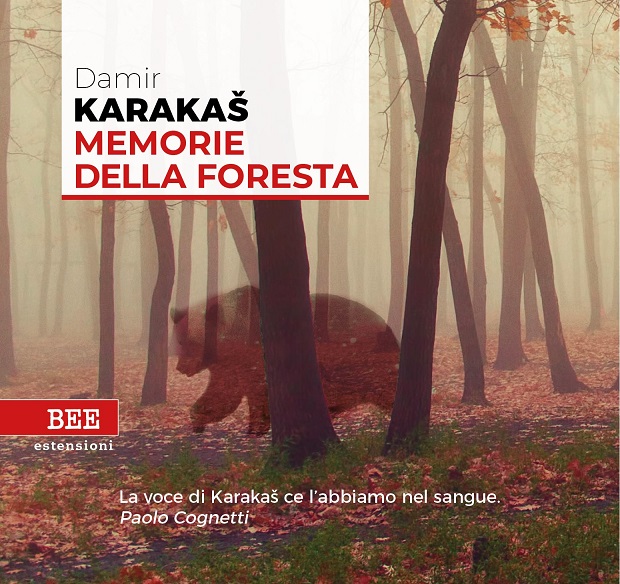
Damir Karakaš and his novel 'Remembering Forest' among winners of Italian literary award 'Premio ITAS del Libro di montagna'

Damir Karakaš’ novel “Remembering Forest” is among the winners of the Italian literary award “Premio ITAS del Libro di montagna”. Books published by fifty Italian publishers were taken into consideration in this year’s competition, with „Remembering Forest” being awarded in the category for young readers and receiving a prize of two and a half thousand euros.

“Premio ITAS del Libro di montagna”, an annual literary award established in 1971, recognizes both Italian and international works of literature featuring themes of nature and mountains.

Karakaš' novel was translated by Elisa Copetti and published as “Memorie della foresta” by Bottega Erante from Udine, the Italian publisher of Nobel laureate Ivo Andrić. It’s receiving amazing praise including a riveting review by Paolo Cognetti, one of the most renowned contemporary Italian writers.

Originally published by Sandorf in 2016, „Remembering Forest” was already translated into German, Slovenian, Macedonian, with French and Romanian edition expected to come out soon as well. It was also adapted into a successful play directed by Tamara Damjanović at Gavella Drama Theater.


Kristian Novak-sample translation

Excerpts from Dark Mother Earth

1.
Forgotten things started to appear, one by one, in premonitions and dreams. At first, he thought they were coming from the present, not the past, and belonged not to him but to someone else. It started with nightmares. Since he believed that the quantity of happiness and unhappiness in his life had to be in balance, he considered it a down payment for the following day with Dina. He would wake up in the middle of the night, disoriented he would stand up in bed and stare into the darkness, nervously looking for the lamp switch and trying to focus on an actual object to make sure that it was not a phantom. He did not understand his bad dreams even though he suspected them to have consistency, a kind of twisted logic in a world of hidden truth. Dina would not sleep; she too would wake up because she wanted to be part of that something he did not know how to talk about. She would clench by him in the dark, the way small animals cling to each other in cold nights, not because they can avoid danger by being close to each other, but because they want to be together no matter what and Matija was no longer afraid to fall asleep. From time to time he dreamed of standing by the river looking at an unknown boy with a big bushy head standing in the water up to his waist. The boy would just look at him for a while. Then he would open his mouth with a grimace of a man frantically yelling. No voice came out of that mouth, just dark velvet blood streaming down his chin, over his chest and belly, into the murky river. Sometimes, still delirious, he would murmur „Here, here they are, they found me“. Dina felt there was another side to this man who to her seemed infinitely cheerful and who made his and her life easy. Some dark side, something one was better off keeping quiet about. She would be reminded of it by his unexpected reactions, occasional outbursts of anger he later unsuccessfully disguised with humour, and even more so by moments when he seemed to have withdrawn from the world and would stare mesmerised into his own darkness.

2.
Matija looked at the drawings, and after the first numbness, by the second he became more and more overwhelmed by horror. Those were children displays of brutal scenes of mutilation, abuse, probably death and definitely physical suffering and pain. On one drawing one could clearly see a child kneeling or crouched in the centre, with huge black eyes, holding one hand in his mouth out of which drops of red blood were pouring, while in the other hand he held what looked like a bundle, also red. Matija thought it was a heart. Five or six human figures were standing around the child their heads turned away from him. Or without eyes, it was impossible to discern. They were drawn with crayons, mainly in black and red. The movements were brisk; the paper surface looked almost as carved so were the crayons tightly squeezed. The circles were not full; the sky was generally covered in black and red stripes. On either of the drawings the sun was nowhere to be seen.
(…)
– You used to leave these drawings and messages on dad's grave when you were a kid – whispered his sister while he looked numbly. – I would pick them up after you had left them because I was afraid of what people in the village would think of you. I did not want them to be afraid of you, although you seemed very strange both to mom and to me after dad passed away. Strange kid, that's it. Well fuck, you did not look strange to me, I was afraid of you and afraid for you. You were, what, six years old, and out of the blue you would ask me or mom whether we would have loved you had we known you did something truly horrible. Or you would ask me quietly, so mom could not hear you, whether I would go and dig out graves with you. A six-year old child. You were often talking to yourself. I once came into your room and you were standing in the middle of the room staring at the darkest corner of the ceiling, saying barely understandable words in a half strange language. I remember hearing you say some words … undal, brokesto, safuntteo… and then you would nod and laugh. When you realised I was looking at you, you turned to the ceiling and said to this someone that I was you sister and that „they better leave me alone“. Then even sicker things started happening. You stopped eating, you were disgusted by everything, you were afraid of staying home alone, you were afraid of going out in the yard and you would not tell us what you were so scared of. You would wet your bed and you once wet your pants in school too. I woke up once in the middle of the night because I realised there was someone in my room and saw it was you. You were standing in your pyjamas by my bed, shivering from the cold, crying and whispering „they are here, they found me“. You would feel better for a couple of days and then all of a sudden mom would find bruises and scratches on your back and ribs as if someone had beaten you, but you would not tell who. You would throw stones at the neighbours, spit at by-passers, burn and hide things. And you would always swear very convincingly that you did not do it. That you do not know who did it but that it was not you. I once saw you throw stones at the cherry tree in our backyard and hit it with feet and hands until you had open wounds on your skin. I asked you what the fuck was wrong with you and finally you said you were angry because mom had thrown some wooden box in the trash and that you would rather hit the tree because you were afraid of doing something to mom. You used to run away from home, you do not remember that either, right? They found you by the Mura River in the middle of winter almost frozen to death. You were wearing pyjamas and a jacket. Then another time you ran into the woods. That was when they amputated your fingers. Surely you remember that? When you were in the hospital for two weeks and got pneumonia?
Matija was staring at her.
– You just blocked it out, that’s all. And we were scared shitless for you. It already looked as if social services would take you away because people started talking. Then you were a little bit better, for a couple of years. And then … when the suicides started, one after the other, do you remember that? Fuck … you were always close to someone who would then commit suicide. You go now and explain to people in the village that it was just a coincidence.

3.
I asked Zvonko, who was still standing as a shadow, leaning against the locker room, if we could go to his place, watch television, cowboys and Indians, watch empty beer cans, anything, just to keep me from thinking about Franco. He was kind of nervous and weak, he did not say a word on the way home and at home he drank glass after glass of water, constantly getting out of the armchair and coming back. I took off my sneakers and curled up on the sofa. It seems that at some point I dozed off, although it was still day, because I was completely calmed down and had a blank image in front of my eyes which in my reality was not often the case. The blank image was disrupted by a loud clump from the room next door; this was the sound evoking a huge fleshy bug, an insect the size of a horse banging against the wall of the room lamp. I sat up on the sofa. As if something inside of me had already clearly seen the scene I was yet to witness. The fear of what I would see was lesser than the fear of remaining forever petrified on that sofa so I got up on my feet and went into the hallway. Zvonko was hanging from a rope tied to the attic staircase. At first I did not see the rope as it was dark in the house, the rope was thin and it looked as if Zvonko was hovering. As if he still had the strength to pretend he was composed and decent, he silently flexed and jerked his hands on the noose. It somehow seemed he had changed his mind when he saw me. As if he realised that the only thing that would outlive him was the scene of his helplessness recorded in me. I ran to him trying to lift him by the legs. He was heavy and wildly waving his legs. I managed to grab both his legs a few times but every time he would kick throwing me a few steps back. No one uttered a sound, nor the two of us neither all of Zdravko's memories that were watching this bizarre picture. “Not again”, I thought. I was now definitely becoming a monster, even to those who defended me.
I would feel dizzy whenever I found myself in a very important situation. May be because those were the moments I had imagined a hundred times before, creating an imaginary picture of them, and when they became reality I had to switch in my head from a timeless construct to the present. His feet were clenching, the thumb aiming upwards and the other fingers downwards. I saw that because on one foot he was wearing a sock and a slipper while the other one was bare. I looked up and saw that his face was red and his tongue blue. His eyes were big. He was beautiful in some strange way.
When I was sure it was all over, I managed to lift him up for a brief moment, but he jerked his back one last time and kicked me back. Since I did not want to let him go, I lost footing on the ground and hang on to his leg. There was a crispy shot somewhere above me and it seemed to me that I had felt it also under my hands. It reminded me of grandma tearing and nibbling on a boiled chicken leg from the soup. His body was now completely still and I knew he was gone. My head was leaning against his groin and I felt moisture on my face. He took a leak, I thought. I moved a few steps back and sat in the corner never taking my eyes off him. He was swaying back and forth and flinched one more time although his face was already dead and still. He did not stick his tongue out and his eyes were not bulbous, at least not more than usually. He was completely serene and I was imagining that he could now see all those from the village who had left us these days and that he may even see my father. They were now all together and could laugh at what had happened.
I do not know how much time passed before they found me, I just saw that it was already dusk. I was lucky because no one ever came to Zvonko's house. That day precisely Pišta came to his house to borrow an extension cord for the light above the kettle. He came in and right at the door saw me sitting, my back against the wall and staring at the body with a petrified smile.


Zoran Ferić, author, on The Player

Marina Šur Puhlovski wrote an excellent and wicked novel. And I have to say it made me feel like reading Krleža or Bernhard, because I felt that bad feeling when reading good literature: bad because of the world around us, but also good for sharing these thoughts with the author.


Strahimir Primorac, Vijenac

To remove the animal – her finest literary work so far, at the very top of last year's Croatian prose titles. (…) Exquisitely written, excellent book!


Jutarnji list on Črna mati zemla

Črna mati zemla is a book that discovers a new, different and quite narratively competent name on the domestic literary scene. It is a novel that contains and combines different and important layers that are relevant to the contemporary Croatian prose, although approached and elaborated from completely different starting points.

Novak’s hero Matija must ultimately come to terms with himself and his fear that all people he loves will be dead, as well as with his unfortunate homeland, while the reader will understand that no private horror can be bigger than the one we try to suppress to personal or collective amnesia and into the hallways of our subconscious.


Marinko Krmpotić, Novi list on A Wild Woman

This is an anti-love novel at its core, telling the reader that the path towards freedom, in contexts such as the Croatian, is often possible only if one „goes wild“ and refuses to follow the well-trodden paths, standard rules and relationships.


Teofil Pančić, Vreme

Devoid of pompous subversiveness, A Clan of Ghosts manages to be one of the best interpretations and most successful deconstructions of the totalitarian "patriotic narrative".


Main works/Translations
Sample translation
Links
Contacts