

Katarina Luketić, Novosti
A Land without Sunsets can be read as one of the pioneering works of ecological fiction in Croatia.
A Land without Sunsets can be read as one of the pioneering works of ecological fiction in Croatia.
FOREIGN RIGHTS
Fraktura d.o.o
T: +385 1 335 78 63
F: +385 1 335 83 20
E: fraktura@fraktura.hr
MAIN WORKS
Against the Grain (Uz dlaku, Mladost, 1970), critiques
Mysterium Televisionis (Mysterium Televisionis, Mogućnosti, 1972), essays
Naked Mass (Gola masa, Znanje, 1973), feuilletons
Tender Heart (Nježno srce, Znanje, 1975), essays
Mythology of Everyday Life (Mitologija svakidašnjeg života, Otokar Keršovani, 1976), feuilletons
From Bach to Cage (Od Bacha do Cagea, Mladost, 1977), essays and critiques
101 Short Critic (101 kratka kritika, August Cesarec, 1977), critiques
In the Shadow of Faded Music (U sjeni ocvale glazbe, Znanje, 1977), essays
Policemen of the Spirit (Policajci duha, Globus, 1977), essays
The Shock of the Present (Šok sadašnjosti, Centar za informacije i publicitet, 1979), feuilletons
Arsen (Arsen, Znanje, 1983), essays and monography
Literature and Media Culture (Književnost i medijska kultura, Matica hrvatska, 1984), essays
What do Women Actually Want? (Što zapravo hoće te žene?, Istarska naklada, 1985), feuilletons
Principles of Crime Fiction (Principi krimića, Mladost,1985), essays
Anthology of the Post-War Croatian Poetry (Jedna antologija hrvatske poratne poezije, Mladost, 1987), anthology
Farewell, Dear Krleža (Zbogom, dragi Krleža, Književne novine, 1988), essays
Marriage Kitchen (Bračna kuhinja, Grafički zavod Hrvatske, 1989), feuilletons cowritten with Slavica Mandić
Ecstasies and Hangovers (Ekstaze i mamurluci, August Cesarec, 1989), essays
Novels of Crisis (Romani krize, Prosveta, 1996), critiques
Literary Front (Književno (st)ratište, Matica hrvatska, 1998), critiques
Our Thing (Za našu stvar, Biblioteka XX Vek, 1999), critiques and essays
Priap’s Problem (Prijapov problem, Arkzin, 1999), essays
Between Two Flames (Između dv(ij)e vatre, NIN, 2000), feuilletons
White Crow (Bijela vrana, Prosvjeta, 2002), feuilletons
ER (Hitna služba, SysPrint, 2005), feuilletons
Under One’s Skin (Sebi pod kožu, Profil International, 2009), memoir
Last Minute (U zadnji čas, Profil International 2009), memoir
Paper Shield (Oklop od papira, V.B.Z., 2014), memoir
Deathbed Diary (Predsmrtni dnevnik, V.B.Z., 2017), memoir
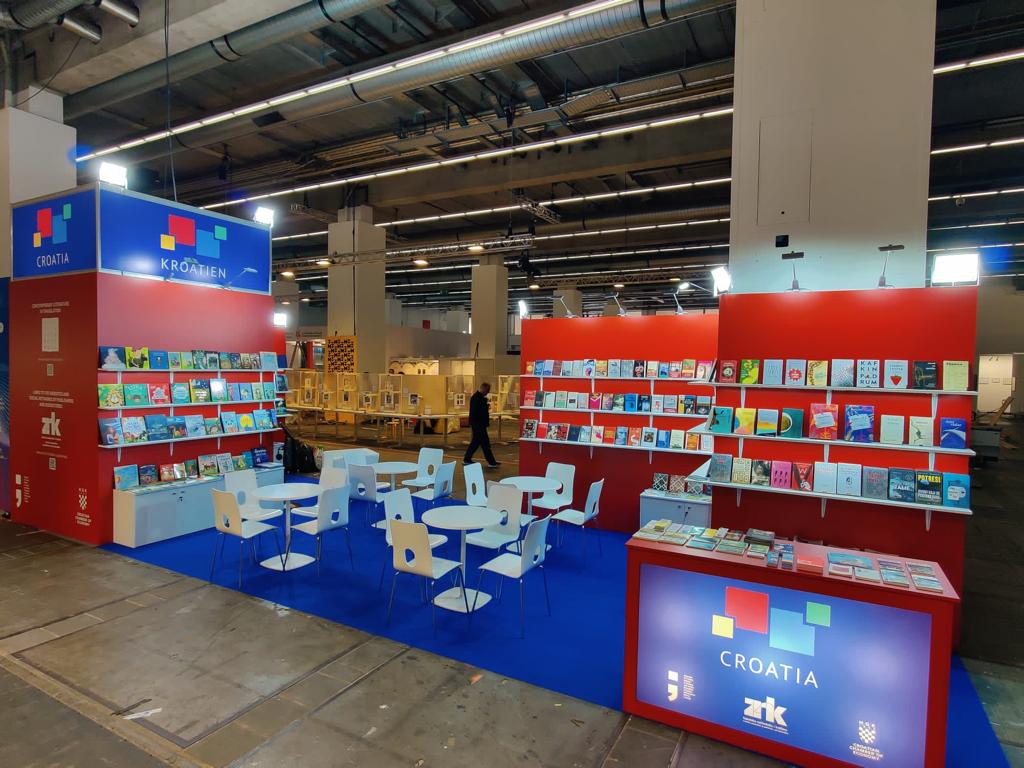
Croatia will present its literary and publishing scene at the Frankfurt Book Fair 2022 (19.-23.10.2022.), after two years of missing, with a selection of Croatian novelists, poets, non-fiction authors, and illustrators. This participation, which includes 24 publishers and more than 160 titles, has been organized by the Publishers and Booksellers Association within the Croatian Chamber of Economy, while The Ministry of Culture and Media of the Republic of Croatia has leased the national stand, and publishers themselves finance their programs.
The joint Croatian national stand, long 38 m2 will be in Hall 4.0, stand F40. The most important books of Croatian publishers in the past years, as well as ten fiction and four non-fiction titles, will be presented there. The selection of these 14 titles has been done by the Book and Publishing Council of the Ministry of Culture and Media of the Republic of Croatia, while the Croatian Writers' Association and the Croatian Writers Society proposed titles to be included.
Selected fiction:
and selected non-fiction:
A selection of 15 illustrators, made for the Croatian participation at the Book Fair in Montpellier which unfortunately didn’t take place, has also been included now for the Frankfurt Book Fair: Vanda Čizmek, Ivana Glušević, Klasja Habjan, Vedran Klemens, Agata Lučić, Andreja Peterlik Huseinović, Ivana Pipal, Klara Rusan, Ivan Stanišić, Stipan Tadić, Hana Tintor, Vendi Vernić, Hana Vrca and Dominik Vuković.
.jpg)
Foreign publishers, editors and agents will be able to see the results of the support program for translations of Croatian authors into foreign languages in a selection of books published in 2021 and 2022 at the Croatian stand. In addition, at the stand, Croatian publishers will organize promotions of several books by Luka Bekavac, Kašmir Huseinović, Dalibor Marković, Andrea Petrlik, Miro Radalj, Igor Štiks and others.
>>> PROGRAM at the Croatian national stand - click here!
>>> Croatian Books, Writters and Illustrators - Catalogue - click here!
http://www.fraktura.hr/foreign-rights/authors/?author=4407
MAIN WORKS
Turtle and Other Landscapes (Kornjača i drugi predjeli, Matica hrvatska, 1961), poetry
In Your Actual Body (U tvom stvarnom tijelu, Naprijed, 1964), poetry
The Lantern and the Sleeper (Svjetiljka i spavač, Naprijed, 1965), poetry
Storm and Other (Nevrijeme i drugo, Razlog, 1968), poetry
The White Sign of the Flower (Bijeli znak cvijeta, author’s edition, 1969), poetry
On Veronica, Belzebub and Knocking on Uncertain Door (O Veronici, Belzebubu i kucanju na neizvjesna vrata, Matica hrvatska, 1970), prose
The Doors Tale (Bajka o vratima, Naprijed, 1972), prose
The Fourth Animal (Četvrta životinja, Naprijed, 1972), poetry
Natural History (Prirodopis, Biblioteka Teka, 1974), poetry
Fibs (Izmišljotine, Naprijed, 1976), prose
Carbon Age (Razdoblje karbona, Cekade, 1976), poetry
Observatory (Zvjezdarnica, Hrvatska sveučilišna naklada, 1994), poetry
The Flower Square (Cvjetni trg, Durieux, 1994), prose
Walking along the Railroad (Hodanje uz prugu, Matica hrvatska, 1997), poetry
Murmur (Žamor, Meandar, 2004), poetry
Somewhere (Negdje, Fraktura, 2013), poetry
Indian Summer (Kasno ljeto, Fraktura, 2018), poetry
Carbon Age: Italian (Quaderni di letteratura croata)
As If I Am Not There: English (Viking)
The Flower Square: German (Verlag fur neue Wiessenschaft)
Stall Disease
Listen to those mathematically identical pauses between the hoof beats, that trackless train engine which one must subordinate to one's own uncoordinated movements.
Hundreds, thousands of hours wedged between worn out, always worn out pieces of woodwork, between school chairs of minimal manufacturing complexity designed with the best humanist intentions and their matching ascetic tables, all these efforts to understand exactly and globally, comparative methods, abstract thinking and experiments. Today at five o'clock in the afternoon, just like at any other time of day tomorrow and yesterday, as she's trying to walk in front of the bridled nag, in front of her, that is, not parallel with her fore legs or, even worse, skipping behind her shoulders, behind the shoulders of that damned perfectly balanced animal that can coordinate better on four legs than she could on two, she faces the same, unpredictable and irreparable educational deficit made when one did not go for two more hours of riding, among the children of wanton and distracted parents. Who mimic the educational model of the British aristocracy, meaning piano, French and riding lessons on patient nags. These ten year olds, raised to be vain, but mostly without the talent to become arrogant, wouldn't aim for the narrow wooden door on the fence like this, me like this, the horse like this, and then a bow and a picador's cape sweep through the dust, the prettiest movement is an unnoticed one, we passed through the door tramping melodiously, we didn't get stuck on the croup between the wooden stakes. It's too late now, Jelena thinks every day of her only riding experience, of a horse who, she now knows, was a retired hurdler, with the astonishingly long and slim legs of a supermodel, the fence of the manege barely reached his groin, and she had to hold on to the saddle with both hands in order to lift the flat-heeled boot, which she now knows is unacceptable when on a horse, up to the stirrup, and straddle that animal that didn't fill her with trust, but forced her with its anatomy to sit up straight for what must have been the first time in her life, to understand the meaning of uprightness, which had nothing to do with class and arms crossed behind the school chairs, from that position, the riders position, Jelena first saw in an almost shocking manner what a spine was for, and then followed the disastrous report on the state of her character, because horses know everything you can possibly know about human failures, they recognise hesitation and feigned vigor when pulling the reins, cowardice masked as empathy in lukewarm goading, the evolutionary fall of the lovers of plush puppies and kittens who are no longer bold enough to use the whip.
Controlling a horse meant controlling life, it's a skill you have to master at any cost, but Jelena nevertheless never came back, although she wasn't afraid, not at that point, she comforted herself with lack of time and the high cost of training, she justified herself with contempt for the exclusive character of riding, she defended herself from that terrible personal defeat as well as she could. Long term, the damage was enormous. She became painfully aware people were divided into those who ride and those who don't, that the position of rider was the only measure of meaning to someone's biography, and that the speed of reflexes was immeasurably superior to intelligence after the fact, however masterfully reflexive that intelligence may be.
The nag hesitated at the stable entrance. Then she pulled her usual trick: lifting her head suddenly, she tried to rip the reins from her hands. Jelena was ready for it, her harmless mutiny is part of an everyday ritual. Earlier she'd often get scared and let her go, even when she could hang on to her, partly because she understood her unwillingness to return to the obscure area of the box two hours before dusk, and partly because that image of a horse, with its head raised and its eyes turned downward, was simultaneously terrible and fascinating, like a direct insight into insanity, an omen of disaster, a hundredth of a second of a frame from a dream laden with symbols of the unconscious.
She's pretty, nicely built, with a refined head, delicate nostrils, dramatically dark, doe-like eyes. She's not pretty in a phantasmagoric way like thoroughbreds are, she's a mixture of a hot blooded and cold blooded horse; the usual and time tested recipe for an obedient, stable horse meant for beginners, invalids, those suffering from cerebral palsy and multiple sclerosis.
About ten of them visit the ranch every month with their caretakers. The caretakers are mostly parents whose duty is to try and outlive their own children, because the usual, reversed biological order is working directly against them. There is no free, or even cheap sanctuary for young men and girls with twisted limbs and distorted heads fixed on the headrest of the wheelchair, there is no humane solution, it's beyond the ability of every general-purpose philanthropist, so these parents live in the hell of longevity, condemned to timelessness, vitality and optimism, and can't afford loosening, sickness and death. Sick children (no matter what their age, they're always children) mostly expressly ask for this nag, Tara, she's used to walking in circles for hours in a slow, steady tempo, eating apples from a cramped hand in a wheelchair, rubbing her head on their locked shoulders. She's the muse of the handicapped, her framed photographs stand and hang in the neat living rooms of these homes, forever defined by misfortune, photographs on which those who were never walkers become riders, and witness with their happy faces the miracle that a simple horse can produce.
Two parts of oat and a bale of hay. The goat, who lives with Tara in the same box, and awaits her return from pasture always in the same position, with her front hooves over the fence, like a curious neighbor, grabbed the oats first again. Standing on her hind legs, her head is deep in the bowl. The nag sometimes bites her and chases her away, but very rarely. Mostly she just calmly watches the goat eat her food, and eats what's left over. Why does a big animal allow a small one to deprive her of an elementary need, food? if there is an explanation for it, it wasn't available to Jelena. A horse can kill with one blow, or at the very least mutilate a goat. She can hurt her by accident, in a state of anxiety or fear, and fear and anxiety are very common states in the world of horses, in the world of a prey animal, used through evolution to being attacked by perfectly organised packs, tearing off pieces of flesh from its legs and body from several sides at once, until the victim kneels and collapses, so they can bite through her neck and eat enough to secure energy for the next few days, or weeks. Were Tara and the goat friends, in some way? Every morning when she gets in the stable, she finds them in the same position, with their heads over the fence, the same eye movements, a similar look on their faces. The goat with her hooves on the board, a curious suburban neighbor lady, the horse with her hooves on the ground, but identifying with the goat's silliness, a kitsch image of an idyllic family. They've tried to separate them but the goat kept coming back, either from self-interest or loyalty, or both.
"Horses don't want to kill", the Righteous One once said, when he was trying to teach Jelena to block a galloping stallions path with her hands above her head. "Horses don't want to kill." "Horses don't want to kill." "Kill." Could a quadrupedal animal really understand the meaning of murder and death, violent death? The link between a blow of the hoof, the ending of an irritating nuisance, like a fly in reach of the tail or a goat with its head in the bowl, with a taboo that isn't its taboo, which doesn't concern it, the taboo of murder? And if there is no taboo, what's left is empathy. There are no large animals that don't kill small ones out of empathy. Buddhists don't kill ants, but not because of empathy, but for religious beliefs. People mostly don't kill their pets, but that has nothing to do with empathy, it's about complex psychological and social mechanisms, identification, anthropomorphism; complicated, but harmless deviations.
An unseemly curious goat, a neighbor in a housecoat with her annoying braying, perchance the horse's friend, every morning safe and sound, unharmed. There is no explanation. There is no explanation, unless one succumbs to the myths from the melodramatic genre, about the eternal good that lives in Lassie who's coming home, just like Saint Francis of Assisi. Good isn't eternal, it's sporadic, and inexplicable. Sometimes it's a consequence of thorough breeding or successful dressage, but, unlike evil, which is reliable and transparent, almost mathematically predictable, it's mostly unexplainable. Jelena fears what she can't understand, and she can't understand horses.
The Righteous One knows nothing about people, he's completely face blind, he can't read discomfort, polite refusal, absentmindedness, he can't see where a joke ends and offense begins, he can't tell false enthusiasm from the real thing. Occasionally he's suspected of being bereft of empathy, which turns out to be unprovable and pointless every time. He knows horses, which is superior, you can live off horses. Off people too, and even their moods, but it's slippery turf you're better off not stepping into.
Jelena likes to think she knows a thing or two about people. It's no exact knowledge, she's infantile, she responds to movements, to other people's energy, her nervous system is programmed much like that of a horse.
MAIN WORKS
Volatile (Promjenjivi, Subotičke novine, 1987), poetry
Black and Red (Crnocrveno, Globus, 1989), poetry
His Friend Says He Doesn’t Know Him Anymore (Prijatelj ga, kaže, više ne poznaje, Feral Tribune, 1997), poetry
Breathless (Do posljednjeg daha, HENA, 2004), autobiography
Stranger (Stranac, V.B.Z., 2016), poetry
After Rain (Poslije kiše, HENA, 2017), autobiography
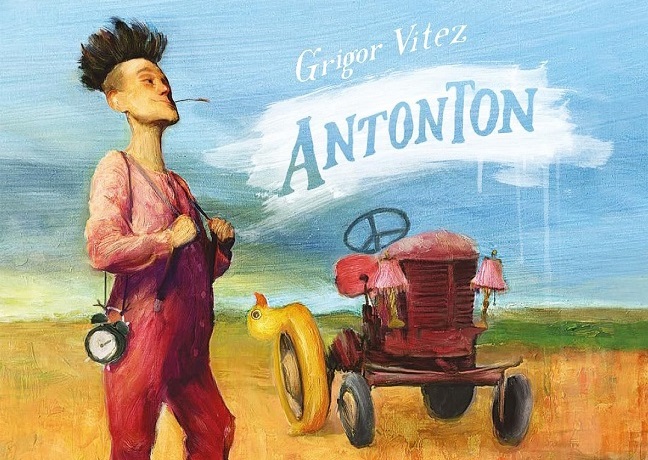
The US edition of one of Croatia's most beloved children's poems, AntonTon by Grigor Vitez, has received three awards given out by the Colorado Intependent Publishers Association! EVVY Book Awards celebrate well written and beautifully designed books from Colorado and world. For over 30 years, EVVY Book Awards choose best titles across 39 categories: from fiction and non-fiction to children's books. Antonton has been awarded Silver in the Children's Illustration category, Silver in the Children's Cover Design category and Bronze in the Children's Picture Books (age 0-5) category.
Penned by Grigor Vitez, the father of the modern children's literature in Croatia, AntonTon is a poem celebrating one-of-a-kind hero marching to the beat of his own drum. There isn't a generation that doesn't know his adventures by heart; now, this classic of children's literature in Croatia has won the hearts of American readers as well.
The English translation has been published by Perlina Press, an independent publishing house dedicated to children's literature, as well as Croatian authors in English translation. AntonTon was translated by Irena Stanić Rašin, editor, author and translator, and illustrated by the award-winning and internationally acclaimed illustrator Tomislav Torjanac.

MAIN WORKS
The Garden (Vrt, Zbirka BIškupić, 1989), poetry
Sections on Eve (Odlomci o Evi, SKUD Ivan Goran Kovačić, 1992), poetry
Azure Gold (Azurno zlatno, Ceres, 1994), poetry
Wings of Ether (Krila od etera, Ceres, 1998), poetry
Seuso (Seuso, Vuković&Runjić, 2000), novel
Revolver (Revolver, Vuković&Runjić, 2001), novel
Sexopolis (Seksopolis, Vuković˛Runjić, 2003), feuilletons
Story of M. (Priča o M., Vuković&Runjić, 2004), novel
Street of Infidel Wives (Ulica nevjernih žena, Naklada Ljevak, 2007), novel
The Hunter and the Goddess (Lovac i božica, Vuković&Runjić, 1998), poetry
Demons and Journalists. A True Story of a Redaction in Recession (Demoni i novinari, Vuković&Runjić, 2010), novel
Wives and Lovers (Supruge i ljubavnice, Profil International, 2009), feuilletons
Cursed Queens (Proklete kraljice, 24 sata, 2011), biographies
Adriadna’s Thread (Arijadnina nit, Vuković&Runjić, 2012), novel
Cursed Croatian Women (Proklete Hrvatice, 24sata, 2012), biographies
Cursed Croatian Women 2 (Proklete Hrvatice 2, 24sata, 2013), biographies
Proust in Venice. Matoš in La Serenissima (Proust u Veneciji, Matoš u Mlecima, Vuković&Runjić, 2013), novel
Cloud Hotel 1914 (Hotel u oblacima, Vuković&Runjić, 2014), novel
Of the Living, Nothing but Good (O živima sve najbolje, Vuković&Runjić, 2005), short stories collection
Unholy Trinity (Nesveto trojstvo, Vuković&Runjić, 2012), novel
Pharaoh from Ilica is Dead! (Faraon iz Ilice je mrtav!, 24sata, 2015), novel
Vladimir and Matilda (Vladimir i Matilda, Vuković&Runjić, 2016), novel
Pharaoh and Nutcracker (Faraon i Orašar, Vuković&Runjić, 2017), novel
Secret of the Hollow Tower: Vladimir and Matilda (Tajna Šuplje kule: Vladimir i Matilda, Vuković&Runjić, 2017), novel
Workers in My House (Majstori u mojoj kući, Vuković&Runjić, 2018), novel
The Dolphin: To Ivan Gučetić (Delfin : Ivanu Gučetiću, Vuković & Runjić, 2025), novel
TRANSLATIONS*
*none so far
MAIN WORKS
Way to Saturday (Put do subote, Prosveta, 1982), novel
Stone from heaven (Kamen s neba, Prosveta, 1984), novel
Maria Częstohowska Still Shedding Tears or Dying in Toronto (Marija Częstohowska još uvijek roni suze ili Umiranje u Torontu, Arkzin, 1997), novel
Canzone di Guerra (Canzone di guerra, Meandar, 1998), novel
Totenwande (Totenwande, Meandar, 2000), novel
Doppelgänger (Doppelgänger, Samizdat B92, 2002), novel
Leica Format (Leica format, Meandar, 2003), novel
After Eight (After eight, Meandar, 2005), non-fiction
Feminist Manuscript or Political Parabole (Feministički rukopis ili politička parabola, Ženska infoteka, 2006), non-fiction
Trieste (Sonnenschein, Fraktura, 2007), novel
April in Berlin (April u Berlinu, Fraktura, 2009), novel
Belladonna (Belladonna, Fraktura, 2012), novel
Dawn (Praskozor, Naklada Jesenski i Turk : Hrvatska radiotelevizija, 2015), co-author, columns
EEG (EEG, Fraktura, 2016), novel
TRANSLATIONS
Canzone di Guerra: Slovenia (Mohorjeva založba)
Doppelgänger: Serbia (Samizdat B92)
Leica Format: Serbia (Samizdat B92)
Trieste: France (Gallimard), Germany (Hoffman und Campe), Hungary (Kalligram), Italy (Bompiani), Netherlands (De Geus), Poland (Czarne), Slovakia (Kalligram), Slovenia (Modrijan), UK (Quercus), USA (Harcourt & Brace)
April in Berlin: Slovakia (Kalligram)
Belladonna: Germany (Hoffman und Campe), UK (Quercus)
EEG: Automatica Editorial S.L. (Spain)
MAIN WORKS
Deadly Sins of Feminism (Smrtni grijesi feminizma, Znanje, 1984), non-fiction
Holograms of Fear (Hologrami straha, Grafički zavod Hrvatske, 1988), novel
Marble Skin (Mramorna koža, Grafički zavod Hrvatske, 1989), novel
How we survived communism and even laughed (Kako smo preživjeli, Vintage, 1991), essays
The Balkan Express (Balkan-express, W.W. Norton & Company, 1992), essays
The Taste of a Man (Božanska glad, Durieux, 1995), novel
Café Europa (Café Europa, Penguin Books, 1996), essays
How did we survive (Kako smo preživjeli, Feral Tribune, 1997), essays
S.: A Novel about the Balkans (Kao da me nema, Feral Tribune, 1999), novel
They Wouldn't Hurt a Fly (Oni ne bi ni mrava zgazili, Kultura & Rasvjeta, 2003), essays
Flesh of her Flesh (Tijelo njenog tijela, Europapress Holding, 2006), essays
Frida's Bed (Frida ili o boli, Profil International, 2007), novel
Two Underdogs and a Cat (2009), essays
A Guided Tour through the Museum of Communism (Basne o komunizmu, Profil multimedia, 2009), essays
Accused (Optužena, V.B.Z., 2012), novel
Dora and the Minotaur. My Life with Picasso (Dora i Minotaur. Moj život s Picassom, Fraktura, 2015), novel
Mileva Einstein: A Theory of Sadness (Mileva Einstein: teorija tuge, Fraktura, 2016), novel
Invisible Woman and Other Stories (Nevidljiva žena i druge priče, Fraktura, 2018), short stories
Café Europa Revisited: How to Survive Post-Communism (Ponovo u kavani Europa: Kako preživjeti postsocijalizam, Fraktura, 2021), essays
My Place Under the Sun (Moje mjesto pod suncem, Bodoni, 2021)
Deadly Sins of Feminism, Extended Edition (Smrtni grijesi feminizma, prošireno izdanje, Fraktura, 2020), essays
Café Europa Revisited: How to Survive Post-Communism (Ponovo u kavani Europa: Kako preživjeti postsocijalizam, Fraktura, 2021), essays
My Place Under the Sun (Moje mjesto pod suncem, Bodoni, 2021)
War is the Same Everywhere (Rat je svugdje isti, Fraktura, 2022), essays
What We Don’t Talk About (O čemu ne govorimo, Fraktura, 2024) short stories collection
Why I Never Learned to Cook (Zašto nisam naučila kuhati, Fraktura, 2026), essays
TRANSLATIONS
Accused: Slovakia (Aspekt), Slovenia (VBZ)
A Guided Tour through the Museum of Communism: USA (Penguin), Sweden (Natur och kultur), Slovakia (Aspekt), Bulgaria (Žanet 45), Italy (B.C.Dalai editore), Serbia (Rende), Albania (ISHM)
Frida's Bed: Austria/Germany (Zolnay), Sweden (Natur och kultur), USA (Penguin), Slovenia (VBZ), Serbia (Profil Belgrade), Italy (La Tartaruga), Hungary (Libri Kiado), Macedonia (Ikona)
Flesh of her Flesh: Serbia (B92), Sweden (Norstedts), Austria/Germany (Zsolnay), Poland (WAB), Macedonia (Skenpoint)
They Wouldn't Hurt a Fly: Netherlands (De Geus), UK (Abacus –TimeWarner), USA (Viking), Serbia (B92), Sweden (Norstedts), Austria/Germany (Zsolnay), Denmark (Lindhardt ok Ringhof), Norway (Humanist), Hungary (Jelenkor), Finland (Like OY), Poland (WAB), Spain (Global Rhythm Press), Portugal (Pedra da Lua), Romania (Curtea Veche)
S.: A Novel about the Balkans: Sweden (Norstedts), Norway (Gyldendal), UK (Avacus), Germany (Aufbau), Finland (Otava), Italy (Rizzoli), Netherlands (De Geus), Slovenia (Aleph), Spain (Anagrama), France (Belfond les etrangeres), Portugal (Asa), India (Green Books)
Café Europa: Netherlands (de Prom), Sweden (Norstedts), USA (Penguin), Germany (Aufbau), Italy (il Saggiatore), Greece (Akti-Oxy), Japan (M.Nagaba), Taiwan (Business Weekly Publications)
The Taste of a Man: Netherlands (de Prom), Sweden (Norstedts), USA (Penguin), Germany (Aufbau), Italy (il Saggiatore), UK (Abacus), Norway (Gyldendal), Denmark (Gyldendal), Slovenia (Rotis), Spain (Anagrama), Albania (Konica),
The Balkan Express: USA (Harper), Slovenia (Rotis), Germany (Rowohlt), UK (Hutchinson), Sweden (Ordfronts), France (Mentha), Denmark (Spektrum), Italy (il Saggiatore), Hungary (Kobra Konyvek), Norway (Aventura), Netherlands (de Prom), Finland (Kaantopiiri Oy), Japan (Sanseido), Romania (Athena)
How we survived communism and even laughed: France (Jacques Bertoin), Norway (Pax), Sweden (Ordfronts), Italy (il Saggiatore), USA (Harper), Slovenia (Rotis), Germany (Rowohlt), Netherlands (de Prom)
Marble Skin: Spain (Grupo libro), France (Robert Laffont), Italy (Giunti), USA (Harper), Netherlands (de Prom), UK (Hutchinson), Sweden (Ordfronts), Germany (Aufbau)
Holograms of Fear: Sweden (Norstedts), USA (Norton), Netherlands (de Prom), UK (Hutchinson), Germany (Rowohlt), Slovenia (Prešernova družba)
Café Europa Revisited: Italy (Keller), Japan (Jimbun Shoin), USA (Penguin Books)
Dora and the Minotaur. My Life with Picasso: Ukraine (Bohdan Publishing House)
MAIN WORKS
Castle America (Dvorac Amerika, Studentski centar sveučilišta, 1995), poetry
You Can Spit on The One Who’ll Ask for Us (Možeš pljunuti onoga tko bude pitao za nas, Konzor, 1999), short stories
Horror and Huge Expenses (Užas i veliki troškovi, Konzor, 2002), short stories
Our Man in Iraq (Naš čovjek na terenu, Profil International : Ghetaldus optika, 2007), novel
Introduction to Funny Dance (Uvod u smiješni ples, Profil multimedija, 2011), autobiographical prose
Sometime Later (Jednom kasnije, Sandorf, 2012), poetry
Culture in Suburb (Kultura u predgrađu, DPKM, 2002), play (staged 2000-2002. in Drama Theatre Gavella, Zagreb)
100 Minutes of Glory (100 minuta Slave), screenplay, 2004 film by the director Dalibor Matanić
No Signal Area (Područje bez signala, Sandorf, 2015), novel
The Poor Man with a Headache (Siromašni čovjek kojeg boli glava, Sandorf, 2019), poetry
A Cat at the End of the World (Brod za Issu, Sandorf, 2022), novel
TRANSLATIONS
Introduction to Funny Dance: Serbia (LOM)
You Can Spit on The One Who’ll Ask for Us: Slovenia (Študentska založba)
Horror and Huge Expenses: Czech Republic (Větrné mlýny), Slovenia (Študentska založba)
Our Man in Iraq: Austria (Leykam), Bulgaria (Damian Yakov), Czech Republic (Art Libri), Egypt (Ibn Roshd), Ethiopia, France (Gaia), Italy (Zandonai), Macedonia, Serbia (LOM), Slovenia (Študentska založba), Sweden (Gavrilo förlag), Turkey (Final Yayincilik), UK (Istros Books), USA (Black Balloon)
No Signal Area: Bulgaria (Janet45), France (Gaia), Germany, Macedonia (Goten), Serbia (LOM), Slovenia (Beletrina), USA (Seven Stories Press), Russia (Rudomino), Italy (Bottega Errante)
MAIN WORKS
Words from Pockets (Riječi iz džepova, Feral Tribune, 1998), poetry
Eighth Commissioner (Osmi povjerenik, AGM, 2003), novel
To Whom Shall We Send Our Postcards (Kome ćemo slati razglednice, AGM, 2005), poetry
Frames of a Frame (Kadrovi kadra, AGM, 2005) non-fiction
Tell Me about Her (Pričaj mi o njoj, AGM, 2006), novel
Hotel Grand (Hotel Grand, AGM, 2008), novel
Dawn (Praskozor, Naklada Jesenski i Turk : Hrvatska radiotelevizija, 2015), co-author, columns
A Beginner’s Guide to Split (Split za početnike, Znanje, 2015), non-fiction
Little Wolf’s Trouble (Muka malog vuka, Naklada Semafora, 2015), children’s fiction
Rejected (OtpisaNE, 2017, Moruzgva Theatre, directed by Nikola Zavišić), stage play
Last Hand (Zadnja ruka, Hena com, 2021), roman
TRANSLATIONS
Eighth Commissioner: France (Gaïa), Russian (Forum slavjanskih kultur), Germany (Dittrich), Macedonia (Kultura), Slovenia (Mladinska knjiga), Ukraine (Folio)
Tell Me about Her: Macedonia (Blesok), Ukraine (Folio)
Hotel Grand: Albania (Poeteka & Ideart), Slovenia (Modrijan), Macedonia (Blesok), Ukraine (Folio)
MAIN WORKS:
Circus Columbia (Cirkus Columbia), novel – award Meša Selimović for the best fiction book in Croatia, Serbia, Bosnia and Herzegovina and Montenegro in 2003
Patriotic turnaround political biography of Stipe Mesić (Domovinski obrat), biography
Gotovina – Reality and Myth (Gotovina – stvarnost i mit), biography
I Dreamed of Elephants (Sanjao sam slonove), novel – Croatian Telekom Award for the best novel in 2011
Rest of the World (Ostatak svijeta), poetry
Şarik Tara – A Life (Šarik Tara – život), biography
Repetition – A Love Story (Ponavljanje – ljubavni roman), novel
Srebrenica, A Story of Evil (Beara, Naklada Ljevak, 2016), novel
Apparition, (Ukazanje, Fraktura, 2018), novel
Talking Sticks (Štapići za pričanje, Fraktura, 2020), stories
The Wild Yeast (Divlji kvas, Fraktura, 2024), novel
Budimir Lončar. Before and After the End (Budimir Lončar: Prije i poslije kraja, Fraktura 2025), biography
The Apparitions (Međugorje, Fraktura, 2026), poetry
TRANSLATIONS:
Circus Columbia: Italy (Zandonai), Spain (Sajalin)
I Dreamed of Elephants: Germany (Antje Kunstmann Verlag), Hungary (Európa Kiadó)
MAIN WORKS
Quiet Street, an Avenue of Trees (Mirna ulica, drvored, Algoritam, 2007), novel
Water, Spider’s Web (Voda, paučina, Algoritam, 2010), novel
Zagreb Noir (Zagreb Noir, Durieux, 2014), co-author, collected stories
Dawn (Praskozor, Naklada Jesenski i Turk : Hrvatska radiotelevizija, 2015), co-author, columns
Ms. Adele's Nine Lives (Devet života gospođe Adele, Sandorf, 2020) novel
The last Think They Sow (Posljednje što su vidjele, Sandorf, 2020) short stories
Four Flames, Ice (Četiri plamena, led, Sandorf, 2024), novel
The Little Seashell Box (Kutijica od školjki, Sandorf, 2026), novel
TRANSLATIONS
Quiet Street, an Avenue of Trees: Serbia (Samizdat B92)
Quiet Street, an Avenue of Trees, Makedonia (Makedonska reč)
Water, Spiders Web, Makedonia ( Makedonska reč)
Quiet Street, an Avenue of Trees, Ukraina (Litopis)
Water, Spiders Web, Ukraina ( Knigi – XXI)
Ms. Adela Nine lives, Ukraina ( Knigi – XXI)
Quiet Street, an Avenue of Trees, Italia (Oltre edizioni)
MAIN WORKS
First Step into the Darkness (Prvi korak u tamu, SKUD "Ivan Goran Kovačić", 2005), poetry
Hotel Tito (Hotel Zagorje, Profil multimedija, 2010), novel
Wildlife Crossing (Prijelaz za divlje životinje, V.B.Z., 2012), poetry
What Would Make Me Have a Fight (Za što sam se spremna potući, Profil knjiga, 2013), non-fiction
100% Cotton (100% pamuk, V.B.Z., 2014), short stories
We Trade Our Night for Someone Else’s Day (Rupa, Naklada Ljevak, 2016), novel
In a Sentimental Mood (In a Sentimental Mood, Sandorf, 2017), poetry
Miracle Claire (Klara Čudastvara, Sandorf, 2019), picture book
Sons, Daughters (Sinovi, kćeri, Hermes, 2020), novel
The Smoldering (Usijavanje, Fraktura, 2023) poetry collection
Fiction (Fikcija, Fraktura, 2025), short stories collection
TRANSLATIONS
Hotel Tito: Czech Republic (Paseka), Denmark (Tiderne Skifter), France (Actes Sud), Germany (Hanser), Hungary (Libri), Macedonia (Magor), Serbia (Rende), Slovenia (Modrijan), Turkey (Aylak Adam), USA (Seven Stories Press), Italy (Sellerio Editore)
We Trade Our Night for Someone Else’s Day: USA (Seven Stories Press), Serbia (Orfelin)
Sons, Daughters: Seven Stories Press (World English), Orfelin (Serbia), Sellerio (Italy), Libri (Hungary), Paradox (Bulgaria), Antolog (North Macedonia)
MAIN WORKS
Carpe diem (Carpe diem, CKD, 1979), theoretical-philosophical essays
Butterflies of the Archetype (Leptiri arhetipa, Mladost, 1980), poetry
Bitter Desserts (Gorki deserti, Globus, 1985), prose
The Clinic for Jerks (Ordinacija za kretene, ICRS Božidar Maslarić, 1986), prose
The Moonlight Hygiene (Higijena mjesečine, 1987), radio drama
Clown (Clown, IC Rijeka, 1988), novel
Erotologics (Erotologike, ICRS Božidar Maslarić, 1988), philosophical essays
Total Sex (Totalni Spol, Mladost, 1989), theory of language – feminism – polemics
Al-Gubbah (Al-Gubbah, Azur Journal, 1992), prose
Jazz, African Wool (Jazz, afrička vuna, Naklada MD, 2001), poetry
Eurokaz – Flaming Solstice (Eurokaz – užareni suncostaj, 2002), theater critiques
Naked Europe (Gola Europa, Dubrovnik n.s., 2003), play
Gentle Palissander (Nježna palisandrovina, Meandar, 2003), prose
Jesus in a Camp (Isus u kampu, Stajergraf, 2004), selected stories
PlayStation, Honey (Playstation, dušo, Profil International, 2005), novel
Chaos (There Is No More Apocalypse 2006, A Little Slaughterhouse of Tenderness 2007, Sarajevo Blues 2007) drama trilogy
Cobweb (Paučina, 2008), novel
The Experience of Emptiness (Iskustvo praznine, 2009), poetry
Artificial Tears (Umjetne suze, Profil knjiga, 2013), novel
Desert (Pustinja, Meandarmedia, 2015), poetry
Radical Moonlight (Radikalna mjesečina, Naklada OceanMore, 2016), short prose
The Opened Dew (Otvorena rosa, V.B.Z., 2018), poetry
TRANSLATIONS
Gentle Palissander: Germany (Schreibheft 64)
MAIN WORKS
Bosnians are Good Folks (Bosanci su dobri ljudi, Vl. Naklada, 1999), travel prose
Kombetars (Kombetari, Vl. Naklada, 2000), novel
Lika Movie Theater (Kino Lika, Ghetaldus optika, 2001), short stories
How I Entered Europe (Kako sam ušao u Europu, Ghetaldus optika, 2004), documentary novel
Eskimos (Eskimi, Profil International : Ghetaldus optika, 2007), short stories
Perfect Place for Misery (Sjajno mjesto za nesreću, Sandorf, 2009), novel
Blue Moon (Blue Moon, Sandorf, 2011), novel
Colonel Beethoven (Pukovnik Beethoven, Sandorf, 2012), short stories
Forest Memories (Sjećanje šume, Sandorf, 2016), novel
Celebration (Proslava, Naklada OceanMore, 2019.), novel
Turnaround Point (Okretište, Disput, 2021), novel
The Flood (Potop, Disput, 2023), novel
Sunčanik, (Naklada OceanMore, 2019.), novel
Drawings: A Monograph (Crteži: Monografija, Naklada OceanMore, 2026), drawings
TRANSLATIONS
Lika Movie Theater: Czech Republic (Dauphin), Slovenia (Literarno-umetniško društvo Literatura)
How I Entered Europe: Serbia (LOM)
Eskimos: Arab World (Dar El Kalema), Slovenia (Literarno-umetniško društvo Literatura)
Perfect Place for Misery: Czech Republic (Doplnek), Egypt (Maktabet Dar El Kalema), Germany (Dittrich), Italy (Nutrimenti), Macedonia (Makedonska reč), Serbia (Samizdat B92)
Blue Moon: Serbia (LOM)
Forest Memories: Serbia (LOM), Bottega Errante (Italy)
MAIN WORKS
Underground Barbie (Sloboština Barbie, V.B.Z., 2008), novel
Hard Worker! Rebel? Consumer (Udarnik! Buntovnik? Potrošač, Naklada Ljevak, 2011), study of Croatian literature
I-merica (Jamerika, Algoritam, 2013), graphic book, poetry, travel book
Dear Insects and Other Scary Stories (Poštovani kukci : I druge jezive priče, Profil knjiga, 2019.) short stories
Mother's (Materina, Stilus, 2026), novel
TRANSLATIONS
Underground Barbie: Germany (Prospero Verlag)
TRIESTE (Sonnenschein; excerpt from a novel)
For sixty-two years she has been waiting.
She sits and rocks by a tall window in a room on the third floor of an Austro-Hungarian building in the old part of Old Gorizia. The rocking chair is old and, as she rocks, it whimpers.
Is that the chair whimpering or is it me? she asks the deep emptiness, which, like every emptiness, spreads its putrid cloak in all directions to draw her in, her, the woman rocking, to swallow her, blanket her, swamp her, envelop her, ready her for the rubbish heap where the emptiness, her emptiness, is piling the corpses, already stiffened, of the past. She sits in front of her old-fashioned darkened window, her breathing shallow, halting (as if she were sobbing, but she isn’t) and at first she tries to get rid of the stench of stale air around her, waving her hand as if shooing away flies, then to her face, as if splashing it or brushing cobwebs from her lashes. Foul breath (whose? whose?) fills the room, rising to a raging torrent and she knows she must arrange the pebbles around her gravestone, now, just in case, in case he doesn’t come, in case he does, after she has been expecting him for sixty-two years.
He will come.
I will come.
She hears voices where there are none. Her voices are dead. All the same, she converses with the voices of the dead, she quibbles with them, sometimes she slumps limply into their arms and they whisper to her and guide her through landscapes she has forgotten. There are times when events boil over in her mind and then her thoughts become an avenue of statues, granite, marble, stone statues, plaster figures that do nothing but move their lips and tremble. This must be borne. Without the voices she is alone, trapped in her own skull that grows softer and more vulnerable by the day, like the skull of a newborn, in which her brain, already somewhat mummified, pulses wearily in the murky liquid, slowly, like her heart; after all, everything is diminishing. Her eyes are small and fill readily with tears. She summons non-existent voices, the voices that have left her, summons them to replenish her abandonment.
By her feet there is a big red basket, reaching to her knees. From the basket she takes out her life and hangs it on the imaginary clothes line of reality. She takes out letters, some of them more than a hundred years old, photographs, postcards, newspaper clippings, magazines, and leafs through them, she thumbs through the pile of lifeless paper and then sorts it yet again, this time on the floor, or on the desk by the window. She arranges her existence. She is the embodiment of her ancestors, her kin, her faith, the cities and towns where she has lived, her time, fat sweeping time like one of those gigantic cakes which master chefs of the little towns of Mitteleuropa bake for popular festivities on squares, and then she takes it and she swallows it and hoards it, walls herself in, and all of that now rots and decomposes inside her.
She is wildly calm. She listens to a sermon for dirty ears and drapes herself in the histories of others, here in the spacious room in the old building at Via Aprica 47, in Gorica, known as Gorizia in Italian, Gorz in German, and Gurize in the Friulian dialect, in a miniature cosmos at the foot of the Alps, where the River Isonzo, or Soča, joins the River Vipava, at the borders of fallen empires.
Her story is a small one, one of innumerable stories about encounters, about the traces preserved of human contact. She knows this, just as she knows that Earth can slumber until all these stories of the world are arranged in a vast cosmic patchwork which will wrap around it. And until then history, reality’s phantom, will continue to unravel, chop, take to pieces, snatch patches of the universe and sew them into its own death shroud. She knows that without her story the job will be incomplete, just as she knows that there is no end, that the end reaches on to eternity, beyond existence. She knows that the end is madness, as Umberto Saba once told her while he was in hospital here, in Gorizia, in Dr Basaglia’s ward perhaps, or maybe it was in Trieste with Dr Weiss. She knows that the end is a dream from which there is no waking. And the shortcuts she takes, the quickest ways to get from one place to the next, are often nearly impassable, truly goats’ paths. These shortcuts may stir her nostalgia for those long, straight, rectilinear, provincial roads, also something Umberto Saba told her then, so she sweeps away the underbrush of her memory now, memories for which she cannot say whether they even sank to the threshold of memory, or are still in the present, set aside, stored, tucked away. It is along these overgrown shortcuts that she walks. She knows there is no such thing as coincidence; there is no such thing as the famous brick which falls on a person’s head; there are links – and resolve – of which we seem to be unaware, for which we search.
She sits and rocks, her silence is unbearable.
It is Monday, 3 July, 2006.
HURRY UP PLEASE IT ’S TIME
Her name is Haya Tedeschi. She was born on 9 February, 1923, in Gorizia. Her documents state that she was baptized on 8 April of that same year, in 1923, by Father Aldo Boschin who, of course, she does not remember, just as she has no memory of her godmother, Margherita Collenz. There is also a baptism celebrated by Don Carlo Baubela. Baubela is a German name. She meets Don Carlo Baubela in the autumn of 1944 when he is already old and hunched over and, spreading the fragrance of incense and tobacco with his half-frozen, trembling hands, he gives his blessing. Gorizia is a charming little town. There have been interesting histories in Gorizia, little family histories, like this one of hers. She never met many of the members of her family. She has never even heard of quite a few of them. Her mother’s and her father’s families are large. There are, there were, families in Gorizia with tangled stories, but their stories do not matter, despite the way history has been trailing them along with it for centuries, just as rapids sweep along broken branches wrenched free of the shore, and the carcasses of livestock, their bellies bloated, cows, their eyes glassy, tailless rats, corpses with their throats slit, and suicides. There were no suicides in her family. Or if there were, no-one ever spoke of them to her.
There were several well-known people who lived in Gorizia and committed suicide. Many people passed through Gorizia on the run. Some stayed, some were taken away. Of these some were Jews, some were Gentiles. Of these, some were poets, philosophers and painters. Women and men. The most famous person to commit suicide in Gorizia was Carlo Michelstaedter.
Her mother’s name was Ada Baar . . .
It took her years to assemble the information from which she tailored her mangled family tree and learned who was what to whom. For a long time now she has had no-one to ask. Those who remain are few, and their memories are blotted, full of gaps, covered with the black stamps of oblivion or contention and like little islands engulfed in towering flames – they shimmer, elusive. The dead voices of her ancestors shudder, whimper, well up from the corners of the room, from the floor, the ceiling, they creep in through the Venetian blinds and hum history just beyond her reach.
She has no idea what her ancestors looked like. There is no proof. Nothing remains.
Her family rattle on the bottom of the trough (of her memory). Today the limbs, her family’s branches, are so jumbled, so dislocated, it is impossible to settle on their whereabouts. The organs of her family are strewn all over. The lives of her ancestors matter less and less for her story, however, for her wait.
Her grandfather was born in Görz. Her mother was born in Görz. She was born in Gorizia/Gorica. When the Great War broke out, they began moving, living in many places. She doesn’t know what Görz was, nor does she know what Gorizia is now though she has been here nearly sixty years. She takes walks along Gorizia’s streets, but hers are brief forays, quick walks, walks with a purpose, jaunts. Even when she takes longer strolls, when her strolls are more leisurely (when the days are mild and her room feels stale, a humid inertia), Haya doesn’t notice the big changes in her surroundings. She feels as if she has been sitting for sixty years in a shrinking room, a room whose walls are moving slowly inward to meet at a miniature surface, a line, at the apex of which she sits, crushed. She cannot see, nor is she watching. She has wax plugs in her ears. She does not hear. Görz, Gorizia, are memories. She isn’t certain whose memories they are. Hers or her family’s. Maybe they are fresh memories. When she goes out she squints at the sun, picks daisies, sits at the Joy Café and smokes. She has not let herself go. She does not wear black. She is not forever rocking back and forth. All is as it should be. She has a television. She has little memories, darting memories, fragmented. She sways on the threads of the past. On the threads of history. She swings on a spider’s web. She is very light. Around her, in her, now is quiet. Gorizia has a history, she has a history. The days are so old.
Sometimes she dreams
she is dragging her mother in a plastic sack. she is dragging her by the legs. she wants to hide her. one of her mother’s legs snaps off. Her mother is dead, but she says, hide that leg, bury it near the stationery shop at the intersection of seminario and ascoli; take the rest to rose valley, that is what she says
Her grandfather, grandmother and mother are born as subjects of the Habsburg Monarchy to which their ancestors came long before, from Spain, she thinks. She is born in Italy. They speak
German, Italian and Slovenian, mostly Italian. Grandmother Marisa was a Slovene, as was her great-grandmother, Marija. Both died young. Her family did not mix much with others in terms of race and nationality, yet they became mixed. Today all her ancestors are jumbled, impossible to disentangle.
An oft-thumbed family booklet, a guidebook of sorts from 1780 that Haya Tedeschi keeps on the desk by the window with a dozen old volumes and several pamphlets, says that Görz or Goritz is an ancient city on the banks of the River Lizono, situated in Gorizia, in a small province by the name of Friuli, a possession of the House of Austria. Sovereignty over the Gorizia Habsburgs is lost between 1508 and 1509 when the Venetians rule the town, building it into a fortification, only to lose it during the Napoleonic Wars, when it becomes part of the Illyrian provinces. The castle (1780) still dominates Gorizia. In the second half of the eighteenth century, the guidebook says, a synagogue was built there, suggesting the influx of a colourful community. Gorizia lies about thirty kilometres to the north of Aquileia and, according to the guidebook, some seventy kilometres north of Venice. The town of Gorizia is in a wooded area,
not far from a road that ran, in Roman times, from Aquileia to Emona. The name of the town appears first in a document dated 28 April, 1001 (“quae sclavonica lingua vocatur Goritia”), with which Emperor Otto III makes a gift of the fort and settlement to Patriarch Giovanni II and Verihen Eppenstein, the Count of Friuli. Today, the guidebook says, Gorizia is an archbishopric with jurisdiction over the bishoprics of Trieste, Trento, Como and Pedena.
Her grandfather Bruno Baar fights in the Austrian Army during World War One. His half-brother Roberto Golombek, a student in Vienna at the time, opens a dentistry office there at Weinberggasse 16 in 1924. Roberto moves to Great Britain in 1939 and gets a job at a sardine factory, so that between 1943 and 1945 the Baar family, while still living at Via Favetti 13 in Gorizia, is supplied, who knows how, with vast quantities of salted sardines, thanks to which they survive the bleakest years of World War Two.
As of May 1915, Italy is no longer neutral. It has not been granted Trentino, the Southern Tyrol and Istria by Austria-Hungary, which it had demanded in return for staying on the sidelines. Rarely does war leave anyone on the sidelines. Hence, affronted, Italy conducts secret talks with the Triple Entente, after which it crosses over and joins them. Invariably there are conflicting sides in any war. The Great War was a conflict between two sides led by the selfsame purpose. To conquer the world. For themselves. For one side. When it enters the war on the side of the Triple Entente, Italy asks again for: Trentino, Trieste, the Slovenian coastline, Istria, a part of Dalmatia and Albania, as well as the right to the Turkish provinces of Adalia and Smyrna, expansion of the colonies in Africa, and so forth. Italy asks for a great deal. What is not granted after World War One, Italy strives to make up for in the next war. Wars are games on a grand scale. Self-indulgent young men move little lead soldiers around on manycoloured maps. They draw in the gains. Then they go to bed. The maps hover in the sky like paper aeroplanes, then settle over cities, fields, mountains and rivers. They cover people, figurines, which the great strategians then shift elsewhere, move here, there, along with their houses and their stupid dreams. The maps of the unbridled military leaders cover what was there, bury the past. When the game is done, the warriors rest. Then historians step up to fashion falsehoods out of the heartless games of those who are never satiated. A new past is written which the new military leaders then draw on to new maps so the game will never end. Italy joins the Triple Entente. A new front is created – the Italian front. Major battles are fought along the Soča. The Soča flows through Gorica, Gorizia, Görz, Goritz. The Soča, the Isonzo, is a river of a vivid turquoise hue. In its river bed it holds a history which eludes historians. The Soča is a river much like a person. Quiet one moment, raging the next. When it rages, it is mighty. When it is quiet, it sings. The Italians wage four terrible battles in 1915 along the Soča. In the Sixth Battle of the Soča (there are eleven or twelve all told), in 1916, the Italians finally capture Gorizia. They shout Viva! Evviva Italia! The Soča is red. Blinded. The rains tell it, we will heal your wounds. The rains push fiercely into the Soča, like lovers gone wild. The Soča is silent. The muddy and bloodstained waters rise, but the rains do not rinse them clean. On the river bottom roll bones which, like a huge baby’s rattle, disturb its dreams. To this day.
Translated from the Croatian by Ellen Elias-Bursać
ACCUSED
novel
“I made you and I can break you.”
A hot summer afternoon. Little Girl is playing on the balcony with her doll. She notices a red convertible gliding down the street and recognizes the man at the wheel. It’s Daddy, she whispers to her doll, glancing worriedly at the balcony door, as if scared that somebody might hear her. All the same, when the car pulls over she decides to give him a timid wave through the balcony railing. A tall handsome young man steps out of the car, humming a tune, but he does not look up and takes no notice of Little Girl waving at him.
Little Girl sees Mommy come out of the building in a short white dress. She opens her mouth to call out to her, but changes her mind. Mommy has her sunglasses on and a wide-brimmed red hat on her head. She is wearing bright red lipstick, which is how Little Girl knows that she’ll be left on her own for a while, at least until Grandma comes back from her afternoon shift. Mommy looks up at the balcony and frowns. She waves her inside. Then she steps into the car, removing her hat. The breeze ruffles her dark wavy hair. Daddy puts his arm around her bare shoulders. She tosses back her head, laughing. Little Girl watches them drive off, lost in her own thoughts. She knows that she should go back to her room and lie down. Every time Mommy goes away with Daddy, she says: When you are home alone, you’ve got to go to your bed and stay put. You can play with your doll, but don’t make any noise.
Her doll is her best friend. Little Girl tells her the kind of secrets that she can’t confide to anybody else. Mommy’s secrets. She says to her doll: See? I told you this morning that Mommy would be seeing Daddy today, but Grandma mustn’t know. The doll nods her head. Little Girl knows she won’t say anything. Any other girl in the neighborhood would immediately blurt out something like that. They don’t know that grown-ups’ secrets are different from children’s and that you must never ever give them away, not even if they lock you up in a dark pantry or the cellar. Or beat you with a belt.
She cradles her doll, sings to her some more and then goes to her room.
Let’s go, the stocky policewoman said, shoving me into the official car, as if expecting me to put up a fight, or maybe even try to get away. Sick of the stale air in my cell, I had stopped on the sidewalk in front of the prison to breathe in the sweet smell of spring. I could feel my lungs happily expand and I went slightly dizzy from the rush of oxygen. The women’s wing, like the rest of the prison, probably reeks of dank and the combined smells of body odor, sweat, floor cleaning products and the guards’ cheap deodorants. Spring hasn’t yet reached us deep down in the stone belly of the old prison building, and who knows if it ever will. Will it ever be able to squeeze through those small barred windows or will we get just the remnants of spring, those shards of sunlight strewn on the gray concrete floor like fragments of gold?
The courtroom reminds me of my classroom in high school, and it’s not that much bigger either. The same white, dusty walls, the same plywood furniture, even the raised tables. All that’s missing is a big blackboard on the wall behind the judge, who looks like the school principal. Despite the flickering daylight pushing its way through the open windows, the neon lighting casts a pall over the crowded courtroom. Everybody looks ashen, as if they have got some sort of disease - from the police to the judge, from the prosecutor and my defense attorney to members of the trial chamber, the witnesses and reporters. My face probably looks the same. Maybe everybody simply feels sick at the very sight of me? I can feel their eyes sliding over me like the clammy tentacles of some blind, curious creature.
For months the press wrote extensively about my case and the dilemmas it posed. It painstakingly reported the police reconstruction of the crime, providing evocative descriptions, so that readers could devour every detail of the scene of the crime and trajectory of the bullets, and scour the photographs for signs of evil on my face over their morning coffee. But in the courtroom I try to keep the same expression on my face. They’re probably trying to figure out if it is indifference, disinterest or lack of passion. The only thing I want them to see is a blank mask. If only they new how much practice it took for me to slip it on.
I try not to let my eyes scan the courtroom for familiar faces because that might stoke my real feelings of fear and helplessness. I’m on my own at this trial, and I’ve decided not to ask for anybody’s help. I do not want my father to testify for the defense. Or my ex-husband, who when I walk in throws a worried look my way, then furrows his brow and tries to read my mood, his almost boyish-looking face suddenly looking old. I asked him not to come, to stay at home with our young daughter, but he wants to show everybody that he is standing by me.
Out of the corner of my eye I see an older woman suddenly get up from her aisle seat and leave the courtroom, head bowed. Maybe she knows me from somewhere? But why is she here then? She must have known, everybody in the courtroom knows, what I am on trial for. They have come to hear for themselves, every detail - the charges, witness testimonies and arguments. Standing between us are piles of newspaper articles, heaps of words and stacks of files, their contempt, maybe even hatred, and my own stubborn silence. Where have you all been until now? I think, as the policewoman shows me to my seat, the one reserved for the accused. So now I interest them, but where were they when I was little and needed help, Little Girl crouching in her inner prison with nobody to hear her screams.
“The Accused - A Cold-Blooded Murder or an Accidental Killing?” screamed the headline announcing today’s trial. What the public in the courtroom wants to know is how I am going to behave and will I break my stubborn silence and speak out in my own defense. But they won’t hear a word from me, not a single word! From the very start I told my court-appointed lawyer that I would not speak. So your defense is silence? she asked. No, I said, I won’t defend myself at all. But why not? she asked in surprise. The prosecutor commented, not without a hint of sympathy, that I was condemning myself in advance. I don’t think that they are all malicious in their quest for answers; I understand that they want to hear me explain my actions.
Why did I shoot? Why won’t I defend myself?
I remember vividly how the inspector, when he first questioned me, asked why I had done it. Because my little girl was crying so hard, I told him, as if it was the most normal thing in the world. I was afraid for my child, I tried to explain. He looked at me in disbelief. And that’s all? Yes, I replied, though, it wasn’t all, of course, but I couldn’t tell him that.
That day last fall, she had been lying dead on the floor for some time. Somebody kept ringing the doorbell. I was afraid that the noise would wake the child up and I had only just managed to get her to sleep, so I opened the door. Two policemen were standing in the doorway. The younger one asked me if everything was alright because the neighbors had reported gunshots. I nodded my head. I did it out of habit. I had been taught that if somebody asked me how I was I should always say: Fine, thank you. People don’t care how you are, Mom would say. When I came to school all black and blue and somebody asked if I was ok, or if a neighbor asked how I was, I always had to say I am fine. The same policeman asked me if there was anybody else in the apartment. I don’t really know why I nodded toward the living room.
Of course I was aware of what I did, though in a strange way, as if it was happening to somebody else. Maybe this event finally put some order in my life .
A different, deeper sense of order, one that the police officer would not be able to understand. But how to explain that to the man in uniform who opened the living room door, took a horrified look at the corpse, and then at me? He was pale, about to faint. I could see dark stains of sweat spreading under his arms, even though the room was cold. He took out his phone, made a call, speaking nervously – a woman…on the floor…dead, yes, yes, I checked. His voice raised, he was shaken, maybe this was the first time he had to deal with such a situation. I was standing in the hallway, afraid that all this noise would wake up my little girl asleep in the other room. She was all I was thinking about, I didn’t care about the commotion, the doors suddenly opening and closing, more people coming in, crawling all over the place, while I stood there, dispossessed.
Then they phoned my husband to come and pick up the child. They told him that I was being arrested, that I was a murder suspect. We waited for him to arrive and then the police took me to the station. As we left, the door next to mine cracked open. It was the neighbor I had been talking to a little earlier, she peered out through the dark, like a cockroach irresistibly drawn to the smell of death.
Little Girl and her mommy move into Grandma and Grandpa’s apartment and Mommy’s old room. It isn’t big; it has two narrow beds and a big closet. It holds Mommy’s old high school books and there are posters of bands glued to the inside of its doors. The Beatles, the Rolling Stones – Little Girl reads their names, proud that she already knows how. There is also a dressing table with a big mirror, which Grandma and Grandpa moved to the room when they bought themselves a new bedroom set. When she stands in front of it, Little Girl can see only half of herself. The upper half. When she was much smaller and they were living with her daddy, she was confused because she couldn’t see her legs in a similar mirror that Granny, her other grandma, had. Look Mommy, I have no feet, she would say, pointing at herself in the mirror. It made her mommy smile and Little Girl would repeat it like a parrot just to hear her ringing laugh. Her mommy still laughed a lot then, her deep throaty laughter would fill the house, every room, floating above Little Girl like a white fluffy cloud.
Mommy always takes a long time to get ready when she is going out with Daddy. Little Girl sits on the bed, watching her try on her clothes. As usual, she can’t make up her mind. What looks better, the red, knee-length dress or the white short dress with straps? she asks Little Girl. But really she is just talking to herself, to the person she sees in the mirror. I think Daddy will like this white one better, she says, quickly slipping the dress over her head and wriggling her naked body into it. Then she sits on the bed to let Little Girl zip her up. The child watches the zipper slowly slide up over the smooth, bronzed skin and inhales her warm smell, Mommy’s smell.
Little Girl likes the flowery dress best, the one her mommy sometimes wears to work or when she has to take her to the hospital for a check-up. That dress makes her look more like the other mommies in the playground and on the street. Their third floor neighbor has a dress like that. But she dresses like a peasant, she knows nothing about fashion, Mommy says.
It is stuffy in the courtroom. The air is heavy, the room is packed because the district attorney will read out the charges today.
Facing the judges from the dock, I have to hold on tight to the wooden railing, with both hands. The air from the half-open window barely reaches me and I can feel beads of sweat forming on my temples and above my lip. I try to listen carefully. There is a succession of people taking the floor in front of me. I wish I didn’t have to listen to all of this again.
The district attorney reads out the monotonous text in a flat voice. I miss some of the words; he seems to swallow them.
“As per article 41, paragraph 2, item 3 of the Law on Criminal Procedure,….,a student, married, mother of a minor, currently being held for trial…,did on…. in apartment…, fire two shots at the victim from a 9 millimeter….pistol, one from a distance of 90 centimeters and the other with the pistol pressed against the body…, internal organs…inflicting a lethal gunshot wound causing instantaneous death…the accused declared…I quote: ‘I tried to get to the child, I was to afraid for her life. My mother was aggressive.’ ”
You are mine and mine only. I made you and I can break you.
The first bullet didn’t bring Mom down, she didn’t give in. She even managed to spit out the words: You misery! She mustered the strength to hurt me even as she was dying. I shut my eyes. I stepped closer and fired again. She dropped to her knees, then leaned against the couch. When she finally fell silent I remember that the pistol in my hands suddenly felt heavy.
Our Man in Iraq (excerpt from a novel)
Saddam is a young villager from the outskirts of Basra, he was named after the President, what can he do, he spreads his hands, spreads his hands wide like a scarecrow, and I spread mine too, spread mine wide, and we chat like two scarecrows in the field, except there are no crops, no plants, no grass and no birds for us to scare away, only sand and scrap iron, and his village, said Saddam, is in a bad place, he spreads his hands, a very bad place, there’s fire there, he says, a lot of fire, so he stuck all his goats in a crazy film pick-up truck and took to the road like Kerouac, except there’s no literature, no Neal Cassady, no poetry, no shade under the vine, as they say here, and his tyre burst, and Saddam the goatherd was out on the Basra-Baghdad highway, his tyre burst and there was no spare, gaaawd, so Saddam is patching his tyre, the goats are bleating in the pick-up, an idyllic scene, Abrams tanks pass by, all looking ahead, amassed forces around Saddam’s goats, I crouch beside him, looking at the tyre, you know, as if I’m going to help, but I don’t.
***
I read this as if I was monitoring him like they monitor malingerers in the army; I could hardly reach him but, damn, he sure got under my skin. I kept thinking of his folksy phrases; it was like when you hear a cheap but catchy song and the melody sticks in your head... No shade under the vine, imagine!
I felt he was doing this to me on purpose. I saw straight away how he looked at me when we met a month ago in Zagreb after the nice, long years of not seeing each other.
The layout guy Zlatko had had a baby daughter that day and treated us to a round of drinks; afterwards I went and sat in the bar close to the firm to wait for Boris. Cuz was over half an hour late. I expected he’d got lost. But then I saw him coming along the street, glancing around cautiously.
I waved.
I watched him as he came up: his gait took me back to when we were teenagers and greeted each other loudly with a clap on the shoulder and a yell of Hey, old chum. We learned a rakish swagger: walking broad-legged with our hands in our pockets as it if was cold. We put on a show of enthusiasm when we met in bars and clubs because we were relying on each other in the event of a fight, I guess.
As I watched him now I saw he still walked that way.
I got up: ‘Hey, old chum, how are things?’ and patted him on the shoulder.
‘Is it you?’ he offered me a flabby hand.
He sat down.
He was wearing orange-tinted shades and smiled like a mafioso pretending to be a Buddhist; De Niro wore that ‘mask’ in several films and since then streetwise guys have taken to using it.
Sinewy, with a longish face. We’d always been similar. He’s even got a streak of colour in his hair, a yellowish stripe behind his ear. He looked quite urbane, as they say. You could tell he didn’t live in our village, which incidentally has expanded quite a bit but still isn’t a city, so we called it a ‘town’... Could there be any notion more non-committal than ‘town’? A multi-purpose whatever, an amalgam of dilapidated houses and holiday flats strung out along the road...
But Boris lived in Split – cuz was urbane, a city boy, good on him. I wouldn’t need to feel embarrassed if anyone I knew passed by.
He sat down at the table so sluggishly that I thought he was smacked out. But he said he’d been clean for a long time. Now he told me he’d come to the big smoke cos, like, there’s no perspective back ’ome and grinned as if he wanted to make fun of that hackneyed word perspective.
He wore his underdoggery in a slightly high-handed way like victims of the system do. Soon he took out some sheets of paper and handed them to me: ‘So ya can see ’ow I write.’
The pages were densely typed from top to bottom with a worn ribbon – you could hardly see the words, but I tried... and read a little longer than I wanted. He just stared straight ahead, smiling at the fruit juice he’d ordered, smoking Ronhill and blithely blowing rings.
What he’d given me were poems in prose on some intangible topic.Never mind, I thought, he’s bound to be unrecognised in his neighbourhood. I could see he was literate, and that was something. His filmstar smile which put me on edge was simply a defensive stance in case I told him his writing was crud.
‘You need to take this to a literary magazine and let them have a look,’ I said
‘It doesn’t matter. I can do any kind of writing.’ He started tapping with his leg. His smile faded.
‘Look, this is literature of sorts, it’s special in its own right,’ I stated cautiously. ‘For newspapers you need to write concisely and...’
‘That’s even easier,’ he interrupted.
I ought to have seen straight away that this wasn’t a promising debut. Well, actually, I did see.
‘I really don’t know just now,’ I told him. ‘If there’s an opening, I’ll let you know...’
‘Fine,’ he said in a descending tone as if I was abandoning a little puppy.
I felt those pangs of conscience again. Why? Was it guilt for me having become estranged? Fear of having become conceited? When he asked me what my girlfriend did and I told him she was an actress, I felt like I was boasting. But what should I have said – that she’s a toll-booth cashier?!
Whatever I said looked like bragging to a provincial audience, a milieu dominated by rough-and-ready Gastarbeiter types. So I spoke in a blasé voice as if none of it mattered, which probably sounded like I was weary of my own importance.
It’s strange when someone like that comes to see you, someone allegedly close who can’t understand you and looks at you like a commercial on TV. I saw that Boris couldn’t conceive of my life in any real terms. I knew where he was coming from and could imagine his life, but he couldn’t imagine mine; that’s why he looked at me like an apparition which had been magically beamed from the summertime shallows where we played ‘keepy-uppy’ in our swimming trunks, into the actors’ jet set, and from there had skydived down into a newspaper office overflowing with cash that was occupied with things arcane.
Once, long ago, we listened to the same records and were so alike in dress and behaviour that old grandmother Lucija could hardly tell us apart; and now look at us... If I hadn’t gone away I would’ve got stuck in a rut like him, I thought. I recognised myself in him like a parallel reality, but he sized me up as if asking himself what made me better. It seemed I reminded him of some form of injustice.
‘I could write what no one else will,’ Boris said and laughed for no reason. ‘It’s no sweat for me.’
‘Hmm. Shall we have another drink?’ I asked, not knowing what else to say.
‘I’ve only got twenty kunas,’ he warned me.
‘It’s OK, it’s on me,’ I said so it wouldn’t be awkward for him.
‘All right,’ he sighed, as if he’d needed persuading.
I ordered another beer and he – I couldn’t believe it – another juice, and I realised that the conversation wasn’t going to get more fluid. I began to feel time pressure.
‘Don’t you drink?’ I asked.
‘Now and then,’ he said and fell silent.
Then I launched into a spiel about when, how and how much I drink – an inane, incoherent story that soon got on my nerves, but I had to say something so we wouldn’t sit there like two logs; he obviously hadn’t developed a talent for small talk.
We sat there for a little longer and finally he mentioned his degree, which he hadn’t been able to finish. I could tell he’d planned to mention it and had thought about how to present the topic.
He obviously thought I knew what he’d studied.
We were supposed to behave like we were really close, so I nodded.
Still, after things ground to a halt again I said: ‘Sorry, what was it that you studied again? I just remember it was pretty exotic.’
‘Arabic,’ he laughed and slapped his hands on his knees. It seemed he was laughing at himself. Probably because he had studied Arabic instead of a more pedestrian subject.
Bingo! It suddenly dawned on me. I was probably a bit sloshed already, and I pointed a finger like Uncle Sam and uttered: ‘Iraq!’
Rabar, the only true go-getter on the staff, had defected to GEP a month earlier, and there he was now reporting for the competitors in Kuwait, so... Unbelievable but true: here was a job in the offing!
Boris smiled sadly and said: ‘Morocco.’
‘What about Morocco?’
‘We were in Morocco, not Iraq.’
‘Uh-huh –,’ I made the connection. ‘I know.’
‘Six years... You know how it was: dad was chief engineer; we had servants and a pool. Then – wham! – the old man had a heart attack. Right there by the pool.’
‘Yes. I know.’
Now he’d finally found his topic. He’d gone to the international school, but they also learnt Arabic. Later, when they returned, he had ‘the language in his head’. Every time he thought of something in Arabic he’d remember his old man. But he had no one to converse with and started to forget the language. He mentioned that once he’d overheard two Arabs talking in the street; he followed them to a café, sat at the next table and listened to them. ‘They noticed I was following them, and I had them guessing whether I was a spook or a poof. I understood everything they said,’ he grinned. Afterwards he enrolled in Arabic in Sarajevo but couldn’t finish uni because the war began.
‘OK, and now have a think about this –,’ I said, ‘Would you go to Iraq? The Yanks are going to attack any day.’
‘Sure!’ came the answer as quick as a shot.
I’d thought he’d be interested in finding out more about the proposal.
I continued, watching his reaction: ‘Now, our guy who went to war zones had his ways of doing things. I don’t know how, but he always coped. He sent things by mail – the photos and the texts. There are also these satellite phones...’
‘No probs, I’ll get the hang of it.’
‘Have a good think. It’s war.’
‘No sweat.’
‘Sure?’
‘Peace has become a problem for me.’
Hmm, right at the start I’d caught a whiff of Vietnam syndrome. It was in vogue after the war among demobbed soldiers. That typical defensive shell: taciturn, phlegmatic face, the occasional long look in the eyes.
I didn’t know where to stand on that. Back at uni me and Markatović had perfected that veteran habitus – here around Zagreb I could have stood in for Rambo if needed, but Boris knew that my experience of war amounted to hanging around up on a hill with an anti-aircraft battery. Nothing ever came anywhere near us, and after a month and a half my old man got me out.
Maybe that was why Boris behaved as if I owed him a favour: because he didn’t have a dad to get him out but followed Arabs down the street.
‘All right then. If peace is a problem for you you’ll have a great time in Iraq,’ I said.
He glanced furtively at me. ‘I think it’ll be great,’ he answered.
Everything should have been clear to me then. But I felt I had to help him in order to return some kind of irrational debt.
When he started to send me his psychedelics, I called him by satellite phone. He acted as if he didn’t hear me well. A bad connection, and pigs can fly... Since then he hasn’t been in touch by phone. He wrote that it’s dangerous, they can be located, but he continued to send mails every day – he didn’t care that we were a weekly. Then I wrote him a mail telling him to come back, afterwards I warned him politely that we expected him to return, and in the end I thoroughly insulted him. No result.
Now he’d been there for a month already, was probably having a great time, and didn’t reply to any of my mails.
I say all of this to an imaginary listener.
Sometimes that helps me plan what I’m going to say, like a lawyer about to defend himself.
* * *
I tried to occupy my thoughts with something else. I was holding Jimi Hendrix’s biography and trying to read when Sanja entered the flat.
I probably looked dejected.
‘Are you angry? Listen, I really couldn’t go and see the flat,’ she said straight away. ‘I ran into a journalist – from The Daily News.’
‘You’re joking, from GEP? How long did you talk for?’
‘An hour maybe. Plus the photo-shoot.’
‘Hang on,’ I looked at her. ‘That’s more than a little statement. Was it a proper interview?’
‘We’ll see, we’ll see,’ she said, as if she didn’t believe it could be. That’d be the first interview of her life.
I felt all this was happening to me. I wanted to be involved too.
I paused. ‘Did they also ask you about, like, personal things?’
‘Don’t worry, I was careful not to let any cats out of the bag,’ she smiled.
She saw the remnants of the pizza on the table.
‘I’ve already eaten, I couldn’t wait,’ I said.
‘No trouble, I’ve eaten too. We ordered a whole pile of kebabs.’
She came up to me.
‘Do I stink?’ she asked and assailed me with a heavy onion breath.
‘Ugh, get off me!’ I said.
‘I don’t caaare!’ She imitated a naughty child. She was obviously trying to cheer me up. I put on some theatrical revulsion: ‘Jeez, what a disgrace! Bloody hell, I mean: she plays the fancy actress, but here at home she stinks like a skunk!’
‘Your problem. I don’t caaare!’ She giggled and fumigated me with her onion breath, trying to kiss me while I kept trying to evade her.
In the end I let her kiss me, but then it wasn’t fun for her any more.
I wondered whether I should tell her about Charly and Ela...
‘Have Jerman and Doc been cramming their lines?’ I asked to change the topic.
She rolled her eyes: ‘Ingo has moved the dress rehearsal to eleven in the evening! He has to work with them before that. But the craziest thing is: he gives me more shit than he does to any of the others. I mean, they disrupt me too, of course. But then he comes down on me to assert his authority.’
‘Well well, he’s supposed to be progressive but he vents his fury on the girls?!’
‘All he tells me is that I have to act like a punk. His spiel is, like, I have to rebel against how others see that role,’ she said, imitating the director’s speech and his way of smoking while constantly looking up at the ceiling.
‘Hmm, perhaps...’
Now she got edgy: ‘OK, I have to be rebellious, but he shouts at me all day.’
I didn’t know what to say: ‘Who’d have thought.’
Then I added, cautiously: ‘He’s obviously panicking. I mean, you all are.’
I thought she knew what I meant. She knew she was the one panicking. But she wanted to let out her frustration: ‘I know. But today I was about to tell him where he could stick it. Like: if punk’s what you want, punk’s what you’ll get!’
Sanja liked to be brave and to make a stand. If she were male it’d all be different, but I adored it like this: her pugnacity, her independence, her attitude... You’re my hero, I whispered to her sometimes.
But now she sighed, looked away sulkily, took a cigarette... She blew out a drag, and another, and glanced at me furtively to see if I’d noticed that sense of crisis.
‘Well, tell him where he can shove it!’ I said.
‘What?’
‘He should think twice, it’s too late to throw you out now!’
I wanted her to feel my support. She had to act with conviction and show she was prepared to defend herself. She wasn’t going to swear at the director, but she should at least feel that she could. That’d put her back on her feet and get her over the feeling that everyone was taking it out on her.
She looked deep into my eyes, as if she saw a beautiful sight there, and kissed me.
‘Ugh, you really do stink,’ I said.
‘Then I’ll go and brush my teeth!’ she yelled cheerily.
When she came back we sat on the couch, she stroked my head, neck and tummy as if she had hidden intentions, but I probably seemed too wooden to her, so she asked me if it was because of her. She reassured me that I needn’t worry, that she’d see us through it all.
I took a deep breath. This time it was my turn.
* * *
Sanja was against Boris going to Iraq, against the war, against anyone writing about such a spectacle, against infotainment, against various things, and I had an inkling she wasn’t exactly enthusiastic about my relatives either. OK, neither am I, but I always defended them whenever she said anything, the devil knows why, probably so it wouldn’t look like she was genetically superior.
I remember how she rolled her eyes when I told her Boris was going, and I assured her that it wasn’t because he was a relative of mine but because he was the right person for the job – he knew Arabic, he was literate, and war wasn’t a problem for him. So now I didn’t mention the problems to her, but I had to share them with someone, dammit.
I just gave her a quick run-down and, of course, it all sounded like a confirmation that she was right.
‘Recommending him was a terrible mistake,’ I concluded.
‘You wanted to help him,’ Sanja said, and added, almost maternally. ‘You’re too sentimental. Your relatives are just using you.’
I didn’t want to talk about that again.
‘Can we skip the topic?’ I said.
‘I had a kind of premonition,’ she continued, as if she herself was in the mess. ‘But you were so enthusiastic about him.’
‘Who me? Enthusiastic?!’
‘Don’t you remember? Your cousin knows Arabic. You said I had to meet him.’
‘I don’t remember.’
I had no intention of talking about that. It’d even look as if I was losing my memory.
‘OK, don’t get angry,’ she placated. ‘You’re just a bit naive, you misjudge people.’
Come off it, I wanted to say to her – I saw straight away what was going on. Then I realised this wasn’t exactly the right time. I felt the gap between those two poles.
She waited for me to say something.
I waited too.
Then I waved dismissively.
Sanja continued in a gentle tone of voice: ‘I just wanted to say something about your relatives: you let them walk all over you... They’re not interested in you, but they keep dragging you down.’
‘Yeah, Sanja, yours aren’t avant-garde either,’ I said.
The wall and the garage
We’d been putting it off for a long time and living in a fiction, as it were. Not until our third summer together did we set off on an official tour to meet the in-laws: several days with hers, several days with mine.
It looked a bit like an actor’s workshop: we watched each other fine-tune our performance, took care that the other didn’t put their foot in their mouth, sat at the table stiffly and respectably and exchanged trite phrases in that regional slang. I didn’t exactly know my lines... But I talked about the high price of living, various ailments and car accidents, basically from memory, a bit stilted I suppose, like an amateur actor.
They asked us about our life in Zagreb in a well-intentioned, worried tone and suspected we were living the wrong way; we tried to stick to factual matters and somehow extricate ourselves because we couldn’t openly admit that we aimed to live a life diametrically opposed to theirs.
It was interesting that we weren’t able to tell them anything about our life as it really happened. When you looked at it, there was hardly anything to say. Our life barely existed, as if it had been left behind in some secret argot, where I had also left my real being, while this imposter sat at the table, enumerated bland facts, nattered about the car and introduced himself to her parents as me... His gaze wandered around the flat. At Sanja’s parents’ there was nowhere to look – there was no empty space. Her mother had a morbid fear of open spaces and the flat was so crammed full of ‘practical’ little tables that there was hardly any air to breathe.
Then, just on our second morning there, Sanja suggested to her mother that they knock down the wall between the kitchen and the living room to gain more space, and I made the mistake of seconding the idea. Her mother glanced at me in consternation and I realised that she was used to her daughter having strange ideas but was disappointed that Sanja had found the same sort of guy. She immediately ridiculed the idea with her Mediterranean temperament; she spoke exclusively to Sanja – you could tell that she couldn’t discuss such intimate topics as knocking down the wall with me. Probably Sanja wanted to appear a mature adult in front of me, so she kept contradicting her mother all the time we there – and not just about the wall. You couldn’t really call it an argument, more a mutual show of disrespect which seemed to keep them cheerful and create a special closeness... In fact, I felt their taunting and teasing actually showed how much they were at home.
I couldn’t talk with her mother like that – I respected her – so I was condemned to silence. Also, my future mother-in-law kept her jabs and wise-talk exclusively for Sanja, not me – because she respected me.
Having fallen silent about the wall, I found it hard to talk at all... Our people are like that, I meditated: they’d always prefer to build a wall than knock one down. They always liked having two rooms rather than one. They loved to count rooms. Now why wasn’t I sensible like them?
I spoke very cautiously with Sanja’s dad, of course. He had disappointment written on his brow. Politics was his particular chagrin, all the parties were a let-down. He watched the news avidly, read the newspaper and was disappointed time and time again. That seemed to be his main occupation. He wanted to know if we journalists were disappointed too. ‘Oh yes!’ I exclaimed and mentioned a few practical examples. I felt a kind of need to join him in disappointment, but maybe he thought I even wanted to outdo him in that because I was a journalist of sorts in Zagreb and had the opportunity to get disappointed first-hand, so in a way he didn’t want to listen; whenever I opened my mouth he’d start explaining how much Zagreb was out of step with the situation on the ground, which was one of the things which disappointed him most.
I sipped beer, relaxed and watched the news. The mass of empty beer cans grew, all rattling in the rubbish bin until they were crushed down into a smaller pile.
We frenetically waved goodbye from the car. I thought of telling Sanja that one actually didn’t look so lost among all the ‘practical’ little tables at my parent’s place, after a drink or two. ‘My folks have got a nice courtyard and a garden, you’ll see,’ I said cheerfully.
Then we arrived and I saw the garage.
They’d told me about the new garage and were pleased with themselves for fitting it perfectly into the courtyard. But I saw straight away that the courtyard was gone. A small amount of space remained but you could see it was unused space.
They proudly opened up the garage for us by remote control as if they were officially opening a new production line, and I parked inside.
‘Oh my God,’ I said to Sanja.
Yep, my folks had become bourgeois, so to speak, and we sat there like we had at Sanja’s folks’. The new edifice in the courtyard stuck out like a sore thumb. And you couldn’t say anything against it. I was about to say a word and they came down on me like a ton of bricks: How dare I cruise in from Zagreb and lecture them – from Zagreb, mind you! Zagreb with its holier-than-thouness was like a red rag to a bull. They needed that new addition: Our garage is our castle.
My mum whispered to Sanja on that occasion, forging a female alliance, that she didn’t need to listen to me all the time because men were stupid: let them have their whims. My father generally followed her remarks with a smile, and here and there heckled his old lady just for fun, which Sanja was supposed to find amusing. I tried to mediate these conversations as far as possible by drawing attention to myself, but my parents only had eyes for their daughter-in-law because, seeing as I’d brought her, it was clear to them that we were going to get married.
Then there we were again, back in our rented flat. Things had stopped developing just by themselves and I didn’t know exactly what we’d think up, what lifestyle, we just had to avoid repeating the same old patterns, I told Sanja. We had to break through in a new direction, bore a tunnel, build a bold viaduct, whatever.
But then Boris had popped up, and now he was a feature in the landscape like my parents’ garage.
I simply couldn’t explain her the whole depth of the problem, so I turned the laptop towards her: ‘Read some of his stuff and tell me what you think.’
She looked at me quizzically.
‘Open one of his mails, any one,’ I said.
* * *
I forgot to tell you the state of the war, cannons roar, turn heroes to gore, flash of steel in hand, crimson stains the sand, the dusky Arab is cast down, resistance is removed like a wart with a laser based on plans and scenarios, I guess all this looks like a film when you see it on TV, the desert is just the right backdrop, as if you were colonising Mars, you have no idea if there’s any life there, you search for it, move on, there has to be something, at least bacteria or remains, fossils, fossil fuels, who knows what, you never know if the aliens have weapons of mass destruction, what level of technology they’re at, here’s an embedded journalist, a Bush, Tudjman or Milošević man, someone’s fan, please circle the correct answer, and he asked me what I thought about weapons of mass destruction, if were there any, and would they be used in the Battle for Baghdad, and he provoked me cos everyone realises somehow that I’m an amateur, no idea how those pros tick, but of course Saddam’s boys don’t have weapons of mass destruction cos you definitely wouldn’t attack them if they did, so never fear, we can be calm, I said optimistically, and we toasted with alcohol-free beer, the people love me, what more can I say, and I feel accepted, but then the storm begins, a wind from the south brings eddies of dust and fine, fine sand, it fills your mouth, nose and eyes, so we fled to the cars and sat in those closed cars all day, sweating, you can’t see a thing, you don’t dare to open a window, not in your wildest dreams, not in your wildest fuckin’ dreams, cos the sand will make its way in, into your brain, inside it’s unbearably hot, brain waves, frequencies, bro, I wanted to call you just now to see what the weather’s like there, but they told us to be careful with the Thuraya numbers cos they could be located, rocketed, and there’s no point me getting charcoaled here just cos of the weather.
* * *
Sanja smiled and shook her head as she read.
‘You didn’t tell me,’ she said. ‘He’s just having fun.’
Hmm, I scratched my head: ‘I’m not sure if that’s intentional. It’s a real pot-pourri. I don’t know if he’s gone crazy or not!’
‘I think it’s tongue-in-cheek,’ she said.
‘But why hasn’t he come back like I told him?!’
‘I don’t know. He’s probably just playing the fool.’
‘He’s messing me around, the dickhead!’ I said. ‘If anyone’s the object of that humour, it’s me.’
She tapped a fingernail on her teeth, contemplating.
Then she had a liberating thought: ‘Maybe he doesn’t know how to write like a normal journalist.’
‘Everyone does, more or less,’ I contradicted.
She reflected: ‘I don’t find it all that weird, you know. He has no training, kind of, in your language. I think if someone sent me to tag along behind the Yanks as if I was reporting on a sports event... I think I’d kind of want to muck up too.’
‘OK, I know you’re against the war,’ I said, but I wanted to let her know that that wasn’t the point.
She looked at me hard: ‘And why shouldn’t I be? At least this guy is saying something; your paper doesn’t have any position on the war.’
I looked at her. What did she think: that I could change the world? A man would never expect that from a woman; sometimes she treated me as if I was Superman.
I thought I should tell her that I’d already lost all my illusions during the wars here. But that’s not the kind of thing you tell a girl who’s planning the future with you.
‘So basically you mean he’s kinda being subversive?’
‘Consciously or not.’
I didn’t want to show the fury that was raging inside me. So they were the subversive ones, and I represented the system; they were on the side of freedom, and I – of repression. Hang on, Sanja was laughing: so he’s witty, and I have no sense of humour? And I have to rack away at the crud he’s written to patch it up. I did that like a domestic secret, tormenting myself and making myself paranoid, while the young’uns could let it all hang out...
I got up: ‘What sort of stupid game does he think this is? I have to rewrite everything...’
‘Hey, don’t yell!’ she interrupted. ‘Have I done anything wrong?!’
I sat down again.
She cast another glance at the text.
‘I’d publish it like that!’ she said.
Who am I talking to, I groaned inside. What pubescent crap.
‘I can’t publish that! We’re a normal newspaper! Not a fanzine for nutters!’
‘Yes, you lay down what’s considered “normal”,’ she said punkishly, just like Ingo demanded of her, and added: ‘You’re yelling again.’
What is going on? Is she practising her role on me?!
‘Tell that to Ingo,’ I said. ‘I get the impression you’re a bigger punk at home than on the stage...’
Sanja snorted, offended.
‘That was below the belt,’ she said.
She was right. But it got on my nerves that I had to defend the system against her and Boris, two brave anti-globalists. How did I get into this mess?
I spewed irony: ‘Oh yes, newspapers dictate standards and the media standardise people! They lay down the language and the “issues” to be served to the masses – bland and boring stuff, not psychedelics like this. They determine what people are to get worked up about and where they’re to have an opinion. Every day a pre-processed opinion...’
‘Hey, why am I getting the flak?’ she interrupted.
‘C’mon, c’mon,’ I stammered, ‘you’re lecturing me as if I’d just started thinking about all this today! I know all that stuff! But that’s where I get paid, and I’m having to take out that fucking loan! I know what’s possible and what’s not!’
‘I’m lecturing you?! You keep talking... That is: yelling,’ she said and glanced furtively at me.
She sat on the couch, offended. And I opposite, in the armchair.
Each breathing in our own rhythm.
The soundtrack of Buena Vista Social Club was spinning in the CD player.
I’d seen the film and realised something was wrong with the Cubans. They were so much better than us.
‘What an absolute fucking mess!’ I spoke through clenched teeth, mostly to myself.
‘OK, that’s nothing new,’ she said.
‘What do you mean?’
‘Nothing. Just what I said,’ she grouched.
She looked at the smoke coming out of her mouth.
‘What does just what I said mean?’
‘Nothing.’
She really was fuming and smoking like an environmental catastrophe. ‘Just what I said...’
She didn’t say what.
So she didn’t say I was an incompetent? Or an idiot, good-for-nothing, misfit, flathead, bonehead or no-brainer?
I felt she was saying some of those things to me, or rather she wasn’t.
Boris, of course, wasn’t the only one. I’d recommended people in the past, too. Unlike Boris, the problem with them was that they’d risen faster than me. They were amazingly capable, those people.
Young talents
I had a nose for talents and starlets, relatively gifted individuals with their hearts set on recognition and even fame. Maybe the point was that for years I’d spent too much time in bars and knew every idiot. In a nutshell, I volunteered as the corporation’s human resources agent because whenever they needed someone young and enthusiastic they’d ask me: ‘Do you know anyone?’
‘I do, there’s this guy working as a waiter in Limited...’
‘A waiter?’
‘Yes, but he’s been to uni and has a way with words.’
‘OK, you can send him.’
That’s how fresh blood arrived in journalism, including even Pero the Chief himself. It may sound strange, but I picked him up too, straight from a bar, back in the dawn of the democratic changes, and led him by the hand to the paper. The rest is history. Poetically put, his success was faster than the wind. Because our country has great social mobility. We don’t have a stable elite. Socialism destroyed the old elites – what little bourgeoisie and provincial aristocracy we had; war and nationalism in the nineties destroyed the socialist elite; and then democracy happened and the nationalist elite had to be done away with.
Defeated elites can survive in nooks and crannies. Oh yes, they can conduct their businesses and pull the strings from the shadows; but out in the light of day, in representative media like our Objective, which always had to be a mirror of the new age – no, the new moment – we constantly needed new people! New columnists and opinion-makers, new faces, new photos. So, in the ten years of feverish change we’d gone through three media paradigms: socialist, wartime and democratic; several generations of smart alecs had been expended in the process, so now our media elite was extremely young.
Uncompromised people were in short supply. If until recently you’d listened to Lou Reed, worked as a waiter or studied viticulture, you now had the opportunity to put forth those new values. Democracy, pop culture, slow food... Without questioning capitalism, of course – we’re not Reds! – so there was nothing you could do about the privatisation which was pushed through in the nineties by the shock-troops of happiness and the nation’s leader. The dough was safely stashed away and young media cadres came along to portray an idyll of Europeanisation and normalisation. After all, what else is there to do after the revolution has been carried out and the dough tucked away? What we needed now was harmony, security, consumers and free individuals who paid off their loans; we could promote a little hedonism too, let people enjoy themselves, but within limits, of course, so as not to displease the Church.
There was something for everyone. It was dynamic, without a doubt. We were a new society, a society with constantly changing backdrops and new illusions. We were all new at the game... There was no House of Lords, landed gentry or old bourgeoisie, only the former socialist working people who’d spruced themselves up and now crowded forwards in a carnivalesque exertion, grasping for the stars. Everyone jostled to be the one to be launched: some fell on their faces, but the Eastern European post-communist version of the American dream did exist. Success depended on chance amidst the general turmoil and rapid repositioning. It was all reminiscent of Big Brother. One of the ordinaries would be shot into orbit, but who? The sky was the limit. We all felt it couldn’t last long. The sky would close. Society would stabilise, the ‘transition’ phase would pass, and then we’d know who made it and who didn’t. One day we too would have a House of Lords – a sham one, of course – but never mind. For now you had to jump on the train. Pero the Chief had outdone me, there was no doubt about that. He became the great editor, while I was still collecting losers by the roadside. And Pero, as we know, was no longer the same person. I wanted to stay the same the whole time, as if it was an achievement to remain a rebel and avoid all that junk.
Was this simply the ‘not wanting to grow up’ syndrome? Or was it all because of Sanja? She was still young enough to think it natural that I didn’t wear a tie like Pero; those were her values, and she fell in love with that sort of guy. But she too was progressing. God, she was progressing damn fast.
I’ll never forget when Pero began to progress; for a time he shunned my gaze, greeted me hurriedly, avoided sitting at the same table as me. Had he forgotten who it was who brought him to the office in the first place?
I always made the same mistake: I inadvertently reminded people of what they used to be.
Later I accepted him as a new person who had nothing to do with the waiter from Limited. Then he, in turn, accepted me again.
Logically thinking, I must have changed in some way too, despite my best efforts. If Pero became my boss nothing could stay the same.
I sort of kept all this secret from Sanja. I mentioned these things, I think, but always with a laugh and a joke, as if I was wafting in a higher universe safe from so-called social values. Stuff from the world of careers didn’t interest her anyway. She only saw love. Our love and love in the wider world. Ecology. Genuineness. Originality and romantic defiance from the fringe. She loved me just the way I was. It was only recently that she’d begun to follow the Career column of the horoscope.
And now, through nervous conversations, we’d begun to arrive at it, at the context – like in Alien, when the crew, after initial arrogance, begins to grasp the magnitude of the problems lurking in the cave in that distant galaxy.
Translated from Croatian by Will Firth
Renato Baretić Der achte Beauftragte (Eight Commissioner, excerpt from a novel in German translation)
Der riesengroße Hai schwamm wütend im Kreis herum und warf wilde Blicke aus seinen hervortretenden Augen in alle Richtungen. Noch nie war er so hungrig und so gefährlich gewesen. Ungefähr zehn Meter über ihm schimmerte weißlich die Meeresoberfläche, doch plötzlich wurde sie von einem Etwas, das einer schwarzen Kette mit einem Anhänger ähnelte, durchstochen. Der Hai zog sich ein wenig zurück und wich zur Seite und wartete, dass der ungewöhnliche Gegenstand bis auf seine Höhe gesunken war. Als er den Rosenkranz erkannte, verwandelte ein zufriedenes Lächeln den starren hungrigen Krampf seines Maules, das sich zunächst weitete und dann aufsperrte, als wolle der Hai einen Tanker und nicht nur eine Gebetskette verschlingen. Das Gesicht unseres Heilands auf dem winzigen Kruzifix war Sinišas Gesicht, die Augen in unsagbarem Schrecken weit aufgerissen...
Siniša fuhr hoch, warf die Decke von sich und setzte sich so plötzlich aufrecht, dass Tonino für einen Augenblick vor Angst erstarrte.
- Ah, Ah... Aha... – schnaubte der Regierungsbeauftragte. – Oh Mann, oh Mann, was für ein Traum... Verflucht, was für ein Traum, das kann nicht wahr sein....
- Es ist schon gut, schon gut... Es ist alles in Ordnung. Gerade haben wir die Bucht von Drittchen erreicht.
Noch immer verschlafen blickte Siniša durch das von Wassertropfen trübe Bullauge. Er bemerkte keinen Unterschied, nur war das Meer nun bedeutend ruhiger.
- Sind wir da? – fragte er.
- Bald, noch etwa zehn Minuten.
- Hast du einen Spiegel? Hast du ein Klo?
- Der Spiegel ist in der Bank unter dir und die Toilette... Wie soll ich sagen, ich erledige das vom Heck.
- Und ein Klo hast du nicht?
- Hier auf der „Adelina“ nicht. Es ist nicht nötig. Allerdings würde ich dir nicht empfehlen, dass du das ausgerechnet jetzt erledigst. Es wäre ratsamer, sich noch eine halbe Stunde zu gedulden.
Achtlos faltete Siniša die Decken zusammen, legte sie auf das Tischchen und klappte die Sitzbank auf. Der Spiegel war nicht in der Bank, sondern auf der inneren Deckelseite. Er warf einen resignierten Blick zum lächelnden Tonino, kniete sich nieder, schob seine Unterschenkel unter das befestigte Tischchen und begann sich in diesem merkwürdigen Spiegel zu rasieren. Tonino trat auf das Heck und reduzierte das Motorengeräusch auf ein angenehmes Brummen.
Siniša klappte den Deckel mit dem Spiegel zurück, ging um das Tischchen herum und holte sich eine neue Dose „Foster’s“ aus der Bank auf der gegenüber liegenden Seite und trat dann auch selbst aufs Deck.
- Do isser! De nju Beautrotto vons Drittchen! Douch de best bishero! – rief Tonino und erreichte in drei Sprüngen den Schiffsbug.
Am schmalen Uferstreifen standen vor einer kleinen Reihe betagter, niedriger Steinhäuschen ungefähr zwanzig Menschen unter Regenschirmen. Einer trennte sich von der Gruppe, Tonino warf ihm das Seil zu, das dieser geschickt auffing und um einen alten Poller aus Stein legte. Siniša wusste nicht so recht, was er tun sollte, und hob seine Bierdose ein wenig in die Höhe, als wolle er jemandem zuprosten. Wie von einem Dirigenten angeleitet hoben sich im selben Augenblick alle schwarzen Regenschirme am Ufer ein wenig in die Höhe. Angenehm überrascht hob Siniša seine Dose noch einmal hoch, sogar ein wenig höher, doch dieses Mal erwiderte niemand seine Geste.
- Tonino, lebt ihr alle in den paar Häuschen? – fragte Siniša leise.
- Nein, um Gottes willen, das ist doch der Hafen und das Dorf liegt oben, dahinter.
- Dahinter?
- Langsam, du wirst schon alles begreifen. Jetzt geh von Bord und pass auf, dass du nicht ausrutschst.
Siniša trat auf die Bugspitze, stieß sich mit dem linken Bein ab und sprang geschickt auf das nasse Ufer, direkt neben den Mann, der aus der Gruppe herausgetreten war, um ihnen zu helfen. Er klopfte ihm souverän auf die Schulter und lächelte ihn an, um sich dann mit demselben Lächeln an die anderen zu wenden:
- Guten Tag, gute Leute!
- Benvenout, Signor Beautrotto – antwortete einer von ihnen, ohne zu zögern, und die anderen nickten mit den Köpfen. – Benvenout ouf dous Drittchen, dous Stontear, dous Lacrima dalla Pietra!
Obwohl er kaum etwas verstand, begriff er aufgrund des Tonfalls, dass es sich um einen höflichen Willkommensgruß handelte.
- Besten Dank – sagte er, und ließ einen schelmischen Blick über alle Versammelten wandern. – Ich habe den Eindruck, dass wir uns ausgezeichnet verstehen werden... Ich werde freilich etwas Zeit brauchen, um Ihren Dialekt und Ihre Sitten kennenzulernen, aber ich verspreche Ihnen, dass ich fleißig und schnell sein werde. Natürlich wird das kaum ohne Ihre Hilfe gehen, aber ich denke, dass es im beidseitigen Interesse liegt, diese Situation schnellstens zu lösen... Wenn Sie nichts dagegen haben, würde ich sofort anfangen... Zum Beispiel, warum nennen Sie mich alle „Beautrotto“? Schon Tonino während der Fahrt und jetzt auch Sie. „Beautrotto“ hört sich irgendwie Italienisch an, aber es klingt auch etwas von einem schönen Trottel mit. Halten Sie mich etwa für einen Trottel?
Die Inselbewohner begannen sich ernst anzublicken und Tonino, der mit seinem Zeitungsbündel vom Boot ans Land sprang, sagte:
- Langsam, Herr Beauftragter, es handelt sich offensichtlich um ein Missverständnis. Beautrotto hat mit einem Trottel nichts zu tun, ganz im Gegenteil. Wir haben nur das Wort „Beauftragter“ ein wenig verkürzt, das war für uns alle ein neues Wort, und so wurde daraus „Beautrotto“, doch sehen Sie sich das Wort genauer an, es bedeutet Beauftragter im Dialekt von Drittchen, ohne irgendeine böse Absicht.
Siniša blickte tief in seine Augen, aus denen nur Unschuld und Ehrlichkeit sprachen. Allerdings überraschte ihn der offizielle Ton Toninos. Offenbar wollte auch er ein wenig Autorität behalten. Sei es ihm gegönnt, der wird hier sowieso viel mehr als ein gewöhnlicher Dolmetscher sein. Die Stille dauerte zu lange an, und Siniša spürte, dass alle Blicke auf ihn gerichtet waren. Er wusste, dass er etwas sagen musste, und er wusste auch, dass davon, was er sagen würde, das weitere Verhalten dieser durchnässten Heuchler abhängen würde.
- Nun gut, da bin ich ja erleichtert – sagte er endlich und bemühte sich, sein Lächeln nicht aus dem Gesicht weichen zu lassen. – Sind wir mit dem Protokoll am Ende? Was hast du gesagt, wo ist das Dorf?
Er wandte sich per „du“ an Tonino, um dessen Autorität nicht noch anwachsen zu lassen.
- Da oben... Wie soll ich sagen, hm, hinter der Anhöhe da...
- Wunderbar, lass uns vor Anbruch der Nacht dort sein.
- Woullens Osolo? – fragte ihn im selben Augenblick einer aus der Gruppe, der dabei mit der linken Hand an einem Esel zog und mit der Rechten auf ihn zeigte. Aus dieser Pantomime erschloss sich Siniša der Sinn der Frage.
- Nein danke, ich kann zu Fuß gehen. Es ist hoffentlich nicht so weit...
Keiner antwortete.
Der Weg führte am Meer entlang und war nur auf dem ersten kurzen Abschnitt mit Steinen gepflastert, danach wurde er zum Pfad und war haargenau so breit, dass zwei Menschen dicht nebeneinander laufen konnten. Siniša, vor dem nur noch der mit seinem Gepäck beladene Esel lief, drehte sich um und überlegte, dass dieses Empfangskomitee, das paarweise hinter ihm herlief, wie eine Schulklasse aussah, die sich auf dem Pflichtteil ihrer Abiturfahrt befand. Aber wer war der Klassenlehrer? Er selbst oder der Esel? Oder er – der Esel? Oder dieser Bauer, der neben dem Esel her lief und seinen Regenschirm über den Sattel und Sinišas Reisetaschen hielt?
- Beachte die Macchia und die niedrigen Büsche auf unserer rechten Seite – überraschte ihn das Geflüster von Tonino. – Gewiss wirst du bemerken, dass sie sich in einer logischen Ordnung befinden und dass sie sorgfältig gepflegt sind. Sie versperren nämlich dem Unbefugten den Blick auf diesen Pfad.
Zwei, drei Schritte später blieb Siniša zum ersten Mal stehen und sah sich gründlich um. In der Tat, das niedrige Gebüsch am Wegesrand, in dem nur hin und wieder ein verkümmertes Bäumchen stand, verdeckte von der Meerseite vollständig den Blick auf den Pfad. Doch noch neugieriger machte ihn die Bucht selbst. Vom Boot blickend hatte er das nicht wahrgenommen, aber von hier aus sah die Bucht von Drittchen wie ein Binnensee aus, vollständig von Land umgeben. Dort wo das Land am flachsten war, im Nordwesten, wenn es überhaupt Nordwesten war, konnte man unter den niedrigen Wolken den gleichmäßigen blass rötlichen Widerschein des weit entfernten Leuchtturms sehen.
- Du meine Güte! Ihr habt euch fein versteckt, was? – fragte Siniša Tonino, der nur mit den Schultern zuckte und den Mund zu einem etwas dümmlichen Grinsen verzog.
Ist das dort das Licht von einem Leuchtturm? – Siniša zeigte mit dem Finger in die Richtung. Tonino starrte auf den Widerschein an den niedrig hängenden Wolken und zuckte ein wenig mit seinem Kopf nach hinten. Sein Gesicht bekam augenblicklich den Ausdruck eines Kindes, das zum ersten Mal ein faszinierendes Bild sieht.
- Siehst du es? Das rötliche Licht hinter dem Berg – fragte Siniša weiter. - Hallo, Tonino, hier spricht die Erde... Hej!
- Lossense, Beautrotto, Tonino issschou... Es wirdschou, wie immor – wandte sich der Mann an ihn, der ihn am Ufer begrüßt hatte.
Siniša holte tief Luft und stieß sie kräftig aus, bevor er sagte:
- Mein Herr, ich verstehe kein Wort. Wie ich sehe, ist mein Dolmetscher zu einem Fels erstarrt. Ich erinnere daran, dass ich seit zehn Stunden unterwegs und zu müde bin, um mich an den heiteren Inselbräuchen zu beteiligen. Was zum Teufel geschieht hier eigentlich?
Das Gesicht des Bauern verkrampfte sich zu einer angestrengten Grimasse, eine Anstrengung, die nötig war, um etwas zu sagen, was dieser Beautrotto verstehen konnte:
- Allen Tag... geht es... Tonino... sou. Doch in feif Minuts is passe. Nating!
- Wie, er erstarrt für fünf Minuten? Er erstarrt und schaltet sich sozusagen ab?
- Jes.
- Und dann, kommt er zu sich und alles ist beim Alten?
- Pasitiv.
Die anderen Bauern bestätigten mit heftigem Kopfnicken jeden Satz ihres Sprechers.
Zum ersten Mal nach beinahe zwanzig Jahren erinnerte sich Siniša an einen Jungen, der ungefähr in der fünften Schulklasse in sein Wohnviertel gezogen und schon im nächsten Sommer wieder fortgezogen war. Auch mit ihm geschah etwas Ähnliches, und beim ersten Mal war es am schlimmsten: sie spielten Fußball vor der Schule und stellten den Ankömmling ins Tor. Er erstarrte genau in dem Augenblick, in dem er ein wenig nach vorne hätte laufen sollen. Die ganze Mannschaft schrie ihn an, weil der Ball an ihm vorbei ins Netz rollte, doch er bewegte sich keinen Millimeter. Ein verrückter Junge, den die Kinder Fisch nannten und der für die Gegner gespielt hatte, begriff als Erster die Lage und begann um den Ziegelstein, der als Pfosten diente, herum zu dribbeln. „Tor... Tor... Tor... Und noch ein Tor...“. Alle anderen Jungen waren erschrocken, nur der Fisch kickte den Ball, und nach seiner Rechnung stand es schon 32:1, als der Kleine unter die Lebenden zurückkehrte. Er stand verwirrt da, blickte alle an und wiederholte nur „Wat is passiert? Wat is passiert?“ Der Arme, seitdem begann er ein- bis zweimal in der Woche in diese seine autistischen Gruben hinein zu stürzen, später sogar jeden Tag. Gerade als sich sowohl er wie auch die ganze Schule daran gewöhnt hatten, kam der Sommer und der Kleine zog mit seinen Eltern fort, man sagte nach Slowenien, des Klimas wegen. Siniša hatte sich seitdem vielleicht zwei- oder dreimal an ihn erinnert, und nun war ausgerechnet der Doppelgänger des Jungen seine einzige Verbindung zur mehr oder minder logisch geregelten Welt.
- Was tun wir jetzt? Wird er wirklich in fünf Minuten zu sich kommen, oder wird er sich eine Lungenentzündung holen?
- Noi kounnen go, er koumschou hinter ouns...
- Und was, wenn er zu schlafwandeln beginnt und ins Meer fällt?
- Dount bi afrejd. Er mouvt nie, nichmol for oun Haar.
- Hmm... Wenn ich Sie richtig verstanden habe, schlagen Sie vor, dass wir weiter gehen, und er wird hinterher kommen, wenn die Starre vorbei ist?
- Pasitiv!
Siniša versuchte das Zeitungsbündel von Toninos Schulter zu nehmen, um wenigstens diesen seinen Schatz vor dem Regen zu retten, doch die Finger des Unglücklichen umklammerten - blau vor Kraft - die Schnur.
- Nun gut, dann lasst uns gehen – sagte Siniša.
Hundert Meter weiter bog der Pfad hinter dem Berghang nach links ab. Toninos Platz neben Siniša und hinter dem Esel übernahm der suspekte Chef des Empfangskomitees. Er war vielleicht schon siebzig, klein und breit, mit unverhältnismäßig großen Händen, in einem einigermaßen gut erhaltenen schwarzen Anzug und mit abgenutztem Hut – er wirkte auf Siniša wie ein sizilianischer Don der alten Schule. Wer weiß, dachte er, vielleicht hat der Alte innen an der Haustür zwei abgesägte Doppelflinten hängen, gesichert, aber immer geladen... Der Regen ließ nach, und der Wind wurde, nachdem er die Richtung gewechselt hatte, immer kälter. In der Kurve blieb Siniša noch einmal stehen und drehte sich um. Tonino stand genauso da wie zuvor, einem Denkmal ähnlich, dem Denkmal eines legendären Helden, der für alle Zeiten über den Frieden und die Sicherheit der Bucht wacht.
- Du lieber Gott... – murmelte Siniša mehr für sich selbst und warf dann seinem Sizilianer einen Blick und ein Lächeln voller Mitleid zu. Dieser antwortete mit einem identischen Lächeln und mit einem kurzen, schwachen Schulterzucken, legte dann seine dicke Hand auf Sinišas Rücken und schob ihn behutsam nach vorne.
- Go...
Siniša erwartete, dass hinter der Kurve die ersten Häuser zu sehen sein würden, doch da war nur die Fortsetzung des Pfades, der nun in einen engen Pass zwischen zwei Hügeln eingehauen war. Er führte nur bis zur nächsten Kurve, leicht ansteigend. Siniša verspürte plötzlich das starke Bedürfnis, sich diese hundert Meter zu unterhalten, wenn es sein musste auch auf Suaheli.
- Hat dieser Pfad einen Namen? Eine lokale Bezeichnung?
- Pfad no - antwortete der Eingeborene, blieb kurz stehen und zeigte mit einer Armbewegung auf den linken, höheren Hügel, den sie gerade hinter sich gelassen hatten. – Aba hieris Vorder Mur und dourtis, ouf dis Soit, Hinter Mur. Frant Wol – Sekend Wol...
- Ah so! Aha, das hier ist also die Vordere Mauer und das ist die Zweite Mauer... Entschuldigen Sie... Aber Sie sprechen auch eine Art Englisch, oder nicht?
- Stralisch.
Stralisch, Stralisch, wiederholte der Regierungsbeauftragte für sich, und versuchte sich zu erinnern, wo er das schon gehört haben konnte und was es bedeutete.
- Ah, Australisch! Stralisch – Australisch! Hab ich Recht? Sehen Sie, ich bin nicht einmal eine halbe Stunde hier und mache schon Fortschritte! – quasselte er und wunderte sich selbst über sein Brabbeln. Der Alte nickte ernst mit dem Kopf, und das ermutigte Siniša munter weiter drauf los zu plappern.
- Aj Siniša! – er schlug sich auf die Brust und legte dann seine Hand auf die Schulter seines Gesprächspartners, - end ju?
- Mi Bartul – antwortete dieser auf der Stelle. – Bart.
- Bart! Bart Simpson! - scherzte Siniša laut und bereute es im selben Augenblick. Bartuls Gesicht versteinerte sich, als hätte er ein plötzliches Donnern gehört.
- Negetiv. Bart Nassfuß – nuschelte er und beschleunigte seinen Schritt.
Den Rest des Weges erklommen sie schweigend. Und dort, wo sich die Vorder Mur und die Hinter Mur wie zwei Riesenschamlippen zu vereinigen begannen, erstarrte Siniša so wie vor kurzer Zeit Tonino. Rechts unterhalb der Biegung des Pfades erstreckte sich ein Tal wie auf einer kitschigen Postkarte. Eine breite Dorfstraße zog sich hindurch, mit Steinen gepflastert und glänzend vom Regen. An den sanften Berghängen entlang dieser Straße standen Steinhäuser in zwei, drei geordneten Reihen, rechts und links jeweils ungefähr dreißig vorwiegend einstöckige Häuser. An beiden Enden der Hauptstraße befand sich je eine kleine Kirche ohne Turm, nur mit kleinen, niedrigen Glockentürmchen über den Portalen. Das ganze Dorf war von Steinmauern umgeben, und vor diesen Mauern wuchsen alle möglichen Pflanzen. Auf dem linken Abhang, der nach Süden lag, gab es Weinreben, und...
- Uff, ihr seid ja nicht viel weiter gekommen – hörte der erstarrte Siniša eine bekannte Stimme in bekannter Sprache hinter seinem Rücken. Ganz durchnässt und außer Atem lächelte ihn Tonino wie ein Kind an. Eine nasse Haarsträhne hing über seiner Nase und klebte an ihr.
- Und, was sagen Sie, Herr Beauftragter? Beeindruckend, nicht wahr?
- Ja, ja... Es sieht wunderbar aus. Und du? Geht es dir gut?
- Kein Problem, kein Problem – beeilte sich Tonino verlegen. – Ich werde es Ihnen schon erklären, aber glauben Sie mir, es gibt wirklich kein Problem... Und das Dorf sieht so aus... - Tonino warf das nasse Zeitungsbündel auf den Boden und legte seine leicht gekrümmten Handflächen zusammen, als wolle er sein Gesicht waschen.
- Ihr habt zwei Kirchen? – fragte Siniša, weil er nicht wusste, was er sonst sagen sollte.
- Ja – antwortete Tonino prompt; alle Anzeichen seiner Benommenheit waren verschwunden. – Der Heilige Eusebius und der Heilige Polion, wie in der nordkroatischen Stadt Vinkovci. Nur dass die beiden dort eine gemeinsame Kirche haben, und hier hat jeder seine eigene. Heileusebi und Heilopoli.
- Heileusebi und Heilopoli... – wiederholte Siniša nach einigen Sekunden der Stille. Er verspürte, wie ihn eine plötzliche Müdigkeit überwältigte, begleitet von einem inneren, unsichtbaren Schüttelfrost, wie jedes Mal nach einer langen und anstrengenden Reise. - Ich glaube, dass ich für heute genug habe – sagte er. – Wo werdet ihr mich unterbringen? Ich muss mich gut ausschlafen, damit wir uns morgen an die Arbeit machen können.
- Bei mir natürlich, wie es sich für einen echten Beauftragten gehört. Sie werden gut zu Abend essen, es sich gemütlich machen...
- Nein, werde ich nicht, Tonino. Ich werde mich nur hinlegen und schlafen. Bring mich einfach hin, und erzähl mir nichts mehr, bitte.
Die letzten Worte sprach Siniša langsam aus, kalt und warnend. Er spürte, wie „der wahre Siniša“ von ihm Besitz ergriff. Mit diesem Namen bezeichnete Željka seine Anfälle schrecklicher Nervosität und Wut, die ihn manchmal überkamen, plötzlich und intensiv. „Der wahre Siniša“ hatte ihm nie besondere Sorgen gemacht, bis ihm Željka diesen Namen gegeben hatte, eine halbe Stunde, nachdem er das Hemd zerrissen hatte, das sie gegen seinen Willen bügeln wollte. Er begann, über diesen Dämon in sich selbst nachzudenken, er suchte nach der Stelle, an der sich das Glöckchen befand, das ihn herbei rief, aber alles, was er mit seinem Verstand begreifen konnte, war die Erkenntnis, dass „der wahre Siniša“ im Augenblick seines Erscheinens mit dem irrationalen und starken Verlangen verbunden war, sofort und ehe man noch mit den Fingern schnippen konnte, allein zu bleiben. Angesichts der Gestalten, mit denen er in den letzten Jahren zusammen gewesen war, war das nicht weiter verwunderlich. Verwunderlich war nur, dass „der wahre“ von ihm Macht ergreifen konnte, auch wenn er sich in angenehmer Gesellschaft befand. Mit der Zeit lernte Siniša, „den wahren“ zu zügeln und zu kaschieren, bis zu dem Moment, in dem es ihm gelang, allein zu bleiben, doch dann war er in der Regel zu erschöpft, um den Sieg auf beiden Kampfplätzen zu genießen.
Jetzt und hier erschien es ihm so, als würde er sich auf dieser sinnlosen, überflüssigen Insel mitten in der Adria ganz allein besser fühlen, als in der Gesellschaft dieser immer düstereren Gestalten und ihrer verhängnisvollen Begrüßungszeremonie. Er beschleunigte entschlossen seine Schritte auf dem leichten Abhang und überholte den Esel und seinen Führer, während der langbeinige Tonino schweigend versuchte, Schritt zu halten. Nachdem er den glatt polierten Stein, den ersten von den vielen, mit denen die Hauptstraße gepflastert war, betreten hatte, rutschte er leicht aus und blieb stehen. Rechts von ihm lag das Kirchlein und vor ihm die kleine Loggia. Er drehte sich auf seinen Fersen um, und noch in der Drehung sagte er mit entschlossener Stimme:
- Meine Herren...
Die Herren waren jedoch ganze fünfzig Schritte hinter ihm und Tonino zurück geblieben. Sie wurden nicht von einem „wahren Siniša“ getrieben und liefen weiter in ihrem eintönigen Rhythmus. Von hier unten betrachtet, undeutlich unter dem dunkel gewordenen Himmel, sahen sie aus wie ein dicker schwarzer Wurm, der langsam in seine Richtung kroch und unter sich die Steinchen auf dem Pfad zermalmt. Ein riesiger, träger Wurm mit einem winzigen Eselsköpfchen...
- Meine Herren – begann er von neuem, als der Esel zahm stehen blieb, den Kopf hängen ließ und einen Meter von ihm entfernt einmal schnaubte. – Morgen ist Sonntag. Wann ist bei Ihnen hier der Gottesdienst? Ich frage deshalb, weil ich gerne alle nach dem Gottesdienst hier...
Tonino hüstelte direkt neben seinem Ohr.
- Hm... Es gibt keinen Gottesdienst – sagte er leise.
Der „wahre Siniša“ zielte mit einem irren Blick auf ihn.
- Ihr habt keinen Gottesdienst? Sonntags habt ihr keinen Gottesdienst?
- Haben wir nicht – zuckte Tonino mit dem Schultern, als wäre es ihm peinlich.
- Zwei Kirchen habt ihr in diesem... Zwei Kirchen, aber keinen Gottesdienst? Und was macht euer Pfarrer?
- Wir haben keinen. Ich werde es dir erklären.
„Der wahre Siniša“ trompetete zum Angriff, und seine Kavallerie stürmte im Galopp von allen Seiten. Der achte Beauftragte der Regierung rief seine Truppen mit gespieltem Mut zusammen:
- Okay, ihr habt keinen Gottesdienst! Ich möchte, dass morgen um elf alle hier erscheinen, in dieser Loggia oder meinetwegen davor! Wir haben viel zu tun, und ich glaube, es ist am besten, sofort zu beginnen. Morgen um elf. Und... Danke für den Empfang. Ich weiß, dass wir gut zusammenarbeiten werden. Gute Nacht.
Die Kolonne begann im selben Augenblick auseinander zu gehen, begleitet von kurzen, dahin gemurmelten Abschiedsgrüßen.
- Wo schlafe ich? – fragte Siniša Tonino.
- Bei mir, wie ich schon gesagt habe.
- Führ mich hin, mein Vergil.
Aus dem Kroatischen von Alida Bremer
Ivica Djikić: Circus Columbia (excerpt from a novel)
I
Bonny
1.
It’s scorching this summer in this small town and people do nothing but talk about the heat, when this drought might end, and when this soil might be sprinkled by a little rainfall. A day goes by quickly with this gentle banter usually narrated in shady gardens, banter habitually accompanied by home-made brandy and strong coffee, a piece of cheese or slices of watermelon. Then comes the evening, not made for you to be working as it is, so people relocate from their gardens to tavern gardens, or sit on some wall along the main street and scrutinize people passing by. They scrutinize and pass remarks, make hushed comments and gossip…
Apart from that, evenings are meant for visiting the cinema. In the front row of the cinema there is always Junuz Bećin, with his buddies sitting around him. When a movie is on, they pass loud remarks, fart, curse, drink beer and eat. When they’re full, they start throwing leftover chevaps, chicken breasts and bureks. After a show, Junus and his bunch go out in the town and walk around from the church to the police station until midnight, sometimes going down towards the primary school as well, looking for someone to pick a fight with, but not finding regular customers very often.
In the evenings Andrija Jukić and Afan Šišić get smashed with brandy and it takes them two hours to cross the three-hundred-and-something-meter length of the Đuro Pucar Stari Street. And while they’re doing it, they’re always singing the same song - – “L’jepi li su mostarski dućani” (Oh, How Beautiful The Mostar Stores Are). And there’s no one in the Đuro Pucar Stari Street – tots to cripples – who doesn’t know the song by heart, and only a few who aren’t sick and tired of both Mostar and its stores.
The only refreshment comes with the winds that sometimes blow down from the mountains around the city in summer evenings. The winds, when they’re good, blow away the stillness the city chokes in. For a few of those hours a little life that sleeps in a shadow near some creek during the day flows through the town neighborhoods – from the church to the police station, from the Moslem to the Catholic cemetery.
2.
It was July 14, 1991, dusk, and a little mountain wind had just blown when a big white Mercedes with German plates solemnly rolled up into the Đuro Pucar Stari Street. The first out of the vehicle was an elderly man, with a straw hat on his head. Elderly means that he was around sixty-five years old. Except the straw hat, he also had a dappled short-sleeved shirt and white shorts. After the man, a woman followed, who could have been around forty years old. She had a big white hat with a curved brim, her torso was strapped in a white shirt, and a white skirt was flapping around her butt. After the man and the woman, a fat black cat lazily strolled out from the Mercedes. The man’s name was Divko, surname Buntić, the woman’s name was Azra, and the fat black tomcat’s name was Bonny. That is to say, that’s what his massive silver collar read. When the news of these three spread around, the residents of the Đuro Pucar Stari Street established the following facts: Divko finally returned home and has a new wife, and the two of them have a black cat as big as a smallish lamb. Furthermore, some of the residents noticed that Divko’s latest wife was – a Moslem.
3.
Everybody in town knew who Dinko Buntić was. He had been digging canals across Germany, saved up some money, built two houses in the town, bought a big white Mercedes and now came home to enjoy the fruits of his labor. He had a nice pension and Divko planned to rest his soul until the end of his days. The very same soul with which he had once loved Lucija, his ex-wife and a woman of extraordinary beauty in her days. She was fifteen years younger than Divko and also lived in the Đuro Pucar Stari Street. She lived in a house which he had left her, and their only son Martin, who turned twenty-five that summer, shared the household with her; he had recently graduated our language and literature in Sarajevo and decided to come back home and wait for a job in one of the local schools. Principally for Martin’s sake did Divko leave the house to Lucija, and it should be mentioned that he did it against the grain.
The town hated Lucija, and she hated the town. For years she would come out to her window every morning and shout: “Fuck you all!” In the beginning people would stop and start endless quarrels with Lucija, but soon they got used to her peculiar welcoming of a new day and the town, which categorized her as one of those people you should laugh at from time to time, but never take seriously. Divko and Lucija divorced in the early eighties, and the reason for their divorce were the rumors Divko had been receiving in Frankfurt: wicked people, who take more pleasure in harming others than benefiting themselves, were saying that Lucija slept with a different guy every night, and after a while he couldn’t bare to cope with these rumors, so one Christmas he came home and told her that she wasn’t his wife anymore.
“Have you gone out of your wits, you poor soul?” she told him.
“No I ain’t, it just like I done told you. Just like that, no other way.”
“Whatta you mean, you dumb fool?”
He didn’t answer, but forced his fist into her teeth. When she fell on the floor, he kept on kicking her, left, right, left, right, resembling a wading robot from some science-fiction movie. The entire street heard Lucija’s screaming and yelling, but nobody even considered taking any action. A man has the right to pummel his wife, the town thought, and if he pummeled her, she must have deserved it, because nobody is crazy enough to kick the shit out of his own wife for no reason. And even if he was that crazy, it would be best not to get involved.
“Look people what this son of a bitch did to me,” blood-spattered Lucija shouted a few moments later, walking down the street. “He beat me black and blue for no reason, broke my ribs, knocked out my teeth, oh, cursed be his bones, let crows peck out his dead eyes, let flesh fall off his bones, let mangy ducks eat him alive…”
But the people closed their windows, pulled their curtains and waited until Lucija got fed up with crying and cursing. Tears she ran out of, but curses and profanities she didn’t. She hasn’t run out of those to this day and she never will, because there is no heart and emotions in cursing, it’s all become a ritual without which Lucija or the town would never be what they are. If it wasn’t for her, mothers would never be able to say to their foolish daughters “you sit down now, for the life of me, you ain’t gonna turn Lucija Divkova.”
4.
You might do what you will, you might achieve god knows what, but it’s all worthless until the town sees it. There are people who left the town long time ago, went to, say, Germany, worked hard, married there, built castles and palaces, but they never felt at ease. Because the town never saw these castles and palaces. Many of them would have given it all up just to have been able to move their villas from Munich or Zagreb to a village or a small town of their birth. All the riches of this world don’t mean squat until the person you shared your poverty with doesn’t see it! The point of getting rich must be that someone might witness it, notice it, so that people talk about it and feel envy. And to admit it. So that the neighborhood says: “Christ Almighty, Divko made it, and nobody can’t deny. Look at them two houses in the town, look at that Mercedes, look at all that money in the bank, look at that lady of his…” That’s precisely what the neighborhood was saying, but not for long. The town can only admire someone’s success for so long; our people can’t praise for long and can’t find someone attractive for too long. After a short-lived praise and admiration a time will come when they’ll be horrendously jealous, and then – one should never doubt it – someone will spread a rumor and everyone will believe it, and the one whose success they praised until yesterday will become a thief, an outlaw, a whoremaster, a miser, a punk, not seen from here to Mostar, and maybe even farther. Only a stroke of bad luck might save such a man from this destiny, when people would take false pity; or he could be saved by life itself, void of anything someone might envy.
5.
“Boy, how will you sleep under the same roof with that fool who beat me up like that? Even today, I can feel my bones hurt when I remember how he kicked my ribs… How will you, you poor soul, sleep under the same roof with that whore and her cat…” Lucija was telling her son Martin when he told her he was going to sleep a few nights over at his dad’s.
“Ma, let it go… He’s my dad. Why wouldn’t I sleep at his house? It ain’t much of a thing! He’s my dad, what can I do…”
“Dog, not dad! Dog! Dog!”
“Ma, don’t piss me off! What’s gotten into you? Uh? What would the town say if word got out that I wouldn’t sleep two nights over at my dad’s? Ain’t no devil, ma, and I don’t want the town to talk!”
“Let’em talk, let’em talk what they will, a mother wept to the one who cared what the town talked…”
“Ain’t no devil! I know it all, but ain’t no devil… Come on, brother… I’ll go there for two nights and I’ll be right back.”
“Tell him that Lucija Slavina fucked his mother hundredfold…”
6.
The fifth evening after Divko’s arrival into town, now, Martin, Azra and Divko were sitting at a table. They were eating. Divko was quiet. He didn’t know what to say to his son, so – from time to time – he would just put on a dull smile. Azra was refrained, but very nice to Martin. But, it wasn’t up to her to strike up a conversation. Bonny was apathetically lying on a chair.
“You got a girl?” father asked him just to make conversation.
“No…”
“Oh… How come, boy!?”
“Just like that, I don’t!”
“What are you getting pissed for, fucking shit. Like it matters much…”
“No, I’m not getting pissed, but don’t ask. How old is he?” Martine asked Azra, turning his eyes at Bonny. He asked just to change the subject.
“Six years,” Azra answered, briefly and cordially.
“You like him?” Divko interfered.
“He ain’t bad, what do I know… I don’t know much about cats.”
“Well, you see, I know all about them, and I can tell you that you can’t find a finer-looking cat than my Bonny for miles around. From here to Frankfurt there’s no cat that’s better-looking, no, by Golly! And even if there was, I would’ve found it and poisoned it, so Bonny would be the best-looking again.”
“Come on, Divko, quit yappin’!” Azra was a little embarrassed, but Divko paid no heed: he continued saying that he wouldn’t give up Bonny even for ten thousand Deutsch marks, and people offered, too; that he and ‘his kid’ spoke to each other like real people and that nobody’s ever proven a better speking companion than his cat; that no one could understand a man like better than an animal; and that he would have gone crazy in Germany if there wasn’t for Bonny…
Azra knew that the story was meant for her and she knew that she should speak a world. If she learned anything in these seven or eight years living with Divko, she learned haow to keep her mouth shut. Many a night she thought about her silence, and this one was such a night: Martin left to his room, Divko fell asleep quickly, and she kept her eyes open, listening to locusts, dogs barking, and Andrija Jukić’s and Afan Šišić’s drunken song. She thought of her destiny which led her to a man who gave her peace only when he would be sleeping, and he couldn’t sleep very much. If she spent another three hundred years lying in this bed, she wouldn’t grasp the idea why she had decided to live with this bitter man of rough appearance, a man averse to other people and joking. Since she met him and soon thereafter started to live with him, she’s been fending off all kinds of companies, because who would want to sit with Divko: he had the ability to drag any story into a black hole with a hopeless, rotten bottom, and our man (no matter where in the world he lived) loves those conversations led only for the purpose of talking hot air. That’s how Divko scared people away and how Azra spent her days, silent most of the time, and after ten silent years she wished for some laughter and those long picnics that don’t make you any smarter, but soothe the burden on your soul that was given to you at birth in these parts where a bit of luck is as precious as a nugget of gold.
7.
In the morning the news spread around with incredible speed, compared only to spreading the news of someone’s death: Divko’s Bonny was missing! Along with the breaking news, the town also quickly learned the details: Divko has a habit to let his cat wander around the house all night, and Martin has a habit to get up and go piss at some time every night; that’s just what happened last night, and since Martin didn’t close the door behind him when he used the bathroom, Bonny entered his room, saw that the window was open, and set off into the darkness. Divko figured all of that out after a speedy investigation, immediately upon realization that his pet was not in the house.
“Fucking Mother of God,” he was thundering at his freshly awakened son, “and fuck your kidneys, and your pissing in the middle of the night. Why didn’t you piss before you went to bed?”
“I did, but I had to go again in my sleep…”
“Go get a treatment if you have to piss every ten minutes. It’s not normal!”
“What’s not normal?”
“It’s not normal to piss so much! Boy, you’re a sick man and go get a treatment,” Divko was still yelling, “but I don’t know where to find treatment for people who never learned to control themselves and who never learned to close the door behind them when they leave the room. And who keeps his window open when he sleeps? If you’re hot, go and take your pillow out on the balcony and sleep there, but don’t keep my window open during the night, you get it?”
“Well, dad, it’ summer, the heat…”
“I told you what to do when you’re hot… What will I do now? Poor me, what will I do without my Bonny?”
“Well, he’ll be back, Divko, he’ll be back for sure,” Azra tried to calm the situation, but it aggravated Divko even more. As if he was waiting for her to say something…
“How will he be back, fuck the blood of Christ!? Tell me now – how? Is Bonny here for the first time? Yes! Does he know anything about this town? No! Just like you don’t know nothin’, and how would you, since you came here five or six days ago! Like I didn’t know anything when I first came to Frankfurt, and I would’ve starved to death if it hadn’t been for my cousin Stipe, God bless his soul. Does Bonny know how to stop someone in the street and ask for directions to Divko Buntić’s house? No! Does he know how to get to the police and report that he’s lost? No! Well, tell me then, how will he be back for sure? Come on, tell me!”
“Well, someone will see him and bring him back. There’s only one such cat in the town,” Martin said, and Divko blew up again: “Ain’t nobody gonna bring him, you’re gonna go and look for him. Right away! And you’re gonna go with him,” he ordered Azra. There was no objection, nor could there be one.
Nada Gašić Water, Spider’s Web
(An excerpt from the novel)
Water as a Prologue
Rumours started going round that the waters were rising in Slovenia, and those who were more cautious listened more attentively to their elders, who warned that the Sava had once already nearly washed away half of Zagreb.There were those who went to the riverbank and came back disquieted by the sight of logs, borne downstream by the threatening waters, disappearing under the bridge with lightning speed, but since no one takes people who go to check on rivers seriously, for four weeks it all came down to the inhabitants of the southern parts of town wading in mud in the unpaved lanes, while those in the city centre irritably opened their umbrellas and worried about their raincoats.
In the early sixties the authorities usually did their best to calm people down when they should have raised the alarm, and to raise the alarm about things that should not have been a cause for concern, so that people knew all about Lumumba and the fate of the Congolese children, theywept for Kennedy, the sad end of the unfortunate Laika haunted the dreams of the citizens of Zagreb, but up until the evening news on the 25th of October 1964, not a word could be heard on the radio about the floodwaters a heartbeat away from Zagreb. Even then, however,when they finally announced that there was a possibility of subterranean waters welling up in cellars on the outskirts of town, people were more concerned about the intermittent power shortages which made it more than certain that in the community centres and the rare homes that already owned television sets they would not be able to watch the next episode of Bonanza.
That night, the Trešnjevka neighbourhood did not sink into darkness, for the simple reason that since the quarter began to spring up it had never emerged from darkness.The unlit streetlamps and the guttering of the petroleum lamps that had luckily never been thrown away served only to augment the feeling of damp and cold, so the inhabitants of the neighbourhood snuggled under blankets and quilts pulled up to their noses.
In the hours leading up to midnight, nothing could be heard from the street. The mud swallowed up both sounds and footprints.
At two a.m., the chained dogs were furiously rattling their chains, straining to get away, while those that were free were hurling themselves at the fences; someone went outside in the rain and wailed into the night, someone knocked on his neighbour’s door, someone called for his mother, someone cursed both Trešnjevka and the darkness. The blue light of a police car cut through the darkness from the direction of the Ljubljana motorway and a voice was heard saying something unintelligible through a loudspeaker. Had the voice been more distinct, people would have learned that as a precautionary measure, residents are requested to leave basement and ground floor rooms; as it was, they registered in confusion the distant siren raising the alarm and only a few of the more elderly stopped for a moment to consider how surprisingly and unjustifiably quickly one forgets the purpose and the meaning of that unnatural sound.
The only thing not heard were the church bells that had always, ever since the world and Zagreb began, rung the alarm whenever there was a flood. Maybe a hand did reach for the rope, only to stop short, either intimidated by the strict regulations on the ringing of church bells, or unable to believe that a great deluge would come down upon the city of Zagreb, endangering the lives and property of the entire flock.
Ana Firman sat up in bed and, putting her feet down, felt for her slippers. Even had there been a light, she would not have been able to see her feet for her belly. For more than a month now she had given up trying. Her husband was not awake and his wife half–turned to shake him by the shoulder. He jumped up.
— Has it started?
— What? No. Something’s happening outside. Go and see what it is.
Zdravko Fiman pulled on his trousers over his pyjamas and, out in the corridor, threw a coat over his shoulders. He made no response to his wife’s calling out:
— Umbrella!
Ana heard her husband exchanging brief, hurried sentences with the neighbours, she also head a curse not addressed to anyone in particular and a yell which, though it mentioned no names, was addressed to her alone.
— Get up, get up! She did not respond at once with her outer body, but with her other, inner body she gauged the exact amount of danger by the intonation of his voice.
And Katarina, her inner body, lay quite still in her belly, lying low. The husband was shouting at his wife from the door:
— Ana, get dressed, let’s go! The Sava has broken through the embankment! It’s coming at us! Hurry up! His wife lowered her arms and, still sitting, started twisting her nightdress round so she could pull up it over her head.
— Ana, put on whatever you can over your nightie, there’s no time. I’ll hold the flashlight for you so you can see.
Blinded by the beam of light she bowed her head, holding the ends of her nightdress in her hands. Her feet barely touched the floor, her belly lay on her knees, and her head, which seemed to have no neck, lay on top of her belly. It seemed to her husband that he had been scolding a shy, overweight child. Overcome with an unfamiliar feeling of compassion, he walked over to her and caressed her hair. He put down the flashlight.
Don’t be afraid. Just put your coat on.
I’m not afraid. She lifted her head.
— Shine the torch on my hospital bag. It’s by the bedside cabinet.
She stood up quite confidently and grabbed the bag with her left hand. Briefly annoyed by the nervous movements of the beam of light, she squinted and surveyed the room. Everything, absolutely everything in that room was indispensable for the life of the family, especially the child that was to be born at any moment now, and nothing, absolutely nothing, could be allowed to get wet, so, feeling that it did not really matter what she would salvage first, Ana Firman reached over to the bedside cabinet and picked up the glass figurine of an accordion player with which she would leave her home.
Her husband was already standing on the threshold, someone was yelling at him to the left, Zdravko, fuck it, shine the torch to the left and the beam of light left the corridor in hysterical jerks.There was a mingling of furious voices; someone was calling Viiilim, Viiilim; the crying of a child was heard and the sound, instead of awakening pity, introduced panic; Ana heard a woman’s voice admonishing the good Lord that it was high time he did something to help and the curse of a man who was banging on a front door with his fists, trying to rouse the hard–of–hearing, evil–minded Mr and Mrs Zgorelec, to whom none of the neighbours had spoken a word for a decade. It was when she heard their name being called out that Ana finally panicked, but not to the extent of letting go of the glass figurine. She transferred it to her left hand,with which she was holding her bag, raised her right hand toward the clothes rack and felt the clothes hanging there in the dark; her trembling hand did not have time to check what it was it had hold of. She dared not put the bag down on the floor, but slung whatever she had first grabbed hold of over one shoulder, unable to reach the other. She carefully transferred the glass figurine back to her right hand.
She reached the threshold in a single step. Stretching out her hand, she managed to touch her husband. She came over to him and lowered her left shoulder for him to pull her coat up over it. As if afraid of frightening her still more, he did not even put his arms round her; instead, he firmly held on to the soft lapel of her coat.
— I’ve arranged everything. You’re going with the Ožbolts. I’ll just take some of our stuff up to the attic, then I’ll follow you.
— And where am I going?
— First somewhere dry, then they’ll take you to Petrova Hospital, to the maternityward, that’s where you’ll be safest. I’ll follow you there.
— Don’t take long.
She did not cry out, she did not whisper I’m not going without you, she did not even look back. She was absolutely sure he would not let her down. Her husband was already shouting to Ožbolt:
— Slavek, leave the Zgorelecs, I’ll smash their door in with an axe a bit later, come take care of Ana!
The woman gingerly stepped out of the house and trod into shallow water. Had she been able to see her slippered foot, she would have seen the water moving, encircling her leg like something animate, sniffing at it, washing it clean before devouring it.
She came down the step, that single step characteristic of Trešnjevka houses, never really meant to assist anyone in entering or exiting from the single–storey house, but put there as a sign that, having lifted your foot, you had left the outside world and walked into the protection of the house, or that, having descended that one step,you were at the mercy of the street. The step seemed higher than her leg remembered it, wider than it had been, and so Ana Firman trusted the step not to let her down, either. It would hold the water back.
Not knowing what she was wearing, she had left her house not in her coat, but in the dust coat she wore to work thrown over her nightdress, clutching a glass figurine of an accordion player in her right hand and carrying in her left a brand–new checked bag bought in the Trešnjevka branch of the Nama department store chain, into which, preparing for maternity hospital, she had packed two brand–new nightdresses, a pink nylon quilted dressing gown smuggled over from Italy and bought under the table, a bar of soap in a pale blue plastic box, a toothbrush with a red see–through handle in a matching box, a tube of strawberry–flavoured toothpaste, a green comb, a small jar of Solea universal cream, two new towels and a baby kit.
All her other things, those she left in her room and in her house, did not get wet; they vanished without a trace in the waters of the Sava which, in the night of 25th to 26th October 1964, flooded the southern parts of Zagreb, which had 180,000 inhabitants, razed to the ground or damaged 8676 houses and took the lives of 17 of our fellow citizens.
Among them that of the father of Katarina Firman, whose married name later in life was Hodak.
Ana never managed to recall afterwards whether she had turned back toward the house and looked at her husband or simply joined the column of people who had left their houses, streets, and native neighbourhood in the pitch darkness, on foot,with or without umbrellas, pushing overloaded bicycles, carrying cardboard suitcases and shopping bags randomly stuffed with belongings, or completely empty– handed. The owners of the few cars that existed in Trešnjevka had been cautious and wise enough to leave the neighbourhood a few hours before, so nothing could be heard but cries and the unfamiliar, unsympathetic and perfidious sound of water rushing in from all directions; as if a wild beast had opened its jaws wide and was roaring, roaring, roaring endlessly.
Ana recalled letting two of the neighbours lead her along by the garden fences through familiar streets they were used to treading in the dark, so now they did not find it hard to move through the water which first came up to their ankles, then up to their knees, and then, in places, dangerously close to their hips. She knew she had followed the voices, don’t look, when they were passing by the potholes in Gvozdanska street where they could hear whirlpools in the terrible darkness. They knew the potholes so well that even in the dark, by the meagre light of torches, they avoided them skilfully. She knew she had heard a desperate voice reaching them from the direction of Hreljinska street begging someone called Joža to climb up onto the roof and catch hold of Granny, and how she had felt by the panicky squeeze of Ožbolt’s hand that he, too, realized that Granny would not make it. She recalled that in Končareva Street, which is somewhat more el-evated than Nehajska Street, the water again came only up to their ankles, that they had lifted her up and put her on a truck crowded with elderly people, women and children, that the atmosphere on the truck had been lively, that you could even hear laughter, and that it was precisely this laughter that had made her come to her senses and that she had wanted to, but did not, call out the name of Katarina’s father. She thought she had opened her mouth but stopped short when the truck began to move.
Katarina was placidly sucking the warmth out of the body protecting her; she could not have cared less that because of this the parturient woman carrying her was shivering, that her teeth were chattering and that her hands and feet were perished with cold. She did not care where the belly which was her home would lie down and she gave a clear signal that she wanted room, a place where she could devote several hours to herself. Ana, Katarina’s mother, moaned and there was a commotion among the women on the truck, who started pounding on the driver’s cabin with their fists and yelling, her water has broken, her water has broken; the driver panicked on hearing a word having to do with water and, fearful that he would not reach the maternity hospital in Petrova Street in time, tuned off toward another hospital, the one in Vinogradska Street, which was closer at hand. He could hardly wait to get rid of the pregnant woman.The women on the truck understood.
Offended that on this last day she had not been left in peace to listen to the beating of her own and her mother’s heart, Katarina switched off all external stimuli; ignoring the screams and making focused use of the sudden rush of extra blood sent to her by her mother’s veins, the precious oxygen and the contractions of Ana’s body, she inched her way toward the outer world. She did a good job, a difficult one, relatively fast. She cried briefly and soon went to sleep. She was fed up with everything.
By the time Katarina left her mother’s body dawn had already broken, so that those who had the opportunity to climb to the top of the few five–storey buildings or the unfinished Vjesnik tower were able survey Trešnjevka and Trnje, bearing witness to the nameless lake from which wet roofs peeped out. The watery expanse looked as if it had been there since time immemorial. On the radio, which could be heard neither in Trešnjevka nor in Trnje, they said that a catastrophic flood had hit the capital of Croatia, that the army, police, fire brigade and volunteers were making superhuman efforts to rescue people and salvage property, that representatives of the city and the Republic had visited the disaster scene, that the material damage was still being assessed, that the first to offer aid to Zagreb were its twin cities in all the socialist republics, that the Red Cross had already despatched the first shipment of aid, that all the hotels, schools and gyms had opened their doors to take in the victims, that the hospitals had been fully prepared and had admitted and taken care of the injured, that sufficient quantities of all kinds of vaccines were available, that an emergency session of the Cabinet had been called and that aid was expected from abroad, and, finally, that in the Vinogradska Hospital, as a sign of renewal and the indestructibility of life, the first little girl from Trešnjevka had been born and that mother and babywere doing well. They also said that telegrams of condolence and support were arriving from all quarters and that the Yugoslav national football team had lost a friendly match with Hungary at the Nep Stadium in Budapest 2 to1.
Ana looked at her little girl and wondered how she could ever have wished for a son.
They wheeled her back from the delivery room and put her on an auxiliary bed.
She waited.
Sleep tried to overcome her, but she would not let it.
She waited.
Finally she plucked up the courage to try and explain to the duty nurse that due to the sudden onset of labour she had been brought to the Vinogradska Hospital, that she should have been taken to the Petrova Hospital, that her husband must be looking for her by now and did the nurse know whether he had called.
The nurse did not know.
She could not talk to the other women in the room.
Several times more she asked passing nurses whether anyone had asked after her, because they must be looking for her... Then she stopped asking.
Breakfast was brought in. She could not eat.
She waited.
The sounds in the hospital became regular, daily sounds.The other women in the room were already mothers and carried on the usual conversations about childbirth. They spoke badly about the duty nurse. None of them came from Trnje or Trešnjevka, so their curiosity about and interest in the extent of the flooding were short–lived.
At about eleven o’clock they moved Ana from the auxiliary bed to a real hospital bed. She calmed down a little.
She waited.
A little before noon a doctor came in, approached her bed and asked her how she was feeling. He measured her blood pressure. The other women fell silent.
When the duty nurse, walking round the doctor, approached her, and her alone, carrying an orange on a small plate, Katarina’s mother realized that she need not wait any longer. She did not even shed a tear, she only threw back her head and screamed as she had not screamed once during the delivery. To the other women in the room, too, her scream sounded different from the screams they had let out when giving birth. They all shrieked and burst into tears.
At that moment:
A helicopter was flying over the intersection of the motorway and Savska Street; from the roof of the Students’ Hall of Residence in Cvjetno Naselje and the unifinshed Vjesnik tower, people were waving at it cheerfully.
The hard–of–hearing Zagorelecs, securely tied to avoid falling, were sitting on the rafter of their house clutching axes, ready to defend their property from potential looters.
In Modruška Street a red patent pump was floating on the water, tapping with its perfect toe against a green kitchen dresser. Lying on a mat in the gym of the secondary school in the Upper Town, a secondary school graduate evacuated from Trešnjevka was crying over it.
In the music room of the Trešnjevka secondary school in Dobojska Street, the black, polished body of a pianoforte could be discerned through the muddy water.
In Drežnička Street, a wet family of hens perched in a tidy row on top of a garden fence which was resisting the flood were miserably looking at the water flowing through their shattered henhouse.
In the five–storey block on Savska Street, house numbers 95 to 101a, the word was spreading among the pupils of the Kata Dumbović Primary School that the attendance registers and other school records had been submerged and two seventh–grade pupils were breaking into song, drawing out the words: You are my destiny...
In the Red Cross shelter an old man was crying after his missing dog.
On one of the roofs of the single–story houses, among the people still awaiting evacuation, a fourteen–year old girl was shivering, watching the approach of a floating door on which rats shifted about nervously. Her lips,which had turned blue, no longer had the strength to close and the little girl was neither calling out, nor shouting, nor screaming, but only emitting a guttural sound. The man squatting next to her raised himself a little and pushed away the rats’ raft with a stick. Later the people were taken from the roof and accommodated in the corridors of the Vinogradska Hospital.
A boat was coming down Savska Street. A solemn–looking man was sitting in it, rowing.
At the Student Centre the flood had lost its force, but the water was licking at its prey, licking the tram rails as far as the Mladost bookshop on Marshal Tito Square. The sandbag barrier behind the underpass at Crnatkova Street, near Vodnikova Street, had managed to stop most of the water. On this thin line made of sandbags, where the peripheral world of poverty stopped and the urban world of the town began, people were standing looking at the water. Theywere smiling, someone was taking a photograph.
Not far from them, a seven–year–old hunchbacked boy was standing with his pockets full of pebbles, flinging one pebble after another into the water at regular intervals. In those places where the water was already still, he was able to observe circles forming, rings of wavelets spreading out, spreading...
Ivana Simić Bodrožić: Hotel Zagorje (excerpt from a novel)
My grandpa used to drink a lot. Long ago, back when he was young, he fell off a motorbike and banged his head. Something in him went out of joint then, and he started drinking. That was the official version. He kept on his feet, more or less steadily, and would get home on his own. Those who stayed in town told us stories of how he rode his motorcycle drunk and took shrapnel in the ass. They’d retell the story and laugh. Only once I also heard that some Chetniks let him drink brandy and that he made friends with them. But even if he had some intention behind his actions, it made no difference, because in the end he also signed the house over to them. Sometimes I pretended not to know him. When I saw him come towards me, I’d swerve toward the fire escape and run off. There was always a flock of kids running after him because his pockets were full of bonbons that he would share. He liked to mess with them, and they could be quite cruel to him. It went on until one day when Dražen’s dad said that he’d kill him if he saw him again near the kid- him, an old drunken mule. From then on I avoided him even more in the hallways, but some afternoons I’d go to their room. Most of the time Grandpa slept, and when he saw me there he’d melt and hand me some toy made of wire and screws. He’d give me a little money to get him a beer from the bar and then to keep the change. It seemed as if it would be best for everyone if he’d just close his eyes.
Once as I was hanging around the reception area, I met Ivan and Zoki. They said they were going to follow Grandpa when he went behind the Political School, like every day at the same time before dinner. They wanted to know what he was doing; maybe he was hiding some dough. I didn’t know what I should do. If he was doing something really horrible, I’d better not be there, but then again I had this impulse not to leave him on his own. We started after him. We were some fifteen meters behind, but Grandpa never turned around. We passed the big field behind the building and came to the part where there’s a slight upward slope. A big bare rock jutted out of the grass and Grandpa knelt in front of it. We couldn’t see what he was doing, and since no one was really afraid of him, Zoki went to him and said, “Grandpa, where did ya hide the treasure?” A few moments later Zoki turned around and came back. He said Grandpa was crazy. He was kneeling in front of a rock that someone had chalked a cross on. But I was relieved. He was just crazy, nothing worse, and we silently returned to the building.
* * *
Zoki was my age. He was one of those kids who always picked fights, spat at other children and usually when you saw him you knew he was up to no good. His cousin told me that when he was a baby his dad threw him stark naked out on the front lawn into the snow, because he wouldn’t stop crying. His twin sister Zorica was in my class at school. On the last day of school, on the road back to the Political School, Marina, Zorica and I found a little scabby kitten. It was really exciting. He was so tiny that he fit into our two palms put together. His hair was patchy, but he moved and meowed softly. We decided to save him. I took out the pouch that I carried my school slippers in and put him in it. We took him to the hill behind the Political School. We got a box and some clothes from Caritas and wrapped him in it. We agreed we’d steal a syringe from the doctor’s office to feed him with. We took turns bringing him breakfast since we had to get up before seven. When it was Zorica’s turn, she overslept. We didn’t tell her, but soon we moved him to another location and started avoiding her. One day on our way to the hill we noticed her following us, so we turned around and went back. Zorica came to me and said, “I hope to God your father never returns.” I spat at her but she dodged it and ran off. I told everyone what she’d said and virtually nobody hung out with her anymore. A few days later the kitten disappeared from the box. We searched the hill up and down, but we never saw him again. The summer went by and Zorica and I still hadn’t made up. She mostly hung around on her own or with her cousin Nataša whom everyone called Clank and who was a borderline case for the special school. One afternoon I met Nataša and asked her to tell Zorica that I wanted to make up. A few minutes later Zorica came running up to me, from the distance I could see her smile. She offered me her hand and said she hadn’t really meant it. I didn’t offer her mine, but I said the whole thing about making up had been a joke. I turned around and left.
* * *
Nataša had several nicknames. Clank, Saddo and Beatles, because of her wiry hair and the hairstyle that her mom used to do for her because you couldn’t do anything else with it. She pronounced it “beet-loos”, which made her even more pathetic. Her older sister Kristina had beautiful waist-long, dark hair. She was about to graduate from the high school of economics and was engaged to a guy from Zagorje. Their room was clinically clean, but filled with all sorts of trinkets. I know it because sometimes I’d go to Nataša’s place when there was absolutely no one else to hang around the hotel with. Every day she’d call me and she often followed me just because I was sometimes nice to her. When I came to her place, she’d show me everything that was there, especially what she wasn’t supposed to, like her sister’s stuff. Once she took out Kristina’s sanitary pads, pretending she knew what they were for and said she’d give me one if I promised to come the next day. Her mom and dad lived in the next room. Her mom was a quiet, little woman who did nothing but clean and tidy up all the time, and her dad was a real lady-killer, at least he thought so. Everyone knew he had a thing going on with the woman from Zagorje who worked at the reception desk.
At this time I’d created a dance group and was picking the girls who’d be in it. I composed the dances and decided which songs we’d dance to and what we’d be wearing. They even gave us the room number four to practice in – the one used for kindergarten in the mornings. When we’d perfected our dance routine, we’d put up notices around the reception area and invite people to come see us in the gym. It was mostly old people and small children who’d flock to the stands, and we had the impression that everyone wanted to be like us. All this time Clank followed us, wanting to be in the group. We agreed she had no chance. We’d perfected a dance routine to the song ‘It’s Only 12 O’clock’, and I thought we could use a boy who’d rap along as we danced, but there was no such boy around. The day before the show a great commotion broke out on the first floor, women were shouting and there was sighing and sobbing. Clank stood on the fire escape, all red in the face. I asked her what was going on. “He ran off with that whore from Zagorje.” I think everybody’s biggest problem was the fact she was from Zagorje. I told Nataša if she wanted to, she could dress in black, put on a baseball cap and come to the gym the next day. She could stand beside us and pretend to be a boy. She said she’d come, but the next day her mom wouldn’t let her.
* * *
Room number seven was the most popular spot in the whole Political School. The management let the young people use it to celebrate New Year’s, play Ludo, cards, and just to spend time there. Everyone between the ages of thirteen and seventeen hung around there. I was a bit younger, but I knew what Seven was like because I’d sneak out on the nearby fire escape and peep in every time the door was left ajar. All of us who were soon to be initiated into Seven did it, and whenever one of the people inside noticed, they’d slam the door on us, leaving us in a cloud of smoke. There were several armchairs in the room, a couch with its insides spilling out because it had been stabbed with a knife, and several low tables. The middle of the room was taken by a ping-pong table. And that was all. The walls were decorated with colorful post-its with quotations uttered by the less popular members of the company. Most of them were by Clank, but she visited so rarely that she couldn’t even get mad because of it. My first visit to Seven was when the good Doctor from Vukovar came to see us in our temporary home for the displaced and gave everyone at the hotel a carton of Marlboro reds – and by this I don’t mean only grown ups, but literally every living and walking creature. Two men unloaded the cigarettes from a truck parked in front of the hotel and then stood by the truck holding a list of rooms and numbers of the occupants. I waited in line to get our cartons. Half an hour later and with three cartons, I headed back to the hotel. I decided to tell mom they’d given me only two, for her and brother. I knocked on Seven’s door. There was no sound from inside, so I sat on the wooden bench, hiding the cartons behind my legs in case someone I knew passed by. Soon, from the darkness of the room, Miro popped out and said, “What’s up? Whad’ya want?” “I brought you cigarettes,” I said softly. He took the carton out of my hands and slammed the door behind himself. Suddenly, Dragan was behind me. He opened the door again and, standing at it, said, “Whatcha doin’ here?” “I brought you cigarettes,” I repeated. He started to laugh and baring his yellow teeth said, “Wanna come in?” “D’ya know what they’re doin’?” he grinned. I peeked over his shoulder, but it was almost completely dark, and I could only see some shadows on the couch. I heard the voices of Miro and some girl. “What are you doing?” I asked. “Playing dare games in the dark!” Miro called out. “Now scram, and come back on New Year’s Eve,” Dragan said, and shut the door. I shouldn’t have given them the cigarettes, I kept telling myself as I climbed the stairs. I came into the room and gave mom two cartons. “That’s all they gave me,” I said. “I’m not surprised that they’d stint us in this too. At least I’ll smoke less,” she sighed. I was relieved she hadn’t caught on so I sat on her lap and hugged her. From then on Miro always said hi to me in the hallway. My girlfriends kept asking what the deal was with him saying hello, and I pretended not to have a clue. By New Year’s I was wearing a softcup bra, and I managed to get Marina and Jelena into the party.
Room number one was used as the doctor’s office. The nurse Ružica and doctor Piggy worked there. The nurse sometimes gave us plastic syringes, bandages and empty pill boxes to play with. We often hung around outside One. There was an improvised waiting room there which was actually a big hallway between the stairway and the ground floor. Against the wall, opposite the door, stood about a dozen chairs which were always filled during the office hours, up to the last one. In fact, the waiting room was always filled with old people. And left of this crowd, near the end of the hallway, we’d be skipping rubber bands. There were loads of places in the hotel, more spacious and vacant, where no one would have been in our way, but here something was always going on, much like everywhere else in the world where people were lamenting, nagging others and arguing, which made it interesting to us. We were very aware that we were getting on people’s nerves, but this didn’t bother us at all. We figured out who were the regular patients and which ones couldn’t stand children at all, to them we were particularly cruel. Daily, they played an inevitable part in our twisted games. Grandma Punđara lived alone, she had no one, not even distant relatives, and she visited the doctor’s office every day. Her only friend was Grandma Milica, who was diabetic and a little crazy and, every time she passed by us she’d halt, lean on her elbow and sing, “See the Slavonian lass a-goin’, look at her pussy a-showin’, Grandpa says cover it up, Grandma says fuck her now,” she’d then burst out laughing and go on her way. She was a loony, but she didn’t hate us. One of Grandma Punđara’s legs was thick and lumpy, and the other one was normal. She had quite a limp, but when she ran after us, she’d catch up with us at an incredible speed. When she caught someone, she’d squeeze them between her huge tits which were hanging down to her waist. It reeked so much between them that it made you dizzy. We’d stretch out the rubber band right in front of her, or tie it to the chair next to hers, and then start skipping it like elephants, as wildly and as rowdily as we could. A few moments later Grandma Punđara would get up and try to rip the rubber band up, yelling agitatedly, “Get lost, you little vermin!” Once she managed to grab little Ivana by her pony tail and pulled out a strand of her hair. That’s when we decided that we were going to have our revenge on her. We followed her and found out which room she lived in. You just had to add up the room numbers to a hundred and you’d get her telephone number. We hoped she had a telephone. We went to Marina’s room since she was alone there with her sister, and we dialed the number. “Hello?” a voice croaked on the other side. We were silent. “Hello? Who’s there?” asked the voice again. I took the receiver from Marina and started blowing into it. I’d seen this in a movie. “You motherfuckin’ fuckers, you bastards! Piss off, you pests!” the voice thundered from the receiver so that those far from it could hear. We grew solemn. No one said anything and then Marina hung up, picked up the receiver again and redialed the number. We sat in silence, looking at each other. “Hello?” the same voice answered. Jelena blew into the receiver. “O, you vermin, you cursed demons! May worms feast on your innards, and crabs drag you down the street, and your mothers poison you! You rotten vermin...,” this time I hung up. We were all silent. We were stunned by the curses we’d just heard and we didn’t want to hear any more of Grandma Punđara’s horrendous swearing, yet at the same time it was very exciting. That afternoon we didn’t call her anymore, but we gave her number to Zoki, Ivan and the other boys. They liked it even more and thought it was really funny, so they called her all the time, sometimes even at night. From then on, whenever we met Grandma Punđara, we’d greet her loudly and keep smiling. We didn’t skip rubber bands in front of her anymore. Only sometimes, very rarely, when there was no other way to kill boredom, we’d dial her up, put the receiver face down next to the phone, wait a minute or two, and then hang up. A few years later Grandma Punđara got cancer and died. She didn’t live to return home for she was buried there, on a small mound, and she had no one of her own to transport her home later.
About a hundred of us started elementary school in the village. Most of us were from the Political School, and there were some Hillies, people from Vukovar who lived in the hotel on the hill, thus the name. They were placed there some time before us - theirs was a real hotel which was one part underground and once used for tourists and various conferences. We joined forces in the war against the Piggies, which was our favorite nickname for the people from Zagorje – and the war broke out immediately. It was cruel and long, with rare truces and few real friendships. We were all more or less the same age, almost equally poor, but we came from a town, a real one, with a town square, Baroque buildings, a Town Café and a Nobel prize winner. Whereas they had only a crappy cake shop and a lousy Communist President who’d cooked this whole thing up. Our arguments were irrefutable. Not to mention the less important ones like that they reeked of pigs, had mud up to their knees, or that there were drunken pupils in the higher grades and an occasional pregnant girl. A smaller number of Piggies were from a village that had a school and street lighting, while the others came from the scattered hamlets too small to have a name of their own so they had a single name: the Village of Zagorje. We couldn’t understand a word of what those Piggies were saying; to us it sounded like a mixture of Shiptar and Slovenian. We called them social cases, although we were all on the state pay roll, only they were on it of their own choosing or simply because they were stupid and lazy, while we were on it because of the Serbs. We hated them as much as they did us; we fought them individually or in groups. To them we were intruders and a threat, displaced persons with hefty pensions and video recorders, living in the hotel, where everything was served up to us. They’d give a cow to live like that for a week. On the other hand, we didn’t know whether or not a cow had horns, so they made fun of us. They couldn’t understand that this didn’t hurt us at all. Clank, Vesna from Vukovar – a Hillie who would later become a very good friend of mine – and Ivan, who stopped going to school after a year, were in my class, so only three of us displaced were left in the class in the end. At first we sneered at most of the classmates, while we kept diplomatic relations with the cleaner ones and those with better grades. Perhaps because we could understand what they were saying, we could copy their work during exams, or simply because we didn’t want to be lonely. As years went by, some of these relationships became almost friendships, but somehow we always remained us, and they something different. But such people were rare. The majority were typical offspring of the Zagorje villages. The brothers Ivek and Marijan walked five kilometers to the bus stop where the bus picked them up at six and took them back at four in the afternoon, following a long tour of the surrounding hills.
Marijan was a C student, quiet and shy, and was missing a front tooth. Ivek was mildly retarded, but far more than our Clank, and he knew the calendar of saints by heart. It was in fact the only thing he knew. He sat with Zdenko, who was horribly fat and plain stupid, and once, after a Croatian exam, two identical tests came up with Zdenko’s first and last name written on them. The other one was Ivek’s. Both managed to make it to the eighth grade. Yellow sat in the last, loser’s row; he was small and mean. He often came to school drunk because he ate bread and wine for breakfast. He lived with his granny who told him that little Jesus also ate this stuff, and he told us the same thing. He also made it through elementary school. In front of me sat Veronika, who always reeked of pigs, had greasy hair and bulging blue eyes. Everybody’s last name was Antolić, Županić or Broz. I didn’t talk to Veronika for a long time, but then my Grandpa became friends with her dad, who also liked to drink and gave him the Caritas stuff that none of us wanted, like UN shampoos and tooth paste that Veronika said smelt real good and foamed, so she became very nice to me. Still, we didn’t have much to talk about since she was convinced that there was an American city called Chickago, but she kept badgering us and inviting us over to look at the little bunny rabbits that had just been born. One spring afternoon we did go over. She lived in a miniature house on the hill with innumerable brothers and sisters who were all small and dirty. They had only two rooms; one was for cooking and eating, and they slept in the other one. We had only one room, but we figured they were poorer than us. The bunnies were behind the house in a wooden barn. As soon as we got in, an acid smell washed over us and it took a few minutes for our eyes to get adjusted to the darkness. On the ground was a cardboard box with furry balls in it. “Here’s the bunnies,” said Veronika excitedly. “They’re so small! They’re so cute!” Marina and I exclaimed. I’d never seen such small rabbits. I was thrilled out of my mind and decided that climbing up the hill in that heat had been worth it after all. “Can I hold one?” I asked. “My mom won’t let me, but you can hold one, just be careful,” she said. They were all so beautiful, most of them were sleeping, and even in their sleep they moved their little muzzles. I chose the white one. Once I saw my grandpa carry a rabbit by the ears. I grabbed him by the ears firmly and lifted him up. Something cracked. “Not by the ears! Not by the ears!” Veronika yelled. Swiftly I put him down, but the muzzle wasn’t moving anymore. “Mom will kill me, what’ve you done?” “I didn’t do anything, I barely lifted him,” I was defending myself. “Can’t you see he’s croaked, you retard!” she yelled at me. “But you don’t mind our shampoos, stinky!” said Marina, because she’d also given her a few bottles. “Let’s go,” I said to Marina and went to the door. We were blinded by the sun and surprised by Veronika’s dad at the entrance to the barn. “Hey ho, town girls! How’dya like them bunnies?” he bared his rotten teeth. We didn’t answer; we just hurried toward the gate. When we got out we started running downhill. Tomorrow at school Veronika didn’t say hello to me, neither did I to her. She didn’t talk to anybody. She just kept pulling a strand of greasy hair across her left eye.
* * *
The last class on Friday was catechism. If we could have, we would all have taken a double math class instead, but there was no way to avoid it, and at the time we didn’t know how to play hooky. At the time we all had to take the class because if you loved Croatia, you loved God; and only Aida from the neighboring class went home earlier. Reverend Juranić came to class before the bell went off, and as soon as it did, he’d start praying - not just Our Lord, like other religious teachers would, but also Hail Mary, all of the Creeds, and sometimes - if he was inspired - a round of the Rosary. He’d glare at us, one by one, he’d circle around the class, lean over to hear, and if he caught someone mumbling, he’d silence everyone else and the pupil would have to continue on his own. If he didn’t know the prayer, the pupil would usually get an F and a slap on the back of the head. Reverend would then return to his desk and there’d be silence. He’d sit there and from his black bag he’d take out a juice box with a straw and a couple of chocolate bars, Mars, Snickers or something of the sort. We watched him eat and drink, and we drooled down to the floor. If he heard someone talk in the back, he’d throw a piece of chalk at them, or something else that was around. He called us dimwits, idiots, slobs. It seemed that the hardest mission in life was to collect the stamps for confirmation. None of us thought we’d fail catechism, but the fear and the uncertainty which Juranić spread around him with the help of God was so great that some literally trembled before him. Sometimes he’d take groups of pupils on the pilgrimage to Marija Bistrica and then, in unusually good spirits, he’d place one of the girls with waist-long braids onto his lap. Her cheeks would flush and throughout the trip she wouldn’t say a word, she’d just stare at the floor. We felt that he hated Vukovar people, although he treated us no differently, but we’d already gotten used to enemies, so we were constantly looking for the signs. He was as equally disdainful to us as he was to others; he just had a different set of questions: “So, Vukovarians... Do you know how to clean the stables?” and then he’d provide the answer himself: “You’re too classy for it, but these little peasants are closer to God because Jesus slept in the stables, not in a hotel,” he chortled. Once he asked Dragan, an eighth-grader, something about the Holy Trinity, and when Dragan replied, “I’ve got no idea,” the reverend gave him an F. Then Dragan asked him:
“D’ya know what the Pope says when he goes to the john?” The reverend’s face boiled and he grabbed the gradebook to throw it at him, but Dragan got up from his desk and threw himself at the reverend shouting: “Holy shit! Holy shit!” The reverend roared and Dragan ran out of the classroom. He ended up at the pedagogue’s office but nothing serious happened to him. The reverend grew more morose, but he stopped throwing things at us.
As Christmas neared, for catechism homework we had to write a composition entitled “My Christmas”. The best ones would be read at the school celebration. I fervently believed in God and composition writing was my favorite of all school assignments. I wasn’t facing a very tough competition in the class, except for one Piggy, Željka, who was good at grammar and whose sentences were filled with epithets. I put all of my effort into write the best composition I could because I was dying to read at the school celebration, I knew it would get mom out of the room, and perhaps for this occasion she’d wear something dark blue. The reverend and the Croatian teacher selected Željka and me. I was out of my mind with happiness because before the reading I’d also perform a dance number with my friend Ivana to the choreography that I made up to the song ‘Paloma nera’. I hadn’t let mom read the composition because I wanted to surprise her, I was hoping that way she’d get more than she’d expected. She knew I was good at writing, but I thought this time I’d outdone myself. I got on stage the second time that evening. I changed from a navy pattern shirt and ripped hot pants into a white shirt and a checkered pleated skirt. I was serious and stood upright as I waited for everyone to quiet down for my composition so that it would get the silence that it deserved. I started reading. I invested all the air from my lungs into each sentence so very soon my breath went shallow and I was left without air. I hoped no one would notice if I read louder, so soon I was shouting out words and the parts of sentences which I believed were the most important. Mainly, it was about a sad twig hanging from a Christmas tree, a missing dad, mom’s black garments, a brother who has no money to buy a soda, and just one wish, to go home... When I finished reading, people started clapping, some clapped hard, some not so much. Some women from the Political School were dabbing their eyes with handkerchiefs. Željka climbed on stage immediately, she stood next to me and started reading. I thought people must have wanted to clap some more, but they couldn’t because she was reading and they wouldn’t hear her. Confused, I kept standing next to her. I felt a little dizzy, my head was ringing with words: turkey with mlinci, a midnight Mass, fresh air that tickles the nostrils, little Jesus, sleighs... When she finished reading she bowed to the audience so deep that her long hair fell over her flushed cheeks. She was very beautiful. People stood up and clapped like crazy. It was in fact the closing of the ceremony and the applause was for all of us. The music started playing; it was time for dance. Pupils and parents scattered across the hall and the stage and I couldn’t see my mom anywhere. I pushed hard through the crowd of faces lit up with happiness, small and big, presuming she’d already left. When I finally reached the door, I saw her through the glass pane standing in front of the school, smoking. She had on a black coat with white shoulders, and her locks were covered with large snowflakes. I nearly knocked her down as I ran to hug her around her waist, yelling: “How was I, huh? How was I?!” “Where’s your jacket? Do you want to catch cold?” she said, hugging me. “It’s in the changing room... Come on, tell me!” I persisted. Her chin trembled, like a child’s who’s about to cry and I felt sorry. I realized I should have written about something else. I was stupid not to see this would make her sad. Just like when I gave a birthday card two weeks before with an engraving of a king and a queen, and her eyes filled with tears because she must have remembered dad. From then on I was going to write for the grade only. I swung my arms around her neck and said, “Don’t cry, mom. You know that our dear God whips the most those he loves best.” She let out a strange sigh and wiping her face she said, “And you got a bag full of sweets from Uncle Grgo.” I was happy. I left the dance floor behind and returned with my mom to our warm room. It was a nice Christmas Eve, we lay holding each other, watching good movies about Jesus, with the bag next to the bed. The only bad thing was that I threw up and my stomach hurt a little the next day.
Milko Valent: Artificial Tears (Jazz for Aisha – excerpt from a novel)
In the evenings you can find us at the Nes-café at Nes Street 33. The place is a harmonious combination of a bar and a coffee shop. As of late, we are regulars at this place, as Luka got us interested in Nes. Mostly it’s people from the neighbourhood and old billiards fanatics who organise tournaments every Thursday and Sunday, those who like soft drugs and excellent beer, old and young rockers, the odd hippie, the odd exacting tourist, and as of late those of us working at the construction site. It’s not a fancy place, but I like it.
Almost everybody was at Nes tonight. Skinny with his friend Marijke, who was becoming friendlier by the minute, or so it seemed; the ex-seafarer Luka, who was crazy about old rock music, especially the Stones, and about Samson tobacco and billiards and who played it three times a week at Nes, and who also competed in one of the teams; Ivica who was a fan of Cohen’s ballads and mayonnaise; Peđa, a “positive deserter” as he liked to call himself, who liked heavy metal music; Jean Drummer and his girl Eefje, who enjoyed classical music and jazz and Crazy Lola who liked rap and hip-hop, and whose face was now extravagantly done up. Lola laughed as she explained to the rest of the people there that she “overdid it with the make-up” because she was going through an early-thirties crisis. Almost everyone was there, except for Kiki as she was angry at me because I had criticised her slight addition to cocaine the day before.
I sat at the bar, drinking Heineken, a good worker’s beer, and smoking. Jim the barman was selling someone a ready joint, whilst cutting a gram of hashish for another customer. The other night when I asked him a journalist question concerning the complete and utter truth about the unification of Europe, Jim had answered and then boasted that earlier he had come to the Nes for a drink and Rembrandt, but that the place had then had a different name.
A girl was sitting next to me. A pretty girl. She was adjusting a turquoise blue scarf but uncertainly. I estimated that she was about my age, maybe slightly younger. I started up a conversation with her. Marko. Aisha. Where are you from? From Bosnia, said Aisha quietly. So why are we talking English? The girl and I continued our conversation in Bosnian-Croatian. Aisha was drinking a Bacardi Breezer with lime. She was quiet, serious, in fact, too serious, almost frowning; a wrinkle played on her forehead. (The Bacardi Breezer reminded me of a summer trip with Tina, the night we feasted on rum, ordering a bottle of White Bacardi Rum, some call it “colourless”, and so that the colours would match I ordered two portions of black olives coated in olive oil.) To me it seemed that the serious Aisha was too old for a Breezer; after all, it was something teenagers drank. I suggested we go for a walk, it was stuffy with smoke inside, and outside was a beautiful spring evening. OK, said Aisha somewhat in a better mood. I bought three Bacardi Breezers with lime for her and three Heinekens for me. I told Jim I’d return the bottles by midnight. Jim just smiled and Skinny winked at me whilst hugging Marijke who was thumping him happily on the shoulder for something whilst laughing loudly.
Aisha and I walked to the Royal Palace on Dam Square, and then on to the stone WWII Memorial. It seemed weird, this high stone grey-white round building, that narrowed off towards the top, and the top was also rounded. Whenever I see a monument I’m always reminded of the Hiroshima-like scenes of Vukovar, which I watched daily on TV during the war.
We sat upon a raised stone, part of the monument. Across the way was the Grand Hotel Krasnapolsky. We sat there. I swung my legs to and fro, I felt good with this pretty stranger in jeans and a turquoise-blue scarf around her neck. I had no inkling of what was about to happen.
We lit up and smoked as we gazed at the Grand Hotel Krasnapolsky. I opened up the bottles and we sipped our drinks, Aisha her Bacardi Breezer, I my Heineken. We talked about the Nes-café, about how the atmosphere was cool, mostly because of the fanatic billiards players, good hashish and weed and the excellent beer, and the postcard of the place was also interesting as it said “Nes to meet you!”. I told Aisha I’d taken a liking to her the moment I saw her at the bar. I hugged her jestingly. She screamed as if she’d been scalded and pushed my arm away hostilely. I was, of course, taken aback. Sorry, she said. I fell silent, I didn’t know what to say, I wasn’t used to such violent outbursts. I can’t say that this had ever happened to me. Perhaps the once in secondary school with mad Nikolina from class 2b.
I’d already started taking out my dictaphone (I’m always on assignment, even when I’m relaxing!), but suddenly it came gushing out of her. She didn’t know me, she said, but she liked me. A long time ago she’d been in love with a Croat, Boris, and all she wanted now was to cry a bit on a sympathetic shoulder, she had carried the burden inside her for too long. Alright, go ahead, I told her. I found myself in an unbelievable situation! The Dam was alive with people and laughter, while Aisha talked quietly staring bluntly into empty space. As I listened to the story of her life I froze, forgetting the dictaphone (which had never happened to me before!), I forgot about everything. Aisha was viciously raped at the beginning of the war in Bosnia, by many. Eleven years had gone by in the meantime, but she still couldn’t sleep normally at nights, because she was afraid she’d dream about everything she’d been through. It happened, she said. She really did dream about the horror, she had nightmares, but even during the day. She noticed that I had sobered up, that I was shaken, saddened.
– Can you bear to hear it, Marko? Do you want me to continue? – Aisha asked.
– Just a minute, Aisha – I said overwhelmed by what I’d just heard, aside from which this was the first time I had encountered a person who’d been raped so I felt slightly uneasy. I lit a second cigarette. One for myself and one for her. I placed the box and lighter on the wall next to me. I knew I wouldn’t be able to do without them tonight. I checked, in my rucksack there were another two boxes. Listening to Aisha I felt chastened. I, a radio fanatic from Zagreb, thought I knew something about the war on the Balkans just because I’d hurried down into the cellar with my father during the frequent air raids, and because my father, angered by the fall of Vukovar and the attacks on Dubrovnik, had joined up and gone to war, returning wounded in the thigh after having spent twenty-seven days on the front. Even Tina’s war journal from 1991and 1992 was but a flickering reflection of the war in comparison to what Aisha had been through. I gathered my thoughts quickly and remembered the dictaphone. I also remembered that a couple of days earlier my editor-in-chief Pjer had praised my news stories in an email saying that I had truly become a radio reporter, a true professional in the field of journalism.
- I’d like you to continue, but first I have to tell you something personal about me and something, let’s say, professional about me. I’ll be completely honest with you. First of all, don’t be angry at me for hugging you, I meant nothing bad by it. I have a girlfriend here in Amsterdam, she’s called Kiki. She got angry at me today, so she didn’t come to the Nes. I really love Kiki and I couldn’t imagine being with another girl. Secondly, two-and-a-half months ago I hit my wife Tina, not just a slap, I punched her, and left her after seven years of marriage because I couldn’t take her messy habits and the chaos in the house. That was the first time I ever hit my wife, a woman in general, with my hands and fists, until she bled, and I still feel sick about it. It also hurt her professionally. Namely, Tina’s a journalist, she mostly interviews people and writes for the radio, so she had to take a week’s sick leave because of the bruises on her face. No, I shouldn’t have hit her despite the intolerable situation, I should have simply left. Ever since then I’ve felt ashamed, especially as I come from a family of hippies, from a family in which violence was considered inadmissible. Thirdly, what I have to say is in fact a proposal. I’m a radio reporter from Zagreb. I used to be a copywriter for the radio, I wrote copy for advertising and recorded jingles. Now I’m working for the radio programme Europe in the palm of your hand. At the moment I’m employed at the construction site at which, aside from two Dutchmen, there are a number of workers from ex-Yugoslavia, in order to write a couple of stories for radio. In short, I travel through Europe and ask people the one question, what is it, according to them, that can truly unite Europe. I know the name of the programme may sound silly, perhaps even funny, but Pjer the editor-in-chief has called it that, but it’s really a good quality and serious programme. What comes to mind is that you could perhaps tell your story for Europe in the palm of your hand and give your answer to the question about Europe. You needn’t mention names or places, all you need to say is that you’re from Bosnia. We can even change your name if you like. What do you say?
Aisha looked at me quizzically and deliberated. The wrinkle on her forehead twitched. She extinguished one cigarette and immediately lit up another. I knew it: if she agreed, I’d have the best story from Amsterdam. I couldn’t help myself, I’d reverted to being the damned selfish professional; I was so set on getting a good news story and a major story at that that I was losing my compassion for the affliction of others. Not completely, but still! I was consoling myself that it was my duty, both as far as sound and text were concerned, to give a true and veracious account of various people’s lives and their fates, but I couldn’t deny that I hadn’t changed. I had changed, that was obvious. I no longer had illusions. Research journalism, even if the worker type that Pjer had introduced, was just another excuse for private inquisitiveness, for curiosity which is difficult to resist… Aisha was obviously deliberating seriously, it seemed an eternity.
- Alright. I agree – she said quietly. I shuddered with joy, even though the whole thing was more than sad. – But only under one condition! – she added resolutely.
- Tell me.
- I’ll tell you what happened to me and answer your question for your radio programme if you promise that the next time you and Kiki are kissing, that before that, before the sex, that you’ll dedicate that beautiful and wild sex to Aisha and enjoy it for Aisha. For a raped woman who cannot stand the touch of a man in the past eleven years because of everything she’s gone through, even though she would like to. Is that alright? You can let Kiki hear my story if you want to. Is that alright?
I looked at Aisha, looked at her serious face and her sad dark eyes. I was overwhelmed by feelings to which I could not even give a name. It seemed that I wasn’t a lost case after all, it seemed I was still capable of feeling compassion…
- More than fine. I promise it’ll be the way you want it, Aisha. I’m not exactly a paragon of virtue as a man, but I try to keep my promises. Of that you can be certain – I said.
- Well, then. Get your dictaphone out then, Marko – she said and smiled for the first time since we’d met at the Nes. A weak smile, but still a smile. – and yes, in your programme I want to be referred to as Azra * – said Aisha.
- No problem – I said and took the Dictaphone out my rucksack with shaking hands, turned it on, took a deep breathe and dictated the first introductory words of a reporter. I tried to make it casual, even though I was deeply touched and excited, even more excited than when I’d done my first report on Ban Josip Jelačić Square in Zagreb.
- This is Marko Globan reporting. Once again I’m reporting from Amsterdam, this time from Dam Square. It’s now 10.07 p.m. I’m sitting here with an exceptional person on the wall of the stone WWII Memorial. Across the way is the discretely lit world famous Grand Hotel Krasnapolsky. A beautiful night, warm and balmy. Azra, a girl from Bosnia, has something to say for our programme Europe in the palm of your hand. Azra has accepted to answer our usual question concerning Europe, but before she does she’s going to tell us something about her experiences – I said with a quavering hand which I directed at Aisha. (For the first time since becoming a radio reporter my hands were shaking.)
Aisha sat up on the wall, sipped on her Breezer, exhaled cigarette smoke and said as follows in a quiet but firm voice.
''My name is Azra. I was in the second class of secondary school when the war broke out in Bosnia. At the time I was in love with Boris. We held hands, walked by the river and kissed, but nothing more, we never managed anything more. I was sixteen at the time and I was a virgin. I have remained a virgin in the true sense of the word, even though eleven years have passed since then. The Serbs attacked the city in April and they had conquered it by July. Chetniks went from house to house and dragged people out. They separated the men, women, children and elderly. When they came to our part of the city they entered our house. My father and my younger brother, and the other men from the neighbourhood, they took off to the river and shot them before our eyes. (At this point Aisha’s voice quavered slightly – Marko Globan’s comment.) Their only fault was that they were Muslim Bosniaks. Let it be said, that during WWII the Chetniks killed several thousand Muslim Bosniaks in our city. My mother fainted when she saw my dead father and brother. She was totally overtaken by grief, she couldn’t even cry. In short, the ethnic cleansing had started, and what followed was systematic raping of women as a systemic tactic, which was also part of ethnic cleansing, perhaps its worst part, as between sixty to seventy thousand women were raped in Bosnia, according to post-war statistics. They took my mother, me and the other women into a big sports hall. The hall began to fill with girls, young women, women and elderly women and men and children. They didn’t manage to rape my mother because she died of sorrow for my father and brother two days after we went to the hall. She died of a heart attack, or infarct, as they say, her heart broke. I couldn’t even bury her. They threw her into a pit by the river as they did to all the other men killed, our fathers and brothers. The Chetniks raped all the women, even eleven-year-old girls, and even and old woman of seventy-nine. This usually occurred in the evenings and at night. They’d come in drunk, many of them carrying weapons, as well as a bottle of Rakia. Around forty of them beat and raped me for six months, to be exact, one-hundred-and eighty-six days. They all went for me because I was the prettiest in the hall, a joyous, healthy-looking girl, and I was a virgin as I was only sixteen years old. One night I was raped by twelve of them, perhaps more, only I can’t recall how many because I fainted after the twelfth. The Chetniks called this a gang bang, and all the other things they called me I don’t even want to mention, as they’re not meant to be heard by those listening to the radio. One night a drunk, fat and extremely bearded Chetnik, Dragan, engraved his name on my forearm with a knife whilst raping me, and then he smeared my blood across my entire body, yes, even down below, and then he licked up my blood hollering: ‘’You Turk, you’ll bear me a Serbian son.” Then he entered me again and poured Rakia over me. I was lucky not to have bled out. The women covered me in clothes in the morning. Maybe the Rakia had also helped for the wounds to heal more quickly. Still I had the marks on my forearms which remain to this day, and the letter D is quite clearly visible as the initial D, as in the name Dragan, the animal who alongside all the other smelly and unkempt beasts killed my family, halted my youth and prevented me from having a normal adolescence as a girl, the kind of life all adolescents all over Europe lead at my age. To cut it short, after six months one of ours caught a Chetnik, and among those on our side was the father of my good Boris whom the Chetniks had murdered in the meanwhile. He knew that Boris and I had had a soft spot for one another, as Boris had told him all about me. Boris’s father traded me for the Chetnik and so saved my life. He then sent me to his sister and with the help of a friend she managed to send me off to the Netherlands, to Amsterdam, shortly afterwards. This is the short version. Sorry for giving you the shortened, administrative version, but if I were to go into details, I’m sure I wouldn’t be able to take it, I’d flip out. During the past eleven years not a day has gone by without my reliving the disgusting spectacle of the bloody raping and all the other disgraceful acts enacted upon my body and soul that went on for six months in my thoughts and my dreams. In time, I learnt to and managed to have relationships with young men, who had no idea what I’d been through and who were not to blame, but I still couldn’t imagine having an intimate relationship with a man, and the question remains when and if I will be able to. What is there to say, I’ve spent every day in the last eleven years on heavy sedatives, and still have nightmares and those during waking. As far as your question concerning the best road to a united Europe, I believe that this kind of Europe that calmly watched genocide happening before its doors, that is, in its very courtyard, can never truly and honestly be a united Europe. The irony of my fate is that this country, a country that has accepted me and provided me with a living, sent out UNPROFOR units which did not prevent, although they could have, the massacre in Srebrenica. You’ve probably heard of Srebrenica, and the name of my village I cannot reveal for obvious reasons. So much from me.”
We agreed to meet at 9 p.m., but Kiki was already at Nieuwemeerdijk at 8.30 p.m. She had a crazy plan, of course, which had nothing to do with our previous agreement that we go to Leidseplein for a drink at the Three Sisters or at Dan Murphy's Irish Bar, or that we go for a beer at our favourite Café Schuim, and then on to a concert, perhaps at the Paradiso if the tickets weren’t already sold out.
Kiki was unbelievably sportingly attired this evening: a jacket and blue jeans, white socks, white Adidas tennis shoes and a white cap, similar to those worn by golfers. A rare sight. I had just had a bath and was preparing dinner with Skinny in our small kitchen next to the music studio in the basement.
– Sorry, Skinny, this can’t wait. I’m taking my dearest somewhere – shouted Kiki as she grabbed me by the hand and began dragging me to the door. I looked at Skinny helplessly and shrugged my shoulders. He knew all to well that Kiki was unpredictable. I picked up my wallet, mobile, my cigarettes and lighter. Resigned, despite my drying hair, I got into Kiki’s Mini Cooper.
Kiki is a fast driver and we were in front of the construction site in Dijkgravenlaan within ten minutes. It was already dark, but the full moon shone down on the quiet street; even the streetlights seemed dimmer than the moonlight. The plan was quite simple. Kiki was running the show. She took a picnic basket, a CD-player and a blanket out of the boot. We checked to see if there was anyone around. OK, nobody. We climbed over the fence as Luka, who was the last to leave the construction site, locked all the doors behind him, and so we entered the courtyard and the backyard of the house. Kiki spread out the blanket on the grass by the small concrete fountain from the first half of the pervious century which Skinny and I were going to pull down in the following couple of days. Then she took out paper serviettes and large pieces of something wrapped in alufoil. She unwrapped the pieces. My favourite sandwiches, man, I couldn’t believe it! Tuna with ketchup and chilli. Kiki laughed at my surprised face, whilst she took out a bottle of rosé, a bottle opener, two glasses and two candles. In the basket I saw a further two bottles of the same wine. It seemed to be a trend. Everyone in Amsterdam seemed to have gone wild about rosés, especially “sophisticated girls” (Kiki).
- This is a worker’s dinner at the construction site during a full Moon – she said ceremoniously as she lit the candles. Then she slotted in a cassette and turned on the CD player. – I love it when there’s a full Moon. What goes best with this kind of moonlight is jazz, let’s say something by Sarah Vaughan – said Kiki and started to eat. - I also like your favourite sandwiches, Marko. Pour us some wine, would you – she said with her mouth full. The piercing on her lower lip shone in the moonlight and candlelight. We ate, drank, listened to music that had no generational code and gazed at each other. The candle flames outglowed the moonlight. Kiki said that they outshone the beauty of the moonlight and extinguished them.
After our meal we lay on the blanket, listened to jazz, smoking, drinking rosé and gazing at the full Moon which was still reddish at the edges. We lay there in silence. At one point Kiki started caressing me. I remembered the promise I’d made to Aisha and stopped her. She looked at me confused and upset.
- It’s alright, Kiki, but before we continue I have to tell you something. Yesterday at the Nes I met Aisha and…
- Who the fuck is…
- Hush and be patient. It won’t take long. I’ll tell you all about it. I told Aisha that we loved each other so please calm down. No jealous outbursts, please! Aisha is a girl from Bosnia, a raped woman. You’re a historian and sociologist, and you know a lot about evil and the wars on the Balkans. Yesterday Aisha told me that at the beginning of the war the Chetniks had killed her father and brother, her mother died of a heart attack because of it, and Aisha, who was still an innocent sixteen year-old, they raped repeatedly for six months, around forty of them. I suggested she tell her story under a different name for my radio programme. She agreed, but under one condition, that next time we kissed, before we kissed and before our beautiful wild sex, we mention her, we dedicate the act to her, Aisha, a girl raped during the war who has been traumatised for the past eleven years because of what she lived through and cannot stand to be touched by a man even though she would like to be – I said to Kiki and hugged her. She looked at me with that look in her eyes, our look. I knew she’d understood Aisha’s condition, Aisha’s wish.
- Are you up for some wild sex, Marko? – Kiki asked me quietly and cuddled up against me. – Do you want to dedicate it to Aisha tonight? – she asked even more quietly. – I do – I whispered dumbfounded. I was left speechless. We went wild almost immediately. It’s always like that with Kiki. I’m hot-blooded and at moments like that I go crazy, and once the storm has past I wax poetic. The jazz played on. Sarah Vaughan and Summertime. Sometimes in the middle of a song a blue note of the blues lights up the jazz like a firefly and intensifies the serene night. ''This is jazz for Aisha'', I thought to myself as I lost myself in Kiki’s embrace.
The moonlight continued to shine down upon us at the construction site in the quiet Dijkgravenlaan.
Translated by Tamara Budimir
Damir Karakaš: Die Erinnerung an den Wald
(Zagreb, Sandorf 2017)
Das Mittagessen
Seitdem Großvater gestorben ist, habe ich seinen Platz am Tisch bekommen, sodass ich jetzt dem Vater gegenüber sitze; zu Mittag essen wir Schweinefleisch, Kartoffeln und grünen Salat. Vater kaut und achtet mit einem Auge darauf, dass ich die Gabel nicht fallen lasse; er pflegt mir deswegen mit seiner Gabel eins auf die Finger zu hauen; während er isst, sagt mir sein Auge ständig: „Pass auf!“ Die Schwester hat vor Kurzem ihre Gabel auf den Boden fallen lassen, aber er hat zu ihr nur gesagt, dass sie langsamer essen sollte. Ich esse langsam, ich kaue und schaue auf den Teller vor mir; die Schwester schafft es nicht, ein Stück Kartoffel mit der Gabel aufzuspießen; ihre Zähne sind beschädigt; sie sind noch schwärzer, wenn die glänzende Gabel in ihrer Nähe ist. Vater hat ein Stück Fleisch noch nicht ganz geschluckt, und schon trinkt er geräuschvoll Wasser; am Rand seines Glases bleibt ein fettiger Abdruck; Großmutter bewegt den Mund und schaut vertieft auf den Teller; wenn wir so alle zusammen am Tisch sind, spricht sie selten. Sobald sie dazu ansetzt, sagt Mutter‘: „Seid doch still, wenigstens solange wir essen.“ Sie rächt sich an ihr, weil Großmutter das meiner Mutter immer wieder angetan hat, als sie gerade meinen Vater geheiratet hatte. Vater tut meistens so, als würde er das nicht sehen und nicht hören, aber manchmal sagt er: „Genug!“ Gestern stellte ich mich auch auf Großmutters Seite, unterbrach Mutter und sagte ihr, dass sie meine Cordhose waschen sollte. Mutter hielt inne, sah Großmutter an und sagte: „Ich habe keine zehn Hände.“ Vater sagte nichts, er besah nur die morschen Deckenbalken über seinem Kopf. Dann sagte er zwischen zwei Bissen: „Im neuen Haus wird uns der Staub nicht mehr in den Mund fallen.“ Die Schwester ließ wieder ihre Gabel aus der Hand fallen, diesmal auf den Tisch; wir essen und schweigen; draußen bellt Medo. Er weiß, dass er nach dem Mittagessen seine Mahlzeit bekommt. Vater steht plötzlich auf und schreit durch das geschlossene Fenster: „Willst du, dass ich zu dir komme?!“ Das Gebell hört auf, Vater setzt sich und sagt zu sich selbst in den fettigen Bart: „Ich werde dich die Vernunft lehren!“ Ich fahre zusammen, weil mir scheint, dass er diese Worte an mich gerichtet hat; ich nehme ein weiteres Stück Fleisch aus der Schüssel, ich versuche, möglichst viel zu essen, um mein Gewicht etwas aufzubessern; ich bin dünn, ich wachse, sodass ich jeden Tag noch dünner werde. Vater sagt: „Wenn du dir das Essen hinter den Rücken schmeißen würdest, wärst du dicker.“ Großmutter sagt: „Er wird dicker werden, wenn er in die Armee kommt, da werden alle kräftiger und dicker.“ Mutter will etwas sagen, schluckt es aber hinunter, nimmt ein Küchentuch und wischt der Schwester grob den Mund ab. Diese wehrt sich und sagt: „Lass mich, ich bin kein Baby mehr.“ Am Ende des Mittagessens ist das ganze Fleisch aus der Schüssel aufgegessen: nur dickflüssiges Schweineschmalz liegt noch darin. Vater nimmt, wie immer, die Schüssel in beide Hände, steht auf und hebt die Schüssel langsam an den Mund: in zwei Anläufen trinkt er das ganze Schmalz aus; dann wischt er sich mit dem Handrücken den Mund ab und sagt zu mir, ich soll Medo die Knochen bringen, weil er wieder bellt. Ich sammelte die Knochen vom Tisch und warf sie Medo hin, der sie mit seinen kräftigen Zähnen zermalmte, dann ging ich weiter in mein kleines Zimmer: ich hatte noch viel Zeit, deshalb legte ich mich hin und schlief ein. Ich hatte nichts geträumt, es ist auch besser so; letzte Nacht hatte ich einen der hässlichsten Träume: dass ich eine Kuh verloren hatte. Es macht mir Angst, auch nur daran zu denken, was Vater mir antun würde, wenn ich ohne die Kuh nach Hause käme: ich würde gar nicht nach Hause gehen. Mutter kam herein uns sah, wie ich da lag mit dem Gesicht in den Händen, weil mich die Sonne blendete, und fragte mich: „Tut dir etwas weh?“ Ich schüttle kurz den Kopf, stehe auf, gehe in die Küche und stopfe mir Speck, fünf oder sechs Kartoffeln und das Klappmesser in meine Tasche. In einigen Minuten habe ich mich schon zwischen die warmen Rinderkörper gezwängt; ich löse sie von der Kette, dabei achte ich darauf, dass sie mich nicht zerdrücken. Dann laufe ich zu Medo, der vor Freude hüpft und an der Kette zerrt; wegen dieses Zerrens habe ich es gerade noch geschafft, ihn loszubinden. Ich richte die schwer gewordene Tasche an meinem Körper, nehme meine Gerte, die hinter der Stalltür lehnt und treibe die Rinder bergauf. Unterwegs pflücke ich saftige, rote Waldbeeren; nach jeder gegessenen Waldbeere drehe ich mich um: ich sehe nach, ob Pejo und Nenad schon auf dem Weg sind. Mit der Hand erweitere ich noch ein bisschen meinen Horizont: durch den Vorhang aus kleinen, ledrigen Blättern sehe ich nur den Kleinen mit seiner Kuh, deshalb schlage ich mit der Rute fester auf Peronja; wir gehen zuerst über die Lichtung, dann durch gelbe Blumen; nachdem wir uns alle oben auf der Wiese versammelt und ein Feuer angezündet haben, denken wir laut nach, was wir heute spielen könnten. Der Kleine sagt: „Cowboys und Indianer.“ Pejo sagt: „Du bist noch zu klein, um so klugzuscheißen.“ Nenad krempelt sich schon die Ärmel auf, er will, dass wir wie gestern große Steine von der Schulter werfen, ich möchte Wespennester suchen und sie dann im Feuer vernichten. „Lasst uns zuerst eine rauchen“, sagt Pejo, bückt sich und holt aus seiner Socke eine Schachtel Opatija. Darauf verteilt er am Feuer langsam Zigaretten an uns, nur der Kleine mag nicht; wir rauchen und versuchen, Ringe aus Rauch zu bilden; Pejo bläst den Rauch ins Feuer und reicht seine Zigarette an den Kleinen. Dieser mag zuerst nicht, dann nimmt er sie, zieht kräftig daran und bricht in Husten aus, aber so, als würde er ersticken, sodass wir alle am Feuer laut über ihn lachen.
Etwas auf Rädern
Vater sitzt auf einem Baumstumpf; in der Hand hält er einen gelben Zollstock, hinter seinem Ohr steckt ein Zimmermannsbleistift. Er steht auf und geht ums Haus wie ein Schlafwandler; wie ich vom Hörensagen weiß, hat er den Plan, neben dem neuen Haus auch einen Stall zu bauen, sodass die Rinder nicht mehr unter uns leben und scheißen werden. Großmutter gefällt das nicht, sie sagt: „Die Rinder unter den Menschen haben dieses Volk seit Jahrhunderten vor dem Erfrieren gerettet.“ Ich stehe auf, mache einen Schritt bis zur Schultasche, nehme daraus ein Heft und einen Bleistift und kehre wieder zum Stuhl zurück. Großmutter stellt sich auf die Zehenspitzen, dreht mit der Hand an der Glühbirne und macht Licht; Vater sitzt wieder auf diesem einsamen Baumstumpf vor dem Haus: in seinen Händen schläft sein müder Kopf; plötzlich steht er auf und schüttelt dann zuerst das eine, dann das andere eingeschlafene Bein; seine Augen sind wie trübe Glühbirnen. Ich schaue ins leere Heft, wieder stelle ich mir das neue Haus vor: das Dach aus rotem Backstein und den Wetterhahn aus Blech, der sich so dreht, wie es ihm der Wind befiehlt; am meisten freue ich mich auf das neue Haus, weil dieses Knarren aufhören wird; deshalb ziehe ich mir in der Nacht immer die Decke über den Kopf. Ich horche hin, dann stecke ich mir die Finger in die Ohren: die Stimmen klingen durchs Haus hin und her, auch die Finger in den Ohren helfen nichts. Man hört auch ein Stöhnen, ein beschleunigtes Atmen, und das Haus schaukelt, zittert, wie ein Schiff auf Rädern, das über bucklige, abschüssige Wiesen rast. Meine Großmutter steht dann jedes Mal wütend auf, stellt sich mitten ins Zimmer und schreit in die hölzernen Wände: „Was ist das?“ Obwohl ich sehr wohl weiß, dass sie weiß, was das ist, aber sich nicht zu sagen traut. Nach ihrem Herumgeschreie lässt das Knarren etwas nach, es wird stiller: man hört irgendwelche lispelnden Stimmen. Dann hört man nur noch Vaters Heulen, ähnlich wie das von Medo, wenn er gähnt. Im Haus entsteht eine Grabesstille, aber diese Geräusche bleiben mir noch lange in Erinnerung. Am nächsten Morgen überprüfe ich heimlich und aus dem Augenwinkel, als hätte man mich bei etwas Unredlichen erwischt, ob die Mutter einen Bauch bekommen hat. Jetzt frage ich sie: „Wann beginnen die Arbeiten am neuen Haus?“ Sie zuckt nur mit den Schultern. Ich frage sie noch einmal, sie sagt ruhig: „Sie beginnen, wenn sie beginnen.“
Nach einigen Tagen schleppt Vater Betten, Schränke, Tische, Stühle, den Herd und alle anderen Dinge aus dem alten Haus und stellt sie ordentlich auf der Wiese ab. Er führt die Rinder aus dem Stall und bindet sie mit Ketten an die Zwetschkenbäume. Fünfmal wickelt er das Seil um das Haus, als würde er es für immer gefangen nehmen wollen. Danach führt er Lozonja und Peronja im Gespann heran, das Ende des Seils bindet er um das Joch. Einige Zeit steht er nachdenklich neben den Ochsen und wägt mit den Augen das alte Haus ab. Dann klatscht er mit den Handflächen fest auf die Hinterteile der Ochsen und hebt plötzlich die Hände in die Höhe. Es ist, als ob er zum Haus rufen würde: „Ergib dich, du hast keine Chance!“ Das Seil spannt sich an, aber die Ochsen bleiben wie angewurzelt im dünnen Schlamm stecken. Vater holt sie wütend zurück, nimmt die Schaufel und schlägt sie damit fest auf den Rücken. Jetzt spannt sich jeder Muskel am Körper der Ochsen. Vater schlägt wieder auf sie ein und schreit: „Los, ihr Faulpelze!“ Diesmal haben die Ochsen das Haus einfach aus der Erde herausgerissen, das Haus ist auseinandergefallen; an der Stelle, wo es gestanden ist, ist nur ein schwarzes, stinkendes Loch geblieben, wie nach dem Ziehen eines schadhaften Zahnes. „Ich habe nicht einmal gewusst, dass es so verfault war“, sagt Vater und wischt sich die Hände an den Hosenbeinen ab.
Er und die Mutter werden, während an der Stelle des alten Hauses das neue gebaut wird, unter freiem Himmel schlafen, neben den Rindern. Es ist Sommer, sie werden sich zudecken, so wird ihnen nicht kalt. Großmutter und ich werden im Haus von Großvater Joso schlafen; als er noch lebte, hat er oft mich, Pejo und Nenad von seiner Wiese vertrieben; er war alt und langsam, sodass wir es nicht eilig hatten, wegzulaufen. Wir nahmen ruhig unseren Ball, gingen weg und riefen ihm zu: „Gott gebe, dass du krepierst!“ Als er starb, hat seine Tochter, die in der Kleinstadt lebt, Großmutter diesen großen, zylinderförmigen Schlüssel gegeben, damit sie hin und wieder das Haus lüftet. Pejo würde niemals in diesem Haus übernachten, weil seine Großmutter einige Male spät in der Nacht auf dem Dachboden Licht gesehen hat; sie glaubt, dass der selige Großvater Joso dort einkehrt. Ich würde auch niemals alleine dort schlafen, aber mit der Großmutter habe ich keine Angst. In dieser ersten Nacht legten wir uns in ein hölzernes Ehebett; an der verblassen Wand hängt über unseren Köpfen ein Jesus aus Gips, als wäre er mit dieser gelblichen Wand zusammengewachsen; ich liege in der Stille neben der Großmutter, sie beginnt, Vaterunser zu beten: jede Nacht betet sie Vaterunser. Sonntags geht sie zu Fuß nach Letinac, ein größeres Nachbardorf, in dem sich auch unsere Schule befindet, und betet dort in der Kirche; mein Vater und meine Mutter gehen, wie die meisten im Dorf, selten in die Kirche. Vater sagt: „Ich werde hingehen, wenn sie eine in unserem Dorf gebaut haben.“ Mein Großvater ist überhaupt nicht in die Kirche gegangen. Er sagte immer: „Ich habe eine Glatze, in der Kirche ist es kalt, so kann ich mich verkühlen, und es ist nicht vor Gott in Ordnung, dass ich in der Kirche eine Mütze auf dem Kopf trage.“ Ich gehe auch nicht in die Kirche, und auch niemand von meinen Freunden, Großmutter sagt aber, dass ich damit anfangen sollte, und dann auch die Erstkommunion empfangen. Sie bekreuzigte sich noch einmal, deckte mich besser zu und sagte: „Jetzt gehen wir schön schlafen.“ Etwas später waren über unseren Köpfen zuerst leere Geräusche zu hören. Dann ein Knarren. So als wären jetzt Vater und Mutter oben auf dem Dachboden, genau über unseren Köpfen. Ich liege da und schaue nach oben; in einem bestimmten Moment spüre ich die Nähe des Plafonds, und vor Angst krieche ich noch tiefer unter die Decken; ich weiß nicht, warum, aber ich habe das Gefühl, dass ich in der Nacht in diesem Haus sterben werde; einmal trat meine Großmutter morgens auf die Schwelle unseres alten Hauses und beobachtete schwarze, kreischende Vögel: der Himmel war voll davon. Dann ging sie ins Haus zurück und flüsterte Großvater zu: „Die Krähen freuen sich heute auf jemanden.“ Das war am dritten Tag, seitdem ich aus dem Krankenhaus entlassen worden war und ich war sicher, dass diese Krähen wegen mir da waren; jetzt habe ich wieder das Gefühl, dass ich sterben werde, ich wecke Großmutter mit dem Ellenbogen und sage zu ihr: „Etwas ist auf dem Dachboden!“ Sie setzte sich sofort auf; ich dachte, dass sie schreien würde, aber sie horchte weiterhin ruhig im Dunkel hin.
Die Atombombe schläft
Großmutter schaut zu, wie Vater die Fliesen im Klosett verlegt: unten braune, und an die Wände reinweiße. Vater sagt zu ihr: „Geh weg, du stehst mir im Licht.“ Großmutter ging weg, und Vater klebte eine neue braune Fliese und sagte: „Hol mir etwas Schnaps.“ Ich gehe durch den Gang in die Küche, nehme die Flasche und ein dickwandiges Schnapsglas und kehre schnell zurück; er hält ein Auge geschlossen, mit dem anderen schaut er diese Fliesen an. Am Morgen zieht er seinen einzigen Anzug an, einen dunkelbraunen, bindet seine einzige, blaue Krawatte und zieht, so herausgeputzt, mit den Ochsen und dem Wagen in die Kleinstadt los; gegen Mittag bringt er einen Spülkasten, Wasserhähne und ein blechernes türkisches Klosett. Ich helfe ihm vorsichtig, das blecherne Klosett abzuladen. Auch Mutter hilft uns, sie sagt zu mir: „Lass nur, ich mach das.“ Ich sage zu ihr: „Lass nur, ich mach das.“ Vater streichelt entzückt über das Klosett und sagt: „Soll man doch sehen, wer der Erste im Dorf ist.“ In einigen Tagen steht er wieder früh auf und spannt die Ochsen ein, diesmal in der Kleidung, die er zu Hause trägt; er geht vor den Ochsen her und pfeift: lange habe ich ihn nicht so fröhlich erlebt. Ich schaue heimlich aus dem Fenster und denke, heute wird er sicher einen Fernseher kaufen, den ersten im Dorf, den ich mir schon seit Jahren wünsche. Und auch er spricht in letzter Zeit oft davon. Später ziehe ich mich an und gehe in die Schule. Auf halbem Weg sitze ich vor einem Haselstrauch: Pejo kommt mir entgegen und ich sage zu ihm im Vertrauen: „Sag der Lehrerin, dass ich Fieber habe, und meinen Leuten zu Hause, dass wir nur zwei Stunden gehabt haben.“ Ich gehe zurück nach Hause und steige sofort auf den Hügel über dem Haus: da stehe ich und warte. Ich schaue zu dem Punkt, an dem jeden Moment mein Vater erscheinen sollte: die Schatten der Bäume haben ihre Hälse ausgestreckt, so dass mir scheint, dass alles um mich diesen einen Punkt anschaut. Vater ist immer noch nicht da: dann sehe ich ihn. Als er endlich da ist, hält er mitten im Hof den Wagen und die Ochsen an; auf den ersten Blick erinnert mich diese eiserne Tonne, die im Stroh gebettet liegt, an eine Atombombe. Ich streichele sie mit der Hand, klopfe mit gekrümmtem Finger daran, klopf-klopf. Vater sagt zu Mutter: „So, das ist der Hydrophor-Kessel, jetzt werden wir als die Einzigen im Dorf fließendes Wasser haben.“ Großmutter fragt: „Und wie viel Strom verbraucht das?“ Er sagt: „Es verbraucht so viel, wie es verbraucht.“ Bald kommt aus der Kleinstadt ein Elektriker mit einem VW-Käfer, bekleidet mit einen blauen Arbeitsanzug; Vater und er tragen den Hydrophor-Kessel in den Keller. Vater schaltet im Gehen mit dem Ellenbogen das Licht ein; sie stellen den Kessel in eine Ecke. Stundenlang stochern sie darin herum. Sie verbinden Drähte, ziehen schwarze Gummirohre durch: sie fuchteln mit den Armen, als würden sie gerne etwas hervorzaubern. Der Elektriker geht in die Küche und montiert mit einer Zange den Wasserhahn in der Küche. Er dreht ihn auf und wartet. Plötzlich hört man ein Brummen und ein unterbrochenes Krachen: aus dem Wasserhahn fließt, zuerst unwillig, gelbes, trübes Wasser. Der Elektriker sah Vater an, klopfte ihm auf die Schulter und sagte: „Es ist gut.“ Dann nahm er den Spülkasten, ging in die Toilette und verlangte nach einem Stuhl; Vater brachte den Stuhl, der Elektriker stieg auf den Stuhl und montierte den Spülkasten. Er ließ mit einem Lächeln mich als Ersten die Wasserspülung betätigen, Vater wurde verlegen und schrie: „Los, worauf wartest du!“ Dann betrachteten wir alle zusammen feierlich, wie das Wasser aus dem Spülkasten, schäumend und gewaltig, in das dunkle Loch des türkischen Klos rann. Danach nahm der Elektriker einen kurzen, hellgelben Schraubenzieher aus seiner Tasche und montierte neben der Klotür zwei Knöpfe in dunkelroter Farbe. Er erklärte alles dem Vater und pfiff jetzt, während er sprach, selbst laut in der Lunge; also dass der erste Knopf für den Heizstrahler ist, da es aber keinen Heizstrahler gibt, dann wird er eben nicht funktionieren. „Der andere ist“, fügte er hinzu, „für das Warmwasser.“ Der Elektriker ging zum Kombiwagen und brachte gemeinsam mit dem Vater etwas Graues, Eisernes, Walzenförmiges, was mich wieder an eine Bombe erinnerte. „Boiler“, sagte der Elektriker zu Großmutter, die gerade vom Feld zurück war und nur verzweifelt mit dem Kopf schüttelte. „Geh doch weg und mach etwas anderes“, sagte Vater zu ihr. Sie befestigten den Boiler mit langen Schrauben an die Wand im Klo, wieder fügten sie mehrmals Drähte zusammen. Etwas später drückte der Elektriker auf den zweiten Knopf, der rot aufleuchtete. Er schaltete ihn aus, nickte zufrieden und sagte: „So, das war’s jetzt.“ Am Nachmittag ging Vater mit seinen langen Schritten, als würde er ständig etwas ausmessen, in die Kleinstadt und brachte auf der Schulter eine Dusche; er montierte die Stange, und darauf den Duschkopf, der total an den Telefonhörer erinnert. Mit aufgeregter Stimme rief er nach der Mutter. Als sie da war und mit der Hand ihren Ärmel glattgestrichen hatte, drückte er auf den zweiten Knopf neben der Klotür und sagte zu ihr: „Das schaltest du eine Stunde vorher ein, wenn du Warmwasser haben willst, und dann schalte es unbedingt aus.“ Dann ging er gemeinsam mit ihr ins Klo, ich folgte ihnen heimlich: einen Fuß ließ ich für jeden Fall draußen. Vater stellte sich in Kleidern und Schuhen auf die gerippten Fußplatten des türkischen Klos; er stellte den Duschkopf etwa zehn Zentimeter über seinem Kopf. Er drehte das Wasser auf, und der Wasserstrahl zerstäubte in Hunderte von winzigen Wasserpfeilen. Vater lächelte plötzlich, sprang mit nassem Kopf zur Mutter und starrte das Wasser an, wie es aus der Dusche ins Loch des Klos peitschte; wieder löste sich ein Lächeln aus seinem Mund. „Das wird unsere Seele retten, wenn wir wieder auf dem Feld arbeiten, danach können wir duschen“, sagte er strahlend.
In dieser Nacht träumte ich, dass er und der Elektriker ein Geschenk für mich gebracht haben; darin war ein Herz aus Eisen. Vater rief nach mir und sagte mit bedeutungsvoller Stimme: „So ein Herz haben jetzt nur zwei Personen auf der Welt, der Präsident von Amerika und du.“ Ich stehe neben der Schachtel, schaue hinein, frage den Elektriker, ob man mit diesem Herz bei der Armee aufgenommen wird? Er klopft mir auf die Schulter, zeigt mit dem Finger auf die Schachtel und sagt: „Es gibt keine Kugel auf der Welt, die dieses eiserne Herz durchstoßen kann.“ Ich salutierte und lief, so glücklich, als wäre ich schon bei der Armee, ins Feld. Ich ließ mich ins Gras fallen und betrachtete die Wolken am Himmel; sie erinnerten mich an Pölster voller Daunen, sodass ich wieder einschlief. Am Morgen weckte mich der Hydrophor, er heulte wie ein gefangenes Tier; abends flackerten die Glühbirnen, manchmal brannten sie auch durch, als würde sich der Hydrophor wegen etwas an uns rächen. Und je mehr die Zeit verging, beklagten sich immer mehr Leute aus dem Dorf über den Betrieb des Hydrophors: sie sagten, er zerstöre ihre Glühbirnen. Vater sagte ihnen darauf ruhig, wobei er mit seinen breiten Schultern zuckte, die er vom Großvater geerbt hat: „Liebe Leute, ich kann nichts dafür, dass wir im Dorf so schwachen Strom haben.“ Zu Hause sagt er zu Mutter: „Wen kümmert es, sie sind total rückständig.“ Wenn ich im Dorf abends zu einem der Nachbarn gehe, beginnt fast immer die Glühbirne an der Decke zu flackern; dann heften alle im Raum den Blick auf diese Glühbirne, darauf beginnen sie, meinen Vater und seinen Hydrophor zu beschimpfen. Zuerst schimpfen sie leise, dann immer wütender und lauter, bis ihnen einfällt, dass auch ich da bin, da werden sie etwas ruhiger. Aber ich mag es, wenn man uns beschimpft; sie sind auf der einen, ich und mein Vater auf der anderen Seite: da spüre ich die größtmögliche Nähe zu meinem Vater.
Aus dem Kroatischen von Jelena Dabić, 9.2.2017.
Damir Karakaš: It’s me
1.
Philip was standing by the window in white long johns. From time to time he sighed through his nose, blew on the glass to melt a misty layer off the window, and then looked through that little hole, as if through someone else’s eyes, at the row of tall willow trees covered with so much snow that their limbs sagged under the weight. What Philip liked, almost obsessively, was the moment — he once called it the moment of true feeling — when the willows, with almost stylized movements, cast off that weight, shaking off the snow, and the branches slowly sprang back up, releasing themselves, as if growing again.
As he watched that scene of liberation, everything seemed to Philip to separate from what it had just been connected to.
* * *
“Please, honey, fix that cotton on the Christmas tree,” Philip’s wife said in a tender voice. “You might pay a little more attention.”
Philip turned around slowly; she was mixing dough, rolling it out, sprinkling flour onto it. Her arms were covered in flour up to her elbows.
Philip went slowly up to the Christmas tree in the corner of the room, where the afternoon shadows were thickening: he looked at it. Then he spread out the fluffed cotton on its edges, which was supposed to imitate snow.
Philip’s wife stopped kneading the dough for a moment, looked straight at the tree, tilted her head, and then moved back, trying to find the right angle.
“Good, now it’s much better,” she said.
Shortly afterward she stopped what she was doing again.
“Did I hear something?” she asked.
Then she said: “Please, go take a look.”
Philip got up and went to the little room whose door was painted blue, with little golden stars scattered over it: inside, two children were sleeping next to one another. They had pacifiers in their mouths and their little noses twitched like rabbits’ snouts. Philip covered them a little better with the blanket, went up to the window of the room, and continued looking into the white, at the cars that passed at regular intervals.
A truck came down the street with its turn signal on, as if it were winking. Philip thought that someone was mocking him. He returned to the living room, went up to the window again, and stared, motionless, at the willows.
The two of them had come here to Canada, to this city that some still call “the Chicago of the north,” when the war had started in their country. His wife’s older sister had already been living here. They’d been here for a long time, now, snow- and icebound.
His wife had been trained as an elementary school teacher. Now she worked as a cleaning lady in the neighboring houses. He had an electrical engineering degree but worked in a bus factory, screwing in screws. He focused on the last twist of each screw. His boss, a wire-haired Dane, constantly repeated the same thing: “Concentrate on the last twist! Concentrate on the last twist!”
Philip, not wanting to think about anything, would just nod.
The house that they’d rented with the help of his sister-in-law was a simple, one-story house. His wife dreamed of having her own house or apartment, someday. Philip just nodded. Even before she would finish what she was saying, he nodded.
All he’d cared about was avoiding conscription, but now he regretted it. Leaving. He would have rather been in a war than here.
A child was crying in the little room. His wife said: “Please, Philip, go take a look.”
He went back to the room. The pacifier had fallen out of one child’s mouth, and then its crying had woken up the other child, whose pacifier had been lost as well. He restored the pacifiers to their places and waited a little for the children to fall back asleep.
“You know what occurred to me?” his wife asked when he sauntered back out. He sat down on the couch to leaf through some newspaper advertisements and nodded to signal that he was listening.
“Did you know that the Indians here can get free credit?” she asked, kneading the cakes, putting all of herself into those movements. “And you have that Indian friend.” She stopped, looked at him, and blew a lock of hair from her brow. “Why couldn’t he find one more Indian, so they could affirm that you’re an Indian, too? I asked around — actually my sister asked around. It’s a great idea, isn’t it?”
He looked at her, and then looked away, at some point beyond the wall. His wife spread out the dough as far as the ends of the table, then sprinkled flour on it in wide motions, as if she were sowing a field.
“I know it’s immoral,” she said, “but think of our children a little. We can’t let a chance like that slip by.”
He still didn’t say anything. He was thinking about that Indian, George Welcome; what a strange surname, he’d said to himself when he’d met him. He’d thought that the man was joking about it, at first, but George was always dead serious. He always had his arms folded over his chest. Once Philip had even seen him walking like that.
“Philip…?”
He lifted his gaze to her and sat up on the couch.
“My sister is coming in half an hour. She’ll explain everything to you. And I forgot to tell you, she and her husband are inviting us to a New Year’s Eve party. That’s nice, right?” she said, removing her apron and throwing it carelessly over the nearest chair.
“It’s at some fancy hotel,” she added.
They heard a car outside. Its muffled sound was drawing nearer. He stood up and slid his feet more firmly into his slippers.
“Please, just go change out of that underwear,” his wife said from the door.
He went to the closet, pulled a pair of jeans over his long johns, sat down in an armchair, and played with the slippers on his feet.
“Philip…?” his wife said. She sat down on the couch and stretched out her legs. “You knowwhat I think? You should start thinking about taking some vacation and going to your brother’s place when the weather gets a little better there, so you can get that house of yours sorted out. Enough time has passed, and we need every dinar we can get. It’s time to divide up the property. And then we’ll figure out about that free credit. I’ll take a look at plane tickets tomorrow.”
2
When the plane landed, he took a taxi to the bus station.
He bought a ticket for the bus to Brinje. He was lucky; he would catch the only one leaving that day.
The bus was old, with paint peeling off its sides. It was almost empty, but it moved so slowly that it seemed weighted down, or as if it were dragging the road along with it. Philip sat up front near the driver, who wore a cap and drove with one hand while he switched radio stations with the other.
After two hours of driving they arrived at Brinje. There was no one on the main street except a man hauling sacks of cement on a wooden wheelbarrow, weaving back and forth. In the middle of the town, up on a hillock, stood the ruins of a medieval castle. Wooden scaffolding had been erected all around it. It occurred to Philip that he’d never actually seen that castle without the scaffolding.
Philip turned off the main road, onto a side road that went up toward gray, jagged mountains, their peaks piercing the sky. He walked with his rucksack on his back, looking at the straggling villages. He breathed in the air and recognized the smells of his childhood. Around him people were dressed in a mixture of civilian and camouflage clothing. The houses cast elongated shadows across the road.
In the yard of an old farmhouse he saw a Gypsy who’d knocked a sorrel horse down onto its side. The Gypsy was sitting on the horse’s head and smoking nonchalantly. A different, older Gypsy was picking at the hoof of the horse with the tip of a knife blade. Philip could hear female voices inside the farmhouse, and the crying of a small baby. Both men greeted him with a nod. He nodded back. He knew most of the Gypsies here; he’d gone to school with many of them. But he didn’t know these men. They’d probably settled here after the war.
Farther on, the houses near the road disappeared. Philip continued walking, passing reddish-yellow pools, the choruses of frogs resounding in the air. He marched through denser and denser woods, the birds in the trees droning like a well-tuned orchestra.
He used to walk to the cinema through these same woods, in spite of the sinister howling of wolves. Strangely, his father hadn’t forbid him to go to the cinema. It was only drawing that he’d hated. Whenever he’d seen something Philip had drawn, he’d gone wild, tearing it up and thrashing Philip good with a switch.
His father hated sketching and anything that reminded him of it from the depths of his soul. He would say: “You should eradicate bad things from a man while he’s still young.”
Andrija, Philip’s older brother by four years, took this advice to heart. Whenever he caught Philip drawing, he’d tear up his sketch and beat him up. Then he would report it all to their satisfied father. He was his father’s little soldier. Once Philip saw him literally saluting their drunken father as he reported having torn up two of Philip’s sketches. Andrija had slapped him, that time.
Their father approved of all this; their mother didn’t get involved. Andrija had even gone as far, once, as to undress Philip and toss him naked into a bed of nettles. Another time he’d walked on top of him, furious; Philip had begged him to stop, but his brother had just stepped on him harder, and added in a few kicks and punches.
Philip had tried to run into his mother’s arms, once. But when Andrija came over to beat him, his mother said only, “Don’t hit him on the head, just don’t hit him on the head.” Her breath stank of slivovitz. “Whoever deserves a beating should get it,” she would say. She thought he wasn’t sufficiently obedient to his father, who, to her mind, only wanted what was best for him.
With time, Philip stopped drawing. In art class, at school, his hand would tremble so that he couldn’t make a straight line.
After he’d finished eighth grade, Philip’s father called him in for a talk. He told him that he would go to school to be a precision engineer, to be someone who repairs televisions. That was the future. His father said that Andrija would repair cars and Philip would repair televisions. Philip simply shrugged his shoulders.
He ended up studying electrical engineering in Zagreb. He remembered how, on his first day in the big city, he saw a graffito on a wall: they won’t give alex a piano, it said. He averted his gaze quickly. He felt pressure in his chest for two days afterward.
Later he met his wife, and had children. Sketching and the desire to sketch had long since left him.
He arrived in the village after nightfall. Ten or so old houses, nestled in a valley between two mountains. Someone’s dog started barking, followed by all the others, as Philip approached. He stopped in the middle of the village, beside a wild apple tree with forking branches. Lights were on in a few of the houses, but it was dark in his family’s home. After a while the dogs stopped barking, as if they had finally realized he belonged there. He adjusted his rucksack and followed the winding trail down to the house.
There were junked cars scattered around the property. Awhite car was parked by the front door. Philip took off his rucksack, stood for a while motionless in front of the door, and then finally knocked.
No one answered. He knocked again.
“Who’s there?”
“It’s me.”
“Who’s me?”
“Your brother.”
* * *
They sat in the kitchen, in a thin mesh of light. On a glowing burner on the stove hissed a battered tin pot, something inside of it simmering. There wasn’t anything on the walls except a Catholic calendar, smeared with traces of dead houseflies. Andrija was telling Philip that his wife had left a month before. She had taken their two children and gone to her parents.
“Bitch,” he said.
He repeated his sentences when he spoke, as if stressing their importance. The older he got, the more he reminded Philip of their father. Philip mainly listened, glancing around and nodding. Andrija crushed out a cigarette in the ashtray, then got up and went to stoke the stove. He dragged a low table with squat legs along with him, the same table their mother had sat on when she milked the cows. Now Andrija sat down on it, opened the metal door beneath the burners, and pushed in one more piece of wood. Some red-hot coals fell out, but he knocked them back in with his hand.
“Tomorrow there’ll be vegetables and meat on the stove, so help yourself,” he said. “I’ll be gone all day. I have to go repair a truck.”
“Bitch!” he hissed once more over the pot. Then he came back to the table, sat down, and passed his palm over the plastic tablecloth. He looked at Philip.
“The old man really loved you,” he said, turning his eyes back to the stove and gazing at it for a long time. “He admitted that to me before he died. He said that he was afraid more than anything of you becoming an artist, and then turning into a faggot, like our uncle. He was really afraid of that. You can imagine how he felt when it came out that our uncle had been living with some other faggot in Belgium,” he said, turning toward the wall. “What a shame that was for our family!”
Philip said nothing. He could barely remember Uncle Mile. All that came to mind were black-and-white photographs in which their father and uncle were mowing hay and smiling at one another tenderly. He knew that his uncle had studied to be a stonecutter: he’d made portraits, and various ornaments on gravestones. Later he’d gone abroad and never come back. Only rarely did they mention him at home, even when word came that he’d died of a stroke. He was buried somewhere in Belgium.
“And then, when you went to Canada,” Andrija was saying, “Papa always boasted: ‘I made a man of him! I made a man of him!’ And he did, when you think about it.” He got up and leaned with his palms on the table. “If there had only been someone to beat me like that, who knows what I could have been,” he said, and looked away, lost in thought.
Then, little by little, Andrija began to talk about the war, in which he’d taken part from beginning to end. He said that he expected the police to burst in and take him away at any moment, because someone in the village had accused him of having thrown two old women into a well during the fighting in one of the neighboring Serbian villages.
“That tells you what kind of people live in this wretched village of ours,” he said. “They live just to make your life hell…”
He fell silent, and started toward the stove. He grabbed the pot by its handles and moved it to the edge of the burner.
“And how long are you thinking of staying?” he asked, moving the pot a little more. “Did you have some reason, or did you come just because?”
Philip started to say something but stopped. He didn’t want to start talking about selling the house — at least not yet.
“I’ll be here for a while,” he said.
Andrija looked at him curiously, then glanced at the clock and gave an audible yawn.
“Let’s go to bed,” he said. “I’ve got a lot of work to do tomorrow. I’ve got a lot of work to do tomorrow, and you must be very tired.”
Philip got up, and Andrija patted him softly on the shoulder. “You know what?” he said. “I’m very proud of you.” He began slowly twisting the various buttons on Philip’s shirt. “You live in the West, you’ve had success. Papa would be very proud of you if he were alive. Papa would be very proud. Now be good and go to sleep. You’ve had a long trip, you must be very tired.” Andrija paused. “If you happen to hear someone walking around up in the attic, don’t be afraid, that’s our old man stopping by. You know how he always liked rummaging around in the attic. I went to the priest, and he said it’s normal, that it will stop with time, and there’s no reason to be afraid. And besides, Papa always leaves peacefully.” He ran his hand across Philip’s back. “Good night,” he said. “Tomorrow or someday soon we’ll go to the cemetery.”
Philip nodded and walked up the stairs.
He dropped his things in the little room that their deceased grandma had used. After she died, Philip had begun to sleep there. Before that he’d slept with Andrija on the couch in the kitchen, where Andrija still slept now.
Philip turned on the light. He put his rucksack into the dry, brittle closet, pressing down on it with his knee so that he could close the door. Then he opened the cobweb-covered window to ventilate the room a little. He sat down on the edge of the bed and lifted his head. His gaze passed slowly around the room. Everything was as it had been before. Sagging walls of indeterminate color, a woodstove, a tattered blanket on the bed, across which Philip ran his fingers nostalgically. He turned out the light, listened for a bit, and then slipped under the warm blanket, feeling the familiar indentation in the mattress, which had a bad spring.
In his dream Andrija told him to go to the cemetery. Philip got his shotgun and put in two shells for bears: one red and the other blue. He slung the gun over one shoulder and hoisted a pickax over the other. When he reached the cemetery he walked up to a fresh mound of earth, set the shotgun down, and started digging a grave with the pickax. After a while he struck something hard. A coffin. He deftly opened up the lid with the tip of the pickax.
His father was lying inside, wearing a white shirt with a starched collar that didn’t suit him at all. He was smoking a cigarette and smiling.
How are you? his father asked.
Good, said Philip. And you?
A coffin is the best bed. Never makes you sore, Philip’s father answered cheerfully.
Why did you beat me? Philip asked him quietly.
Because you turned out better than me, his father said, and laughed.
Philip’s eyes rolled back in their sockets. Eyeless, he took the shotgun and pulled the triggers, firing both barrels at his father at the same time.
A light flashed.
Philip awoke, bathed in glistening sweat. He got up and sat on the chair for a while, with his head in his hands. Afterward he fell back asleep, and didn’t wake until noon.
Later he slowly went down to the kitchen. Andrija wasn’t there. Philip strolled around the house for a bit, and then went back into the kitchen.
He sat at the table and looked out the low window. He had no desire to take a walk through the village and talk with the neighbors. He had no desire to talk to Andrija. He had no appetite, and no desire to go to the cemetery. He didn’t feel like doing anything.
He sat the whole afternoon by the table, leaning on the plastic tablecloth with his elbow. Now and then his elbow slipped, and once he almost banged his head on the table. At one point he thought it might be best to kill himself; nothing made any sense anymore.
A phrase repeated itself in his head: Merciful bullet.
He left the table and pulled open a drawer mechanically. Inside was a screwdriver, cellophane tape, stress tablets. His gaze stopped on a stonecutter’s pencil.
He looked for a long time at that pencil and its dull point. Then he took it in his hand, went to the dresser, and pulled out some brown, oily packing paper. He tore off a rectangular piece and went back to the table. He began turning the pencil in his hand, lost in thought.
He stood up, grabbed the paper, and went up to his room. Darkness fell. He turned on the light. He sat on the edge of the bed and looked through the window. Then he went into the hall, carefully lifting his feet from the floor as if he were walking on the rungs of a ladder, and grabbed a board from the attic. He brought it back to his bedroom and put it on his knees. His pulse quickened, and he felt the paper trembling.
He began to draw.
The moon hung outside the window like a giant white animal. The tip of the stonecutter’s pencil stubbornly followed its long shadow. Philip’s eyes gleamed as he drew, as though they were emitting moonlight themselves. He drew the Gypsy who’d been sitting on the horse’s head, and the other Gypsy who picked at the horse’s hoof. After he added the last few lines, he decided that he was never going back to Canada, not alive nor dead.
He went down to the kitchen and found some tape. Then he went back upstairs and taped the sketch onto the wall above his head.
In the morning Philip heard the noise of a car outside. Someone was revving the engine. He looked through the window.
Andrija was standing next to a yellow car and pulling on his work overalls. A man Philip didn’t know was sitting in the driver’s seat.
“Do you need anything from town?” Andrija called up when he spotted Philip at the window.
Philip waved and then said, “No, nothing.”
“I won’t be back till late. I’m going to repair something,” Andrija said.
Philip nodded, watched the car drive away, then lifted his head and looked at his sketch.
Later, Philip walked around the village, glowing. He visited their neighbors. There were only ten or so of them, now. When he’d been a kid, there had been more than a hundred and fifty men and women in the village. They asked him when he’d gotten there, though they all knew exactlywhen he’d arrived. They asked about his wife and children, and about life in Canada. Philip smiled and nodded. He hadn’t ever said much, so the neighbors weren’t surprised.
He visited the old woman who lived on the very edge of the village last. Her eyes were watery and she was lying in bed, grinding coffee with a coffee mill on her chest. Her neck was lined with deep wrinkles, as if she’d had her throat cut a hundred times. He took the coffee mill and ground the coffee for her.
“Nobody comes here anymore,” she said, getting up with difficulty. “Not even my sons. Such are the times. The only one who stops by is your brother. Sometimes he brings me something from the store, and asks about my health. God will repay him.”
She went shuffling to the wall and kissed a wooden crucifix on it.
When he left the woman’s house he went off into a fragrant field and lay down in the grass. Everything seemed wild, pure, and untouched, as if it were the first day of creation. His eyes followed a flock of birds until they disappeared into a part of the grainy sky. Then he went to the woods and strolled among the trees, touching their branches.
At a tree stump he thought of his wife and children. Every time they came into his mind he felt for a moment as if he were trapped in a hemp sack, with no air, and staggered. He couldn’t think about them anymore. Instead he thought of his sketch, and felt great happiness.
He would work some job, start studying at the art academy, and begin a new life. They’ll be better off without me, he thought.
* * *
When he returned to the house, he saw Andrija lying under a gray car. Only his legs were visible. There was another guy there as well, the same man he’d seen that morning. He had a flat face and he greeted Philip with a nod. Darkness was already gathering in the corners of the house.
Philip went into the house cheerfully, hurrying up the stairs to his room. He wanted to see his sketch as soon as possible, to enjoy it. As he skipped up the stairs, he thought about how this evening he would tell Andrija that they didn’t need to divide the house or the property, that he would leave him everything. When he got into the room, though, he saw that the sketch wasn’t there.
At first he thought it had fallen under the bed. He knelt down in a panic, but he couldn’t find it there, either. He looked outside — perhaps the wind had carried it away — but he didn’t see it on the ground by the window. He ran his hand along the wall where the sketch had been. There was nothing.
Outside Andrija was repairing the car by the light of a flashlight. Philip stood in the yard and watched the darkness settle over the house like an even layer of molasses. His brother opened the car’s hood, stuck his head inside, and tinkered with something, increasing and decreasing the gas. Then he shut the hood and the man with the flat face paid him, got in the car, honked, and drove off.
Andrija snorted audibly as he left, counted the money, and put it in his pocket.
“Andrija?” said Philip.
Andrija looked at him.
“My sketch is gone.”
“What sketch?” he asked.
* * *
The next day the two of them went out behind the house. Andrija cast glances around the field and led Philip to a hole in the ground.
“Here,” he said. “It was a morning just like this one, and those dishes, the dishes that had been in the kitchen, were right here. Clean, clean as can be.” He repeated this in a whisper as he paced back and forth. It was the same thing he’d said to Philip the night before.
“But I know, I know that I had, after my supper the previous evening, I had left them dirty. So the first thing I thought was, Maybe it was our dear departed father. Maybe he washed the dishes.
“And then, about ten days later, I was standing right over there,” he said, pointing to the corner of the stable with his chin. “And I see that weasel stealing an egg from the stable and carrying it in its paws. It was walking on its hind legs, like a human. So now I think — maybe it went into the kitchen that evening, and licked those dishes and brought them back out here. But who knows? And who knows what else it took out of the house?” His last words were barely audible; he was staring down into the hole.
“See what I’m talking about?!” he exclaimed. He called Philip closer to the pit, crouched down, and reached inside.
He held up a piece of brown paper between his thumb and index finger, showing it to Philip in triumph.
“It’s your sketch,” he said, and then he knelt down, positioning himself a little better. Philip slowly knelt down as well. Andrija removed two rocks from the pile, laying one next to him and the other one next to Philip.
“We’ll wait for it. We’ll wait for it. Damn that thing. We’ll wait ten years if we have to,” Andrija said.
Philip was squatting down and staring into the hole. He put his fingers on the rock, feeling its little indentations and cracks under his fingers. The quiet was absolute, so quiet that Philip could hear that rock breathing beside him.
When Andrija bent over and peered into the hole for the umpteenth time, Philip grabbed his rock, raised it high over his head, and hit Andrija hard with it on the back of his skull. Andrija dropped down gently, his head covered in blood. It was as if he were still peering down into the hole, but now from a much more uncomfortable angle.
Philip hit him again for good measure. In the quiet of the morning all one could hear were the motions of his arm and the dull thuds of the rock when he connected.
At one moment, between two powerful swings of his arm, Philip thought he saw the weasel jump out of the hole in his brother’s head. Before he could react, it grabbed his sketch from the ground and vanished back into the pit.
Translated by Stephen M. Dickey
Maša Kolanović
The War Cosmetic Bag
(From Slobostina Barbie)
Until that day, I always thought such a sound could only be heard at air shows, where planes left blue, white, and red streaks in the sky while the pilots performed daredevil stunts much Like Tom Cruise in Top Gun. But that day, the air-show Cruises wore the olive green Yugoslav National Army uniforms.
I had never been to an air show, but my brother had attended a plane-modeling course in the sixth grade and was taken to one by a Comrade as a reward. And then all of a sudden, the air shows disappeared, just Like we were no longer to address anyone at school with “Comrade!” Everything was transformed into something else. For instance, the word “comrade,” and the greeting "zdravo" were changed to “Mister/Miss,” and “good afternoon.” We were ceremoniously admitted to the Pioneers but did not get to be admitted to the Communist Youth. In school, Tito’s portrait was replaced by the Croatian national coat of arms and the crucifix. Holy mass was no longer held in a two-room apartment in Bolsiceva Street but in our school hall. The school itself changed its name from the Branko Copic Elementary School to the Otok Elementary School, and it no longer took us on a trip to Kumrovec or Pioneer Town but to the castles of Hrvatsko zagorje. Most of my friends with names Like Sasa, Bojan, or Boro suddenly moved away. The letter Y disappeared from the Yugo logo on cars, and a lot of people sewed the Croatian coat of arms, over the star on their Converse high tops. In the name of honor, we stopped swearing by Tito’s little key, we no longer played Rade Koncar at Chinese jump rope when we performed the star jump over the elastic bands. Still, those guys with YNA tattoo were probably the worst off.
Ever since the time of those air shows, my brother and I had a kind of small company. I say “a kind of” because he was the one who could dismiss it and summon it up again whenever it pleased him. And I accepted everything since I wanted to hang out with him and his friends at any price. In fact, I had crushes on some of them, although I was constantly aware that they never noticed me and only talked about the good-looking girls from their class, while I had a curtain haircut, and to make matters worse, all I ever wore were these really pathetic non-glittery corduroy ensembles that my mom and grandma were incessantly sewing for me. At that time, my brother was interested in various books on weapons and military aircraft, which he explained to me during those rare moments of goodwill and for want of better company: the Polycarpus 1-16, Henschel Hs 126 A, Messerschmitt Bf 109 E, and various others from the Illustrated History of Aviation/ Ilustrovana istorija vazduhoplovstva, as well as some supercool modern ones from a book in English. Although I never found these pictures anywhere nearly as interesting as he did, one or two things were quite OK. I remember an American plane whose nose had an image of a shark. My brother knew everything about planes, weapons, armies. What I found OK was only that shark plane, and the fact that every so often my brother considered me a friend.
Anyway, when the sound of the plane became so loud and so near, I realized what an air show must sound like, even though I had never been to one. Only, to put it mildly, that was not exactly the first thing that occurred to me that afternoon when two planes passed above our heads while we were playing in front of our apartment building.
The next day was supposed to be the first day of school and these were our last precious moments of playing on the grates in front of the apartment building, before the gloomy afternoons in the fall when we would be forced to do homework. I would start music school again and would have to practice the piano and learn “solfeggio” so that I don’t become a disgrace to mom and dad in front of Mrs. Milic. As the planes flew just above our heads, I was gripped by the sort of fear I had felt before only when Comrade, I mean my teacher, called on us in geometry, flipping through the pages of the class register and lingering somewhere near the letter K. Actually, the feellng that Sunday was far more terrifying. We all fled at once because our fourth-floor neighbor Mrs. Munjekovic sbouted at us. All our neighbors popped their heads out the windows, and I saw my mom screaming for me to come home immediately, which I would have done anyway with or without her telling me. We climbed the stairs instead of using the elevator as we usually did when we were coming back from playing. The whole building was in uproar and I raced to the fifth floor in the blink of an eye, my heart pounding so hard I thought I was going to have a heart attack, Like the one my mom told me I would have if I downed a cup of black coffee in one go.
Mom and Dad looked serious and nervous, but not in their usual way, Like when they were fighting or yelling at us for one reason or another. Inside, both the radio and the TV were on, broadcasting the news. And while the TV showed footage of unshaven men at barricades and some slightly less unshaven men under the Croatian coat of arms with President Mr. Franjo Tudman Ph.D at the forefront, we heard an air raid siren. My first air raid siren ever. Up until then I had heard only the one for the anniversary of Comrade Tito’s death, when we all had to stand at attention no matter where we happened to be.The situation in our apartment reached a climax: my dad was rolling down the blinds, my mom went to turn off the gas, and my brother rushed to hide the birdcage with the parrot somewhere away from the window. My heart was pounding again like in that heart attack my mom threatened me with. Then Dad told Mom to fetch the bag that had been packed days before and put in the hallway.
I rushed to collect my own things because I had already prepared myself for this, at least to a certain extent.
I had heard my mom and dad talking on the phone with the rest of the family in increasingly worried tones.
They never missed a news broadcast, and last summer we didn’t go to the seaside except for just a few days. My grandma and granddad had also been very worried, and all the beaches near Zadar had been quite empty, with plenty of room to lay down your towel and other swimming equipment. Everything had led up to a moment that, although we had been expecting it, was no less terrifying. However, we had to keep our wits about us, as our neighbor kept reminding us. His name was Stevo, yet he never moved away. I had also packed my own stuff, but wthout my mom or dad knowing about it. Into my small Smurfs suitcase I packed my most valuable movable assets, things I wanted to have by my side should the world come to an end. For if a bomb should hit our apartment building and turn it into a smoldering bombsite with sporadic licks of fire and plumes of black smoke, life would not lose all meaning if my Barbie doll remained intact, together with her bright pink suit with little fluorescent lemons, pineapples, and bananas, her pink-and-green watermelon- shaped handbag, her sunglasses, and the peeptoe stilettos that went best with this outfit. And of course provided no harm should come to any member of my family, relatives, classmates, or friends from my building. Leaving my Barbie doll at the mercy of the sheiling would have been far too risky, and my Barbie doll on her own was just one small part of my little war cosmetic bag.
For what was Barbie without all the perfect things she simply had to have in abundance? Just a plain village girl from the Handicrafts Store, and I had seen more than enough of those before one day She finally knocked on my door, i.e. my maubox, to be precise. And this was a long time ago, long before all this business with the planes and sirens. At first, my mom absolutely refused to buy me this plastic piece of perfection, but Barbie was talked about, everybody had heard of her, and some had even got one before me. Ana F. from apartment number seventeen, for instance. Everyone from my building had seen it. And even though it was very small, we all managed to get a pretty good look at the platinum blond cowboy doll in her hands. And not just a look. At the grates where the girls from number seventeen played, you could simply sense there was something out of this world there, something that must have fallen from the sky. Ana had a real Barbie that her aunt had sent her by airmail from America. She had blond hair, bendable knees, and lots of accessories. And the pop singer Neda Ukraden’s niece, it was rumored, had no less than fifty real Barbie dolls! Jealousy could not begin to express what those of us who did not have a real Barbie felt.Yes, a real Barbie. For there were all sorts of so-called Barbies made of some hideous plastic material, non-Mattel fakes with puffed-up cheeks, unbendable knees, badly made clothes, catastrophic little shoes—and their names were not even Barbie, but Stefi, Barbara, Gyndy, and other such stupid names. And not having a real Barbie was equal to profound misery. My uncle Ivo from New York put an end to this dark pre-Barbie phase when he sent a real Barbie to my home address because he simply would not stand to have his niece in Yugoslavia deprived of that small but significant token of prestige and prosperity.
And so, one day when my mom and I opened our mailbox, there she was. Snapping out of her alleged indifference, my mom got caught up in my Barbie fever, at least in that moment. I saw it in her eyes. And I honestly did not think any less of her because of it, because you would have to be blind to resist Barbie. The fever consisted of the fact that between me and that most coveted piece of plastic ever there was only a thin layer of brown wrapping paper preventing me from even suspecting what my first real Barbie would look like. And when I unwrapped the package, it was as perfect as it could be, because my first Barbie doll was also my favorite actress, Crystal from Dynasty! Come to think of it, it might not have been the Crystal, but it did not matter because I put it into my head that this was Crystal herself. When I opened the box and freed Crystal Barbie from her protective covers, it was as if I touched a small deity. Only this deity was much more perfect than all those fat and grubby ancient goddesses from various exhibitions at the Archeological Museum where Mom and Dad regularly dragged me so I would become cultured from a very early age. The glossy little pink ribbon tied around the waist of her cocktail dress glittering with all the shades of every possible color all at once, and the same pink around her neck, her tiny ring, earrings, silver sequined shoes, a hairbrush and comb, the scent of fresh plastic... it was all so real! No longer an unattainable item I had only seen in commercials on the satellite channels, something I had imagined so many times, pretended to play with as if it were really mine. For the first time in my life I possessed something truly valuable.
My next Barbie doll was a gift from my Uncle Marko. Although it was my second Barbie, and all firsts are, after all, always special, my second Barbie really was an amazing thing. When my Uncle Marko brought me A Day to Night Barbie, only then did I realize what a Barbie doll really was and how many additional things you could get with just one single Barbie. During the day, A Day to Night Barbie wore her little pink plush suit jacket and skirt, she had a computer, a hat, a briefcase, and a tiny pair of pumps. In the picture on the box, she was deeply immersed into her work and her accounts, but at the same time, out of the corner of her eye and through a pair of glasses that made her look smarter. Barbie cast secret glances at Ken. Oh, the romantic twists and turns between the two of them in that little office with a view of the Twin Towers! At night, that same Barbie would take off her suit jacket
to reveal a glittery pink bodice, her plush skirt would spout a sparkly veil, she would put on her open-toed heels, take her purse, and leave with Ken for a super-luxurious restaurant on Manhattan. Was there anything more perfect than this Barbie doll?! I would spend hours upon hours just admiring her ability to transform easily from a businesswoman into a femme fatale, from a femme fatale into a businesswoman. Uncle Lolo brought me my third, the Tropical Barbie. Her accessories were rather sparse, but you had to appreciate that she had some qualities that both my first and second Barbie lacked. True, my cousin Karolina from New York had ten such Tropicanas lying lazily in the transatlantic suitcase she always left lying about at her Grandma Luce’s house in Privlaka, but against the earth-and-gray landscape of Slobostina, my Tropicana Barbie was something quite unique to me. She had long blond hair, all the way down to her knees, a tiny Hawaiian bathing suit, and artificial flowers in place of a skirt.
She was neither a glamorous Dynasty star nor a Manhattan businesswoman, but a natural beauty surrounded by the sea, the sun, and the waves. Even though she did not have a single shoe and only one little hairbrush, Tropical Barbie was unsurpassed when it came to her natural features. Later on, the numbers went routinely. The fourth in my collection was not a Barbie but Aerobic Skipper—Barbie’s little sister or cousin, whichever you imagined. My parents bought it for me when they went on a trip to Rome with my brother, my aunt Duba, and my cousin Vanja.
Actually, more likely this Skipper doll was a bribe because there was not enough space for me in our Renault 4.
But to be bribed with a Skipper was not all that bad. Aerobic Skipper was almost as perfect as a Barbie, but in a class below her. They did first mean to get me a pathetic little tennis player with only a stupid little racket, but since they decided to prolong their stay in Rome for a whole week, this had to somehow be reflected in my present.
Even though Skipper would never be a Barbie, because she had smaller tits and it was anatomically impossible for her to wear stilettos, anyone with even an ounce of dignity had to have at least one Skipper. Of course, a Ken was absolutely indispensable, although not much happiness could be procured from the fact that one possessed a Ken, given that he was just another Barbie accessory. Anyway, I had seen the Aerobic Skipper before only in the small Barbie catalogue I got for free in the American Pavilion at the Zagreb International Fair and kept in a special folder so it would not be damaged. It came with all manner of sports equipment imaginable. Everything from a pair of leggings and leg warmers, a leotard, two pairs of sneakers (pink and yellow), a baseball cap, a tennis skirt, and a tracksuit. But to talk about excess in the Barbie world is itself excessive, because nobody, and I mean nobody, from this world can have too much of anything from the Barbie world. Too little—by all means! There is never enough. Just to think of all the things missing in my own modest Barbie household! Listing them would take a lifetime, even longer for that matter, especially when it came to all those tiny accessories and small details in pink and violet that I had spent countless hours staring at, hoping that I could somehow bring them to life, make the images from the Barbie catalogue real, things that I could own. Oh, those images from the Barbie world.
Those little Barbie magazines that turned my longing into something utterly painful. And those commercials between two sets of Fun Factory cartoons I watched on Sky Satellite. I remember one Saturday morning when in the middle of the Fun Factory my mom and dad took me away to an exhibition depicting the Passion of Christ with hundreds of different crucifixes. At that moment, more than anything else I just wanted to look at the outfits from Barbie’s wardrobe in the commercials that exclaimed “fun! fun! fun!” The night might ease my suffering, but with every glimpse of that perfect world worked out to the last tiny detail, my body came close to bursting with the immensity of my longings.
Eventually, however, you come to terms with your destitution and start seeking out other solutions. They abounded in the Barbie household I put together myself from all kinds of substitutes. Despair at not having all those things from the catalogue had twisted my mind to such an extent that I could turn absolutely anything into a Barbie accessory: the basin my grandma usually used for a relaxing scented foot bath became a Barbie pool, audiotape boxes fitted into an L were perfect for Barbie sofas, bricks from the balcony along with my mom’s soil from her potted plants became the building material for my Barbie hanging gardens, eraser caps from mechanical pencils became a set of glasses for my Barbie and her friends, little sample perfume bottles contained top-quality whiskey for cocktail parties that my Barbie threw quite often, a red Converse sneaker became a red Ferrari (albeit with only one seat), towels were rolled into little beds, cans lined up together became a promotion desk for my Barbie ... My own Barbie design motto was “Name anything in the world and I’ll tell you what it can become for Barbie!” I made many things on my own, but I also employed forced labor. For example, the cardboard armchairs my grandma lined with purple linen out of her old work clothes, and my mom sewed pillows for them. And as opposed to the pathetic boy clothes they tailored for me, when it came to dressing my Barbie, my mom and grandma were perfectly capable of coming up with sexy-and-spectacular clothes. Most of the tiny outfits they made could never measure up to the originals, but there were some truly brilliant feats of design. Finding the right fabric was the most important thing, an old bathing suit made of colorful synthetics, for instance, or a curtain that closely resembled lingerie. The best item in this category would have to be a transparent corset my mom copied from the Barbie catalogue. Wearing that corset, laid on tbe bed next to a little night table with a fake book she was not reading anyway, and a picture of Ken (made out of a cutout of Ken’s face glued to a piece of cardboard), my Barbie looked almost exactly like the original from the catalogue.
My first original pieces of furniture for Barbie came later on. Actually, they were as close to the real thing as possible. Cyndy, who did not bear much resemblance to Barbie herself, was a passable substitute when it came to furniture. Cyndy furniture was cheaper than Barbie furniture, which is why my mom bought it for me. At first it was only a small dressing table with a little lamp that you could Actually turn on, and then there came a little bed. A pink bed with a goldframe. This one time, my brother’s friends used little handcuffs from a Kinder egg to handcuff poor Barbie to the bed and made Ken do all sorts of things to her. And Ken came to my little Barbie household in quite an unexpected way. He came in a package with a brunette so-called Barbie and two kids. They were called the Sweetheart Family. What’s more, both the spouses had engraved wedding rings on their fingers.
I asked my grandma only for a Ken, but she had to go and get me this holy family set that neither me nor my Barbies were too thrilled about, although Barbie’s Mattel heart was made of gold. That sissy of a husband would not part, not for a second, from his brunette Sweetheart wife and those two brats. They would even wear matching idiotic aprons when giving the brats a bath. Somehow all that soppiness had to be stopped. But every time a blond Barbie would charm Ken, there was always that stupid engraved wedding ring sticking out. If only it could have been a removable wedding ring! My grandma seriously miscalculated when she chose this present, because any relationship between this Ken and any of my blond Barbies would automatically qualify as adultery. After this essentiaUy unhappy family, there was another Skipper doll from a duty-free shop in Zadar. I convinced my uncle Marko she was indispensable. She came in a bathing suit that changed color in contact with cold or warm water.
Although the bathing suit turned a remarkable bluish hue in the so-called mountain basin, flipping about in its glacial waters was not Skipper’s favorite pastime.
So, all in all, there were three Barbies, two Skippers, the husband and adulterer Ken and one brunette Barbie, their two kids, an abundance of handmade clothes, and a scarce quantity of authentic ones, with one dressing table and the little bed. That was my full list of the possessions that I had to protect somehow and insure against any catastrophe, for not a single insurance company would pay me damages if Slobostina were hit by missiles, whether surface-to-air or air-to-surface, or cluster bombs, or shot at by machine guns or automatic rifles, or bombed, or drenched in nerve gas coming either from the entrance to the apartment building or from behind the building.
That is why I had to find some way of fitting everything into my little suitcase. And not just squeezing it all in, but conserving it too; somehow all those Barbies had to be embalmed against the dust and shrapnel that might hit them as well as us. First, the Barbie dolls were put into plastic bags, the kind my mom used to deep-freeze meat, fish, fruit, and vegetables, then each was wrapped in a towel like a mummy, and then they were all together put into a special linen bag before they were packed into the little suitcase. The clothes were in a separate bag, along with a few scented moth repellents I stole from my mom’s drawer, and the dressing table was dismantled and packed in its original box. The only problem was the little bed—it just would not fit into the little suitcase. I racked my brain trying to figure out bow to best conserve and transfer this small but extremely important relic to the catacombs.
And so, despite a long period of brain-racking and many attempts to squeeze it into the cosmetic bag, the bed issue remained unresolved throughout the war. In fact, not solving this issue reflected a trace of hope that nothing serious would happen, that there would be no sirens or war. And yet all of that happened. The bed issue had to be resolved ad hoc.
It was a matter of the utmost importance to immediately go to the basement. All the neighbors had already been running down the steps my mom and dad hurried us. As I was running toward the front door of the apartment, carrying the suitcase in my hand and the little pink bed with the golden frame under my arm, I heard a slap and felt a tingling sensation on my cheek. It was a slap, from my brother’s hand, and then the words,”Leave that stupid bed, you idiot!” It was not the time or place to argue, I simply had to do it. The bed was left to the mercy of the YNA. I had to hope for the best! We went downstairs towards the basement and I was afraid of the planes and everything that was happening. The planes were still flying overhead, though now they were louder, and since I did not get a chance to see them but only hear them, I imagined them in my mind according to the pictures from the Illustrated History of Aviation, the section on “Warriors in the Sky.”
When we reached the basement, the whole apartment building had already gathered there: Tea, Dea, Svjetlana, Ana P., Ana Matic, Borna,Kreso, Sanjica, and Marina. They all had already come down into the basement. I remember I could not stop crying, and then the air raid warning stopped a half an hour later, and we all returned to our apartments.
That evening I slept on the mattress in my parents’ bedroom. Did I say sleep? Well, I was actually listening for the sounds of the iron wings of our army. And while I was falling asleep, a Pilot Barbie flew over me, wearing camouflage in shades of pink and leaving a stark pink trace from a Fear Factory episode on a Sunday. For Barbie can be whatever she pleases. Even more than what the little catalogue or the commercials promise.
Copyright of Massachusetts Review is the property of Massachusetts Review, Inc. and its content may not be copied or emailed to multiple sites or posted to a listserv without the copyright holder’s express written permission. However, users may print, download, or email articles for individual use.
Translated from Croatian by Andrea Milanko and Ulvija Tanovic
http://transcentury.blogspot.com
www.foreignaffairs.com/articles/67790/slavenka-drakulic/
http://womenineuropeanhistory.org/index.php?title=Slavenka_Drakuli%C4%87
http://tinyurl.com/nl7aer2
http://ourmaniniraq.com/press-and-praise-for-our-man-in-iraq/
http://www.timeoutcroatia.com/culture/literature/robert-perisic/
http://ourmaniniraq.com/
www.kunstmann.de
http://www.sajalineditores.com
www.kriticnamasa.com
http://www.nisimazine.eu/Danis-Tanovi.html
Ivana Bodrožić: "Coming of age" at war - Die Presse
Refugee misery in the Balkans - Deutschlandfunk Kultur
Ivana Bodrožić, “Hotel Tito” ed. 2019 - Leggere a lume di candela
Bodrožić, Hotel Tito - Agenzia Ansa
Hotel Tito: la guerra in Croazia vista dagli occhi di un’adolescente - Sky TG24
Hotel Tito, i cinesi e il turismo della memoria - Eastjournal
Hotel Tito - Osservatorio Balcani Caucaso Transeuropa
* miscellaneous - Sellerio
http://www.hdpisaca.org/eng/member.asp?clan_id=123
http://www.poetryinternational.org/piw_cms/cms/cms_module/index.php?obj_id=1758
http://www.crobuch.de
http://theatroomnoctuabundi.h.t.f.unblog.fr/files/2007/10/milkovalentlinks.pdf
http://german.traduki.eu/leseprobe/portfolio/kroatisch_valent_milko.pdf
http://www.booksa.hr/vijesti/proza
www.hrvatskodrustvopisaca.org
www.algoritam.hr
www.kriticnamasa.com
http://www.courrierinternational.com/article/2010/05/06/les-nouveaux-miserables
www.dittrich-verlag.de
https://hr-hr.facebook.com/pages/Damir-Karaka%C5%A1-Fan-Club/234110467485
www.kriticnamasa.com
http://www.belletristik-couch.de/masa-kolanovic-underground-barbie.html
http://www.prospero-verlag.de/
http://www.theguardian.com/books/booksblog/2008/sep/17/croatian.literature.masa.kolanovic
http://www.nzz.ch/aktuell/startseite/der-krieg-und-die-barbie-welt-1.17967394
www.kriticnamasa.com
http://winstonsdad.wordpress.com/2013/04/07/a-handful-of-sand-by-marinko-koscec/
http://parrishlantern.blogspot.co.uk/2013/06/marinko-koscecs-handful-of-sand.html
https://audioboom.com/boos/1334999-josip-novakovich-in-conversation-with-marinko-koscec-at-the-lbf-croatian-stand
FOREIGN RIGHTS
info@slavenkadrakulic.com
Anneli Høier
Leonhardt & Høier Literary Agency A/S
Studiestræde 35
DK-1455 Copenhagen K Denmark
anneli@leonhardt-hoier.dk
www.leonhardt-hoier.dk
FOREIGN RIGHTS
Sandorf Literary Agency
ivan.srsen@sandorf.hr
www.sandorf.hr
FOREIGN RIGHTS
FOREIGN RIGHTS:
Literary agent:
christian.marti@eurotransmit.com
Christian Marti Menzel
Agencia Literaria Transmit
Roger de Llúria, 82 Entr. 2a
08009 Barcelona (Spain)
FOREIGN RIGHTS
Corto Literary Agency
diana@cortoliterary.com
www.cortoliterary.com
FOREIGN RIGHTS
FOREIGN RIGHTS:
nada.gasic1@zg.t-com.hr
Algoritam d.o.o
kruno.lokotar@algoritam.hr
www.algoritam.hr
FOREIGN RIGHTS
Sandorf Literary Agency
ivan.srsen@sandorf.hr
www.sandorf.hr
FOREIGN RIGHTS
litag@schruf.de
Literaturagentur Dagmar Schruf
Werrastr. 26
53332 Bornheim
FOREIGN RIGHTS
Sandorf Literary Agency
A work of European high culture... Even at their most lurid, Drndic’s sentences remain coldly dignified.
The New York Times Book Review on Trieste
Of course, any attempt to interpret someone's thought patterns is pure conjecture, but from personal experience I can only concur with the conclusions Slavenka Drakulic has drawn about Frida's state of mind.
Richard Marcus on Frida's Bed
In addition to the skillfully drawn S., Drakulic's other women ring Unerringly true and make the story read like a series of blows to the heart.
The Philadelphia Inquirer on S.: A Novel about the Balkans
A palimpsest of personal quest and the historical atrocities of war... Undeniably raw and mythical...
Alan Cheuse, NPR on Trieste
Trieste is an exceptional reading experience and an early contender for book of the year.
Minneapolis Star Tribune on Trieste
This slim, lucidly written book is an outstanding read.
The Guardian
Robert Perisic is a light bright with intelligence and twinkling with irony, flashing us the news that postwar Croatia not only endures but matters.
Jonathan Franzen on Our Man in Iraq
What’s most compelling about Perisic’s novel are the relentlessly insightful one-liners, offering poignant commentary on the unsettled day-to-day of a society trying to find its footing after devastating violence and in the throes of nascent capitalism (…) this smart, cutting book powerfully illustrates the horrible hangover of war.
Publishers Weekly
Eighth Commisioner shows us how nothing is the way we think it is.
Glas Istre on Eighth Commissioner
Baretić introduces a whole new meta-level of the text itself.
Booksa.hr on Hotel Grand